
简明修订的骨髓瘤合并症指数作为801例多发性骨髓瘤患者大样本队列中的有效预后评估工具。
A concise revised Myeloma Comorbidity Index as a valid prognostic instrument in a large cohort of 801 multiple myeloma patients.
作者信息
Engelhardt Monika, Domm Anne-Saskia, Dold Sandra Maria, Ihorst Gabriele, Reinhardt Heike, Zober Alexander, Hieke Stefanie, Baayen Corine, Müller Stefan Jürgen, Einsele Hermann, Sonneveld Pieter, Landgren Ola, Schumacher Martin, Wäsch Ralph
机构信息
Department of Medicine I, Hematology, Oncology & Stem Cell Transplantation, Medical Center - University of Freiburg, Faculty of Medicine, Germany
Department of Medicine I, Hematology, Oncology & Stem Cell Transplantation, Medical Center - University of Freiburg, Faculty of Medicine, Germany.
出版信息
Haematologica. 2017 May;102(5):910-921. doi: 10.3324/haematol.2016.162693. Epub 2017 Feb 2.
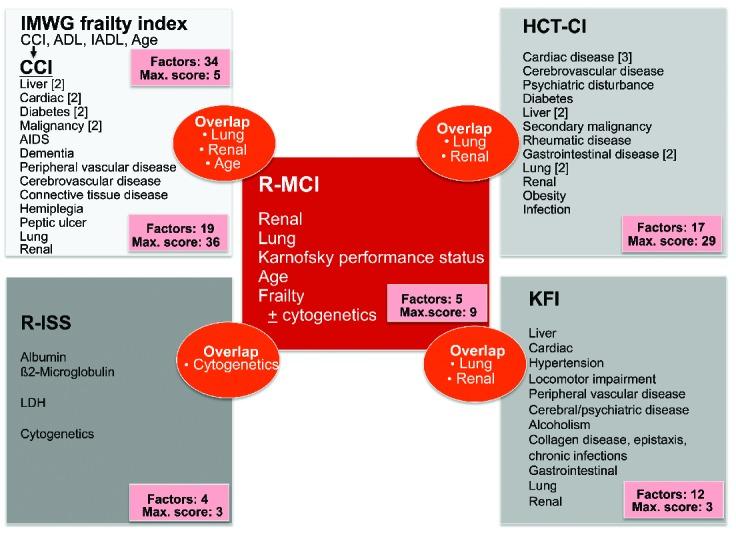
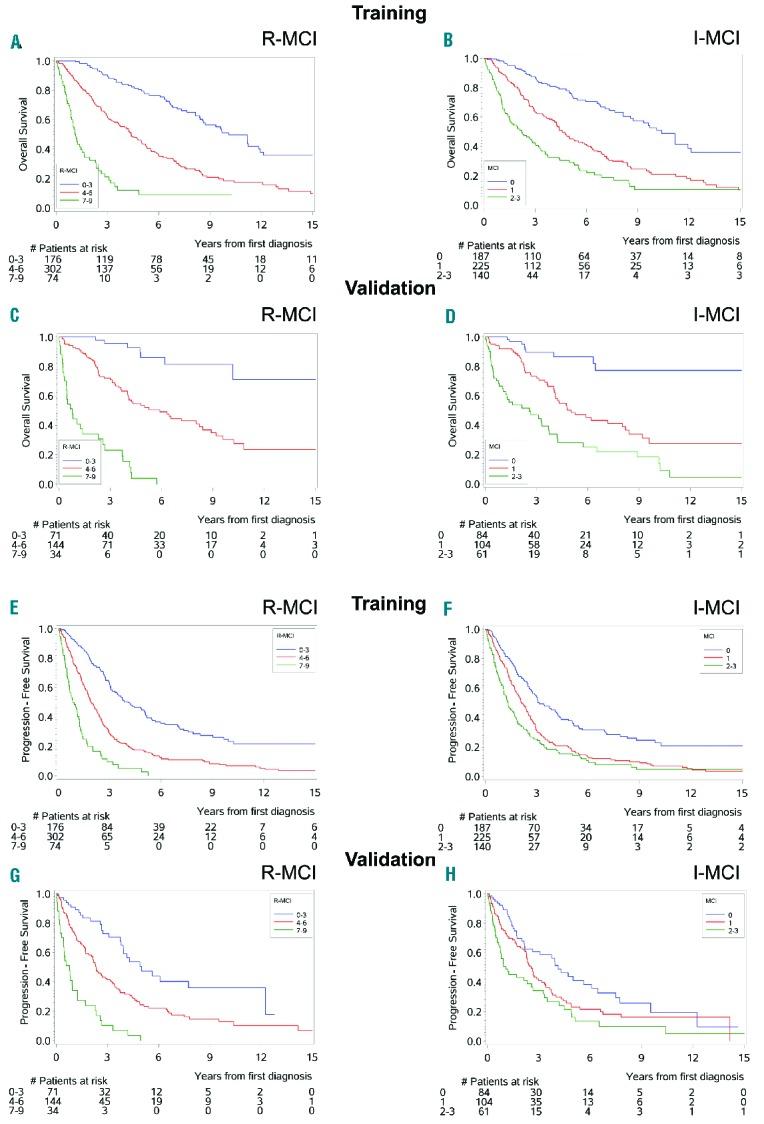
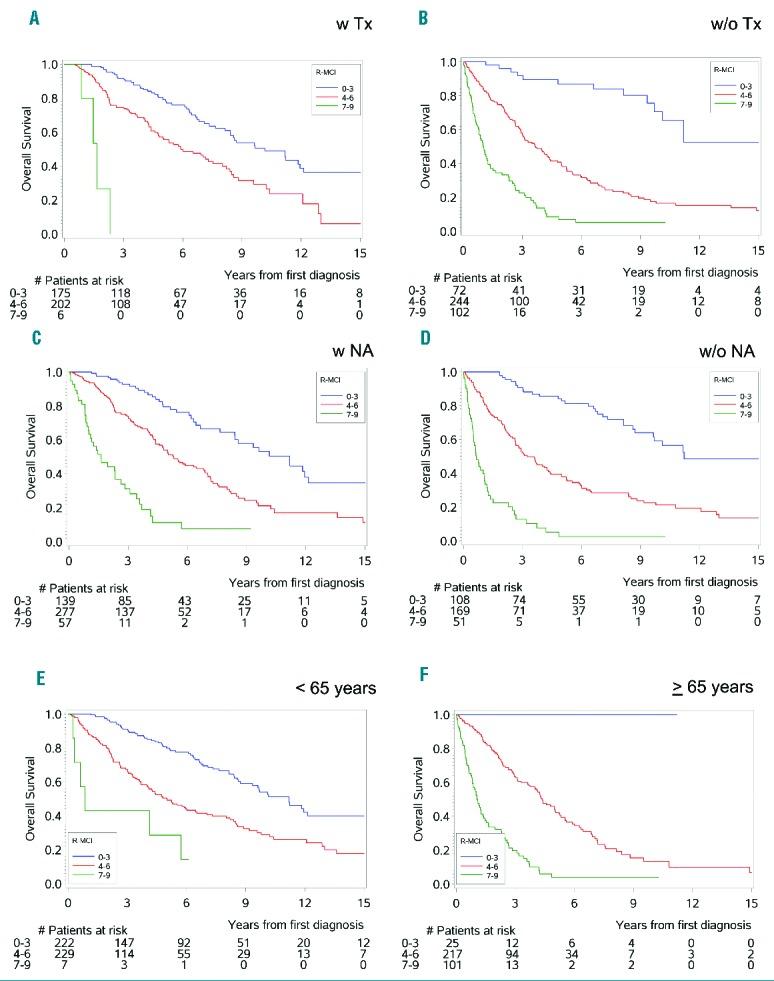
With growing numbers of elderly multiple myeloma patients, reliable tools to assess their vulnerability are required. The objective of the analysis herein was to develop and validate an easy to use myeloma risk score (revised Myeloma Comorbidity Index) that allows for risk prediction of overall survival and progression-free survival differences in a large patient cohort. We conducted a comprehensive comorbidity, frailty and disability evaluation in 801 consecutive myeloma patients, including comorbidity risks obtained at diagnosis. The cohort was examined within a training and validation set. Multivariate analysis determined renal, lung and Karnofsky Performance Status impairment, frailty and age as significant risks for overall survival. These were combined in a weighted revised Myeloma Comorbidity Index, allowing for the identification of fit (revised Myeloma Comorbidity Index ≤3 [n=247, 30.8%]), intermediate-fit (revised Myeloma Comorbidity Index 4-6 [n=446, 55.7%]) and frail patients (revised Myeloma Comorbidity Index >6 [n=108, 13.5%]): these subgroups, confirmed validation analysis, showed median overall survival rates of 10.1, 4.4 and 1.2 years, respectively. The revised Myeloma Comorbidity Index was compared to other commonly used comorbidity indices (Charlson Comorbidity Index, Hematopoietic Cell Transplantation-Specific Comorbidity Index, Kaplan-Feinstein Index): if each were divided in risk groups based on 25% and 75% quartiles, highest hazard ratios, best prediction and Brier scores were achieved with the revised Myeloma Comorbidity Index. The advantages of the revised Myeloma Comorbidity Index include its accurate assessment of patients' physical conditions and simple clinical applicability. We propose the revised Myeloma Comorbidity Index to be tested with the "reference" International Myeloma Working Group frailty score in multicenter analyses and future clinical trials. The study was registered at the German Clinical Trials Register (DRKS-00003868).
随着老年多发性骨髓瘤患者数量的不断增加,需要可靠的工具来评估他们的脆弱性。本文分析的目的是开发并验证一种易于使用的骨髓瘤风险评分(修订的骨髓瘤合并症指数),该评分能够在一个大型患者队列中预测总生存期和无进展生存期差异的风险。我们对801例连续的骨髓瘤患者进行了全面的合并症、虚弱和残疾评估,包括诊断时获得的合并症风险。该队列在一个训练集和验证集中进行了检查。多变量分析确定肾脏、肺部和卡诺夫斯基功能状态损害、虚弱和年龄是总生存期的显著风险因素。这些因素被纳入一个加权的修订骨髓瘤合并症指数中,从而能够识别健康(修订的骨髓瘤合并症指数≤3 [n = 247, 30.8%])、中度健康(修订的骨髓瘤合并症指数4 - 6 [n = 446, 55.7%])和虚弱患者(修订的骨髓瘤合并症指数>6 [n = 108, 13.5%]):经验证分析确认,这些亚组的中位总生存期分别为10.1年、4.4年和1.2年。将修订的骨髓瘤合并症指数与其他常用的合并症指数(查尔森合并症指数、造血细胞移植特异性合并症指数、卡普兰 - 费因斯坦指数)进行比较:如果将每个指数根据第25和第75四分位数划分为风险组,修订的骨髓瘤合并症指数具有最高的风险比、最佳的预测能力和布里尔评分。修订的骨髓瘤合并症指数的优点包括其对患者身体状况的准确评估和简单的临床适用性。我们建议在多中心分析和未来的临床试验中,将修订的骨髓瘤合并症指数与“参考”国际骨髓瘤工作组虚弱评分进行对比测试。该研究已在德国临床试验注册中心注册(DRKS - 00003868)。
 Zotero 插件