
老年多发性骨髓瘤患者不断演变的治疗格局:从四联方案到T细胞衔接器和嵌合抗原受体T细胞疗法
The Evolving Treatment Landscape for the Elderly Multiple Myeloma Patient: From Quad Regimens to T-Cell Engagers and CAR-T.
作者信息
Rees Matthew James, Quach Hang
机构信息
Department of Clinical Haematology, St Vincent's Hospital Melbourne, Fitzroy, VIC 3065, Australia.
Division of Hematology, Mayo Clinic, Rochester, MN 55905, USA.
出版信息
Cancers (Basel). 2025 Aug 5;17(15):2579. doi: 10.3390/cancers17152579.
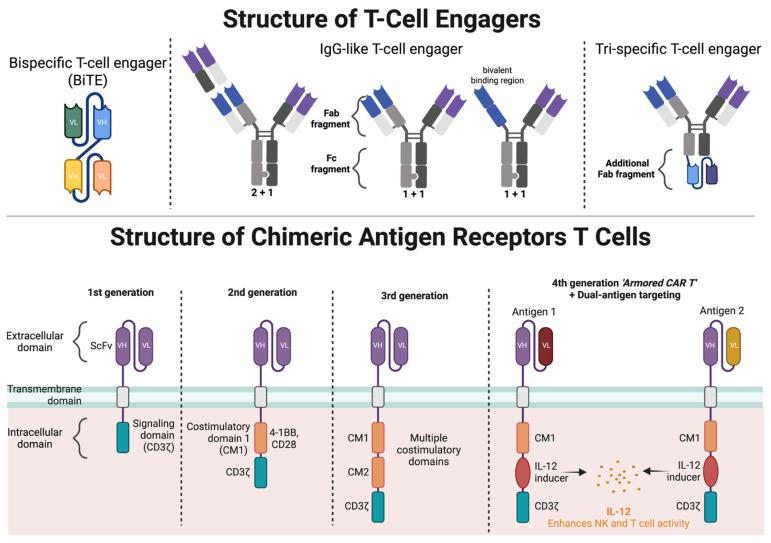
Multiple myeloma (MM) is predominantly a disease of the elderly. In recent years, a surge of highly effective plasma cell therapies has revolutionized the care of elderly multiple myeloma (MM) patients, for whom frailty and age-related competing causes of mortality determine management. Traditionally, the treatment of newly diagnosed elderly patients has centered on doublet or triplet combinations composed of immunomodulators (IMIDs), proteasome inhibitors (PIs), anti-CD38 monoclonal antibodies (mAbs), and corticosteroids producing median progression-free survival (PFS) rates between 34 and 62 months. However, recently, a series of large phase III clinical trials examining quadruplet regimens of PIs, IMIDs, corticosteroids, and anti-CD38 mAbs have shown exceptional outcomes, with median PFS exceeding 60 months, albeit with higher rates of peripheral neuropathy (≥Grade 2: 27% vs. 10%) when PIs and IMIDs are combined, and infections (≥Grade 3: 40% vs. 29-41%) with the addition of anti-CD38mAbs. The development of T-cell redirecting therapies including T-cell engagers (TCEs) and CAR-T cells has further expanded the therapeutic arsenal. TCEs have shown exceptional activity in relapsed disease and are being explored in the newly diagnosed setting with promising early results. However, concerns remain regarding the logistical challenges of step-up dosing, which often necessitates inpatient admission, the infectious risks, and the financial burden associated with TCEs in elderly patients. CAR-T, the most potent commercially available therapy for MM, offers the potential of a '' approach. However, its application to elderly patients has been tempered by significant concerns of cytokine release syndrome, early and delayed neurological toxicity, and its overall tolerability in frail patients. Robust data in frail patients are still needed. How CAR-T and TCEs will be sequenced among the growing therapeutic armamentarium for elderly MM patients remains to be determined. This review explores the safety, efficacy, cost, and logistical barriers associated with the above treatments in elderly MM patients.
多发性骨髓瘤(MM)主要是一种老年疾病。近年来,一系列高效的浆细胞疗法彻底改变了老年多发性骨髓瘤(MM)患者的治疗方式,对于这些患者而言,身体虚弱和与年龄相关的其他致死原因决定了治疗方案。传统上,新诊断老年患者的治疗主要集中在由免疫调节剂(IMIDs)、蛋白酶体抑制剂(PIs)、抗CD38单克隆抗体(mAbs)和皮质类固醇组成的双联或三联组合上,其无进展生存期(PFS)中位数在34至62个月之间。然而,最近,一系列研究PIs、IMIDs、皮质类固醇和抗CD38 mAbs四联方案的大型III期临床试验显示出了卓越的疗效,PFS中位数超过60个月,尽管当PIs和IMIDs联合使用时,外周神经病变发生率较高(≥2级:27%对10%),而加入抗CD38 mAbs后感染发生率(≥3级:40%对29%-41%)也有所增加。包括T细胞衔接器(TCEs)和嵌合抗原受体T细胞(CAR-T细胞)在内的T细胞重定向疗法的发展进一步扩充了治疗手段。TCEs在复发疾病中显示出卓越的活性,并且正在新诊断患者中进行探索,初步结果很有前景。然而,对于逐步递增剂量带来的后勤挑战(这通常需要住院治疗)、感染风险以及老年患者使用TCEs的经济负担,人们仍存在担忧。CAR-T是MM最有效的商业可用疗法,具有实现“治愈”的潜力。然而,由于人们对细胞因子释放综合征、早期和延迟神经毒性以及其在虚弱患者中的总体耐受性存在重大担忧,其在老年患者中的应用受到了限制。仍然需要针对虚弱患者的有力数据。在老年MM患者日益增多的治疗手段中,CAR-T和TCEs将如何排序仍有待确定。本综述探讨了上述治疗方法在老年MM患者中相关的安全性、疗效、成本和后勤障碍。
 Zotero 插件