
疟原虫的乳酸转运蛋白PfFNT是全细胞表型筛选中鉴定出的抗疟化合物的作用靶点。
The Malaria Parasite's Lactate Transporter PfFNT Is the Target of Antiplasmodial Compounds Identified in Whole Cell Phenotypic Screens.
作者信息
Hapuarachchi Sanduni V, Cobbold Simon A, Shafik Sarah H, Dennis Adelaide S M, McConville Malcolm J, Martin Rowena E, Kirk Kiaran, Lehane Adele M
机构信息
Research School of Biology, Australian National University, Canberra, ACT, Australia.
Department of Biochemistry and Molecular Biology, Bio21 Molecular Science and Biotechnology Institute, University of Melbourne, Melbourne, VIC, Australia.
出版信息
PLoS Pathog. 2017 Feb 8;13(2):e1006180. doi: 10.1371/journal.ppat.1006180. eCollection 2017 Feb.
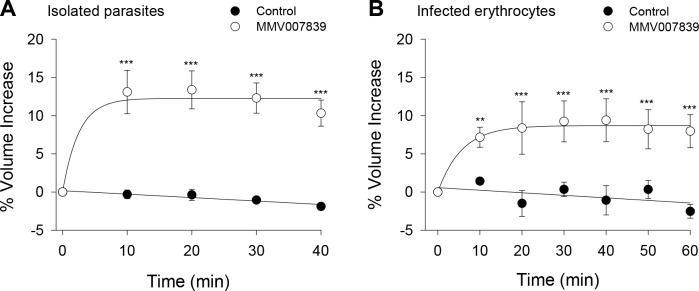
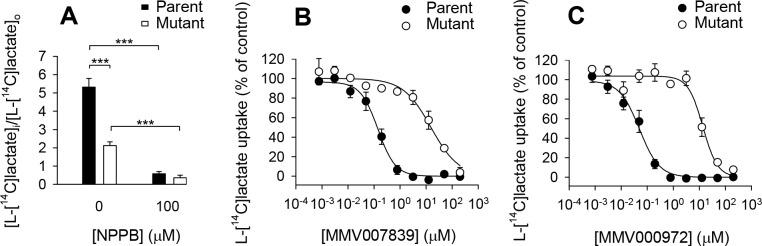
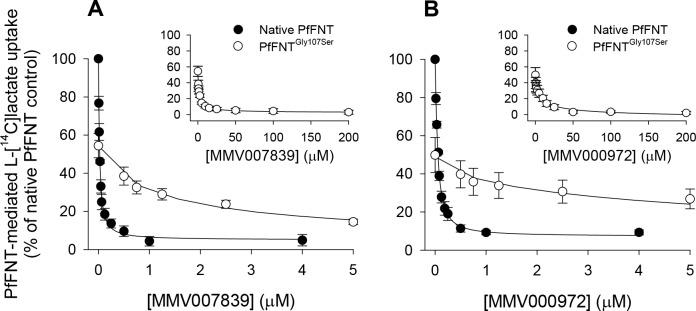
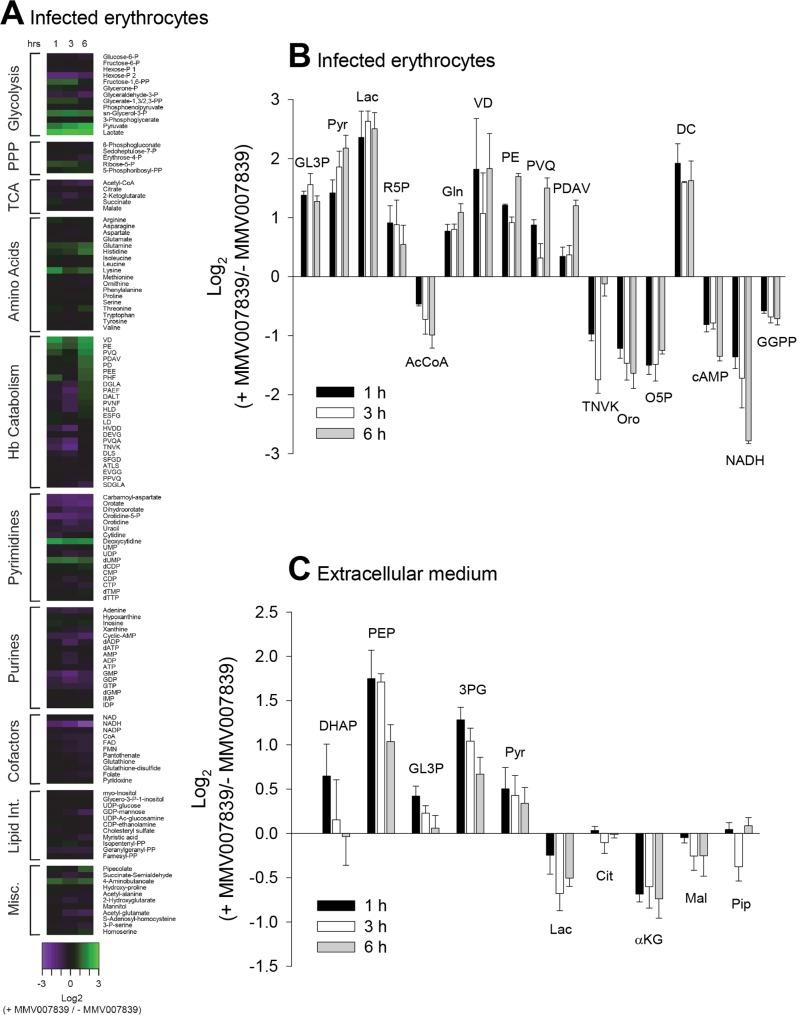
In this study the 'Malaria Box' chemical library comprising 400 compounds with antiplasmodial activity was screened for compounds that perturb the internal pH of the malaria parasite, Plasmodium falciparum. Fifteen compounds induced an acidification of the parasite cytosol. Two of these did so by inhibiting the parasite's formate nitrite transporter (PfFNT), which mediates the H+-coupled efflux from the parasite of lactate generated by glycolysis. Both compounds were shown to inhibit lactate transport across the parasite plasma membrane, and the transport of lactate by PfFNT expressed in Xenopus laevis oocytes. PfFNT inhibition caused accumulation of lactate in parasitised erythrocytes, and swelling of both the parasite and parasitised erythrocyte. Long-term exposure of parasites to one of the inhibitors gave rise to resistant parasites with a mutant form of PfFNT that showed reduced inhibitor sensitivity. This study provides the first evidence that PfFNT is a druggable antimalarial target.
在本研究中,对包含400种具有抗疟原虫活性化合物的“疟疾盒”化学文库进行了筛选,以寻找能干扰恶性疟原虫内部pH值的化合物。15种化合物可诱导疟原虫细胞质酸化。其中两种化合物是通过抑制疟原虫的甲酸亚硝酸盐转运蛋白(PfFNT)来实现的,该转运蛋白介导糖酵解产生的乳酸通过H⁺偶联从疟原虫排出。这两种化合物均能抑制乳酸跨疟原虫质膜的转运,以及非洲爪蟾卵母细胞中表达的PfFNT对乳酸的转运。PfFNT抑制导致乳酸在被寄生红细胞中积累,以及疟原虫和被寄生红细胞肿胀。长期将疟原虫暴露于其中一种抑制剂会产生具有PfFNT突变形式的耐药疟原虫,该突变形式对抑制剂的敏感性降低。本研究首次证明PfFNT是一个可成药的抗疟靶点。


 Zotero 插件