
血小板反应蛋白-1通过调节运动性和集落形成促进恶性胸膜间皮瘤的进展。
Podoplanin promotes progression of malignant pleural mesothelioma by regulating motility and focus formation.
作者信息
Takeuchi Shinji, Fukuda Koji, Yamada Tadaaki, Arai Sachiko, Takagi Satoshi, Ishii Genichiro, Ochiai Atsushi, Iwakiri Shotaro, Itoi Kazumi, Uehara Hisanori, Nishihara Hiroshi, Fujita Naoya, Yano Seiji
机构信息
Division of Medical Oncology, Cancer Research Institute, Kanazawa University, Kanazawa, Japan.
Cancer Chemotherapy Center, Japanese Foundation for Cancer Research, Tokyo, Japan.
出版信息
Cancer Sci. 2017 Apr;108(4):696-703. doi: 10.1111/cas.13190. Epub 2017 Apr 12.
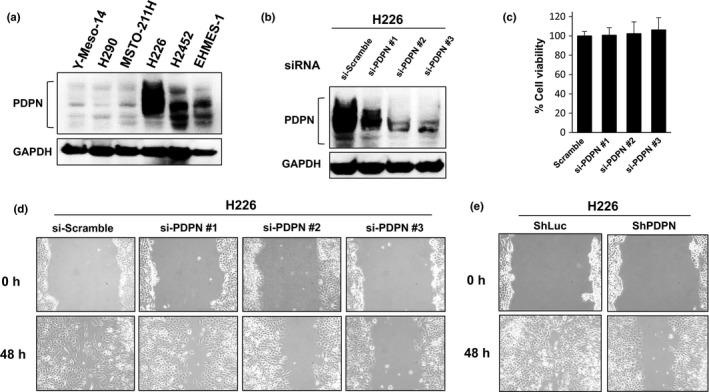
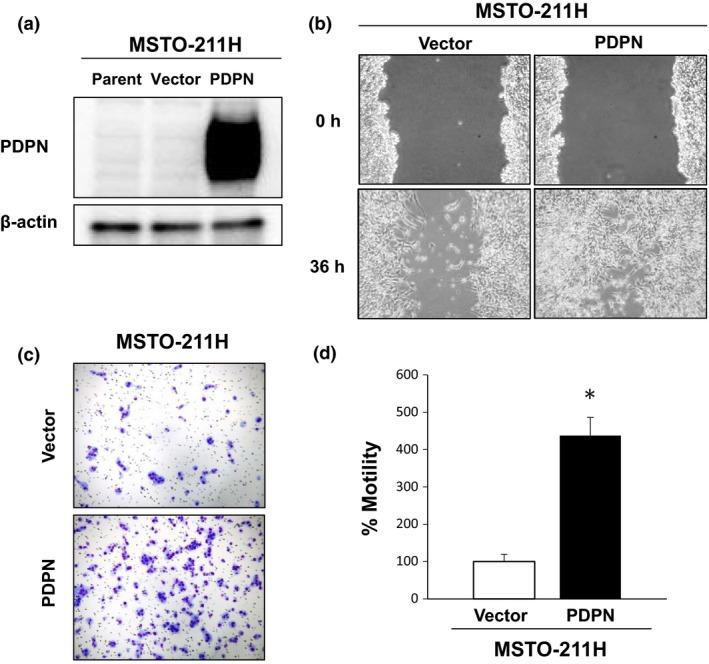
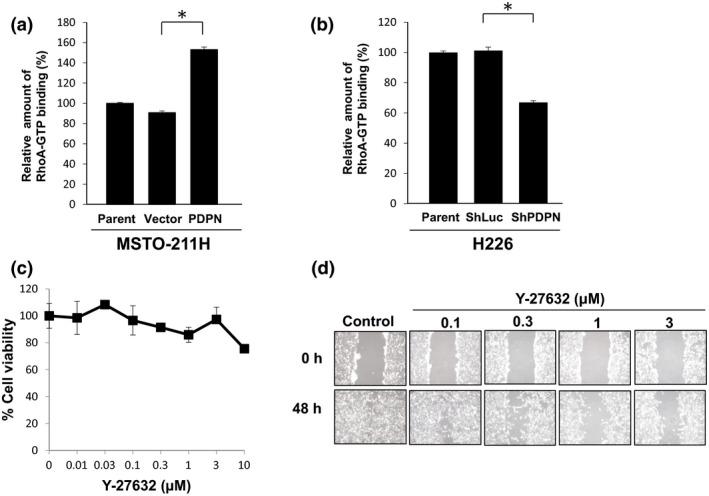
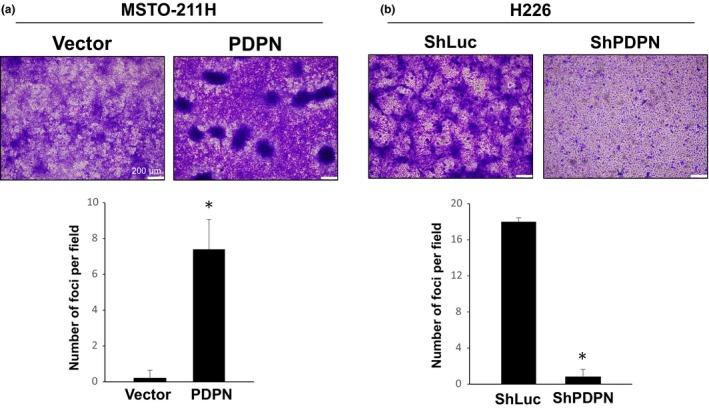
Malignant pleural mesothelioma (MPM) is characterized by dissemination and aggressive growth in the thoracic cavity. Podoplanin (PDPN) is an established diagnostic marker for MPM, but the function of PDPN in MPM is not fully understood. The purpose of this study was to determine the pathogenetic function of PDPN in MPM. Forty-seven of 52 tumors (90%) from Japanese patients with MPM and 3/6 (50%) MPM cell lines tested positive for PDPN. Knocking down PDPN in PDPN-high expressing MPM cells resulted in decreased cell motility. In contrast, overexpression of PDPN in PDPN-low expressing MPM cells enhanced cell motility. PDPN stimulated motility was mediated by activation of the RhoA/ROCK pathway. Moreover, knocking down PDPN with short hairpin (sh) RNA in PDPN-high expressing MPM cells resulted in decreased development of a thoracic tumor in mice with severe combined immune deficiency (SCID). In sharp contrast, transfection of PDPN in PDPN-low expressing MPM cells resulted in an increase in the number of Ki-67-positive proliferating tumor cells and it promoted progression of a thoracic tumor in SCID mice. Interestingly, PDPN promoted focus formation in vitro, and a low level of E-cadherin expression and YAP1 activation was observed in PDPN-high MPM tumors. These findings indicate that PDPN is a diagnostic marker as well as a pathogenetic regulator that promotes MPM progression by increasing cell motility and inducing focus formation. Therefore, PDPN might be a pathogenetic determinant of MPM dissemination and aggressive growth and may thus be an ideal therapeutic target.
恶性胸膜间皮瘤(MPM)的特征是在胸腔内扩散和侵袭性生长。血小板内皮细胞黏附分子(PDPN)是MPM已确立的诊断标志物,但PDPN在MPM中的功能尚未完全明确。本研究的目的是确定PDPN在MPM中的致病作用。52例日本MPM患者的肿瘤中有47例(90%)以及6株MPM细胞系中的3株(50%)PDPN检测呈阳性。在PDPN高表达的MPM细胞中敲低PDPN导致细胞运动性降低。相反,在PDPN低表达的MPM细胞中过表达PDPN增强了细胞运动性。PDPN刺激的运动性是由RhoA/ROCK信号通路的激活介导的。此外,在PDPN高表达的MPM细胞中用短发夹(sh)RNA敲低PDPN导致严重联合免疫缺陷(SCID)小鼠胸腔肿瘤的发展减少。与之形成鲜明对比的是,在PDPN低表达的MPM细胞中转染PDPN导致Ki-67阳性增殖肿瘤细胞数量增加,并促进了SCID小鼠胸腔肿瘤的进展。有趣的是,PDPN在体外促进集落形成,并且在PDPN高表达的MPM肿瘤中观察到E-钙黏蛋白表达水平降低和YAP1激活。这些发现表明,PDPN不仅是一种诊断标志物,也是一种致病调节剂,通过增加细胞运动性和诱导集落形成促进MPM进展。因此,PDPN可能是MPM扩散和侵袭性生长的致病决定因素,可能因此是一个理想的治疗靶点。


 Zotero 插件