
人类新皮层的昼夜和季节性分子节律及其与阿尔茨海默病的关系。
Diurnal and seasonal molecular rhythms in human neocortex and their relation to Alzheimer's disease.
机构信息
Division of Neurology, Department of Medicine, Sunnybrook Health Sciences Centre, University of Toronto, 2075 Bayview Avenue, Room M1-600, Toronto M4N1X2, Ontario, Canada.
Program in Translational Neuropsychiatric Genomics, Department of Neurology, Brigham and Women's Hospital, Harvard Medical School, 77 Avenue Louis Pasteur, NRB 168c, Boston, Massachusetts 02115, USA.
出版信息
Nat Commun. 2017 Apr 3;8:14931. doi: 10.1038/ncomms14931.
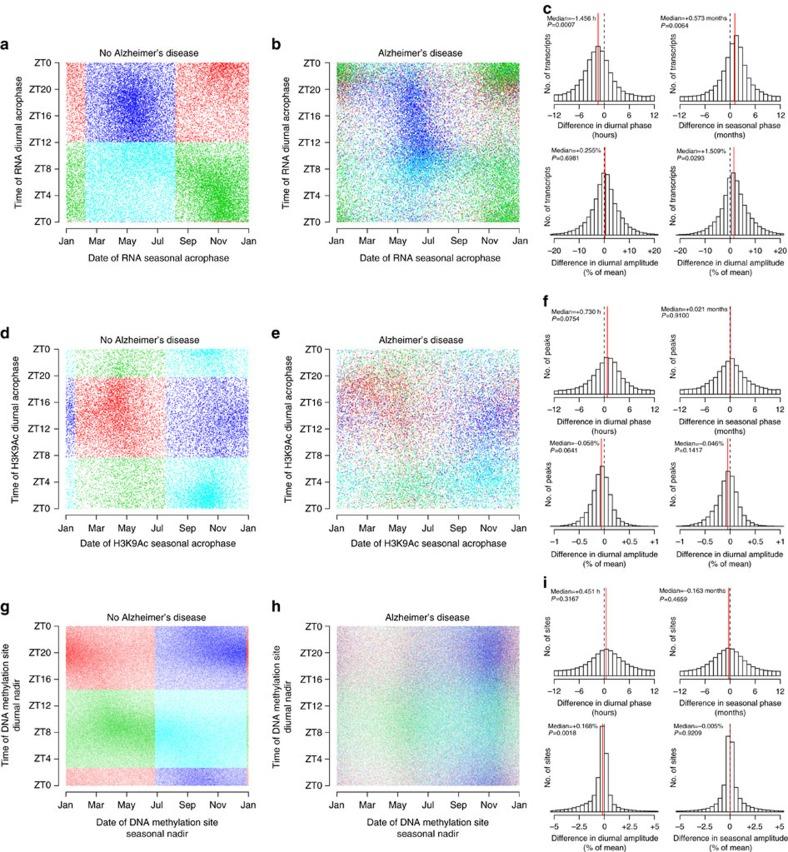
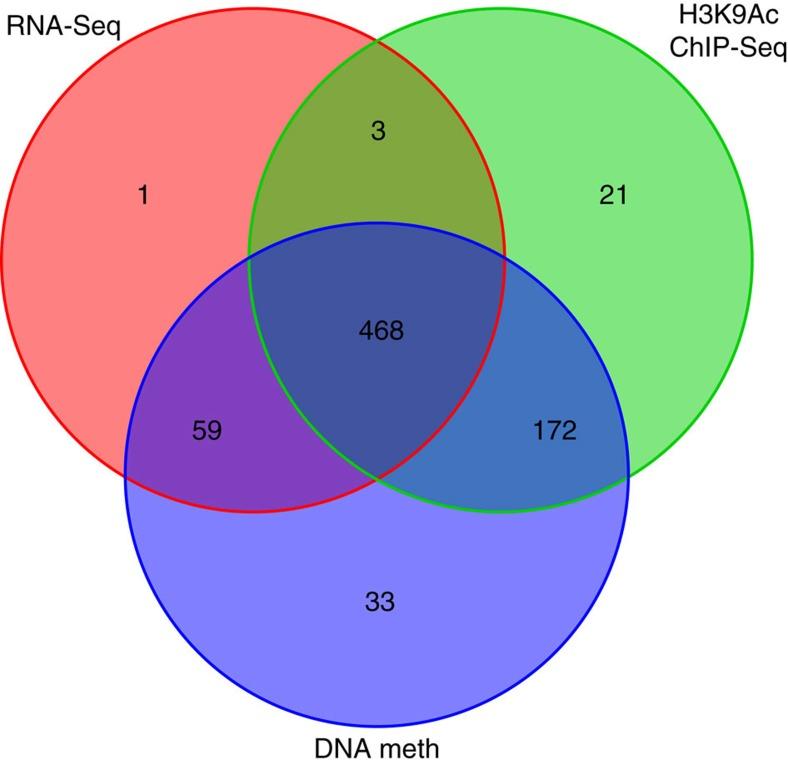
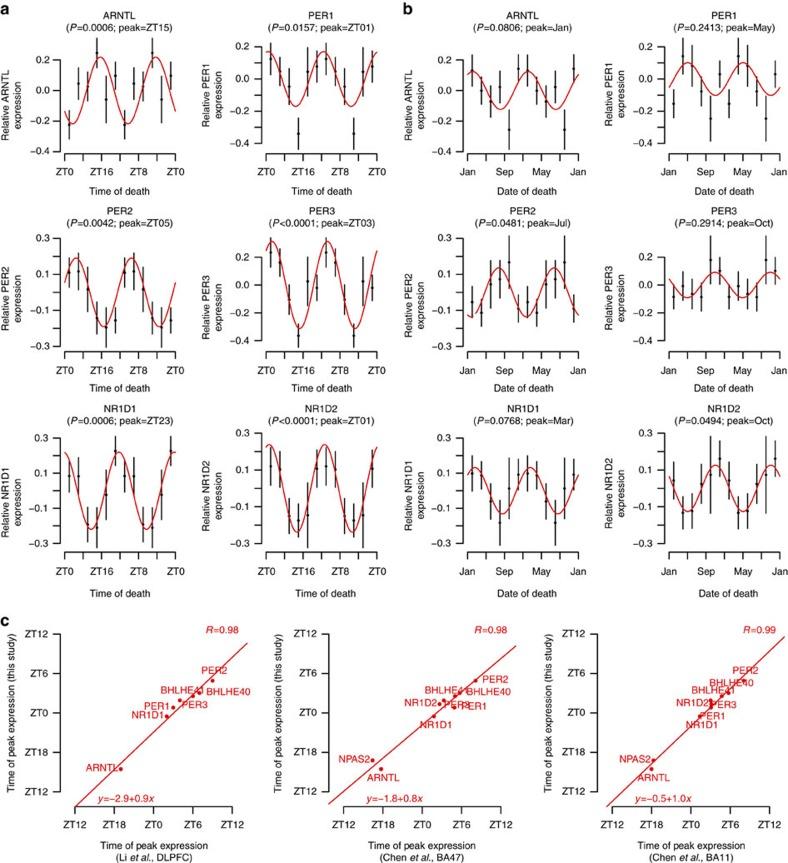
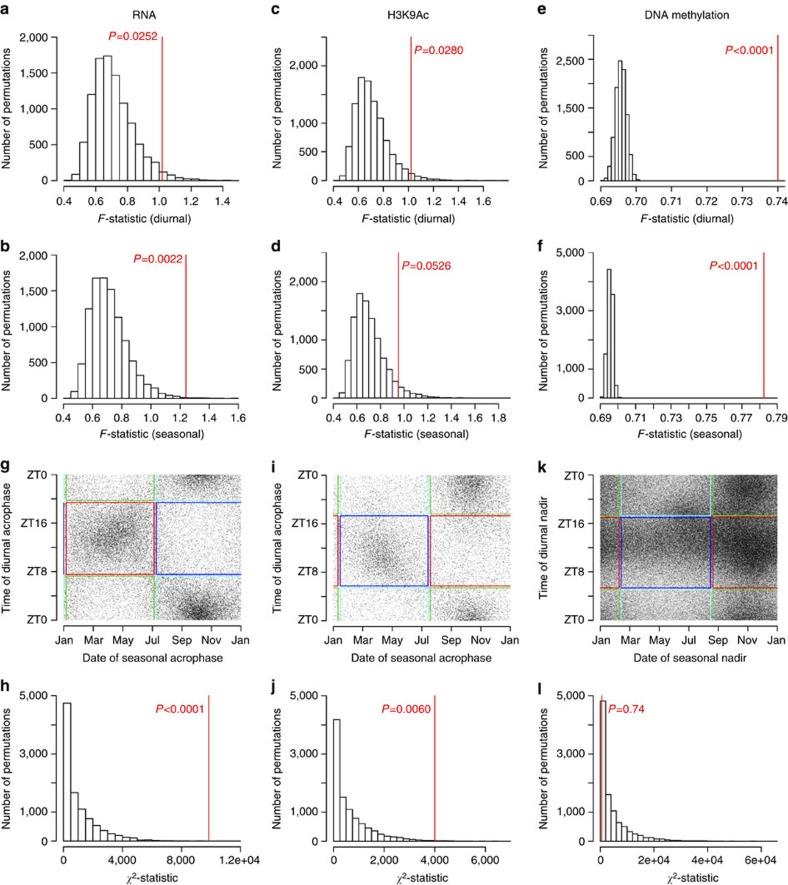
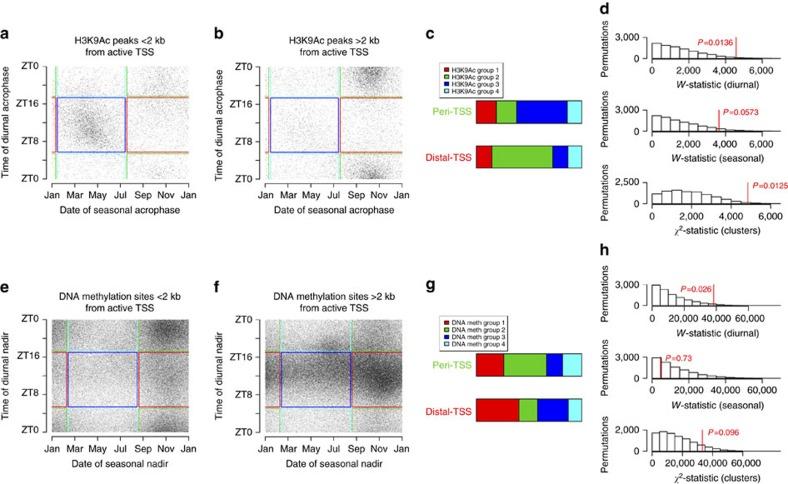
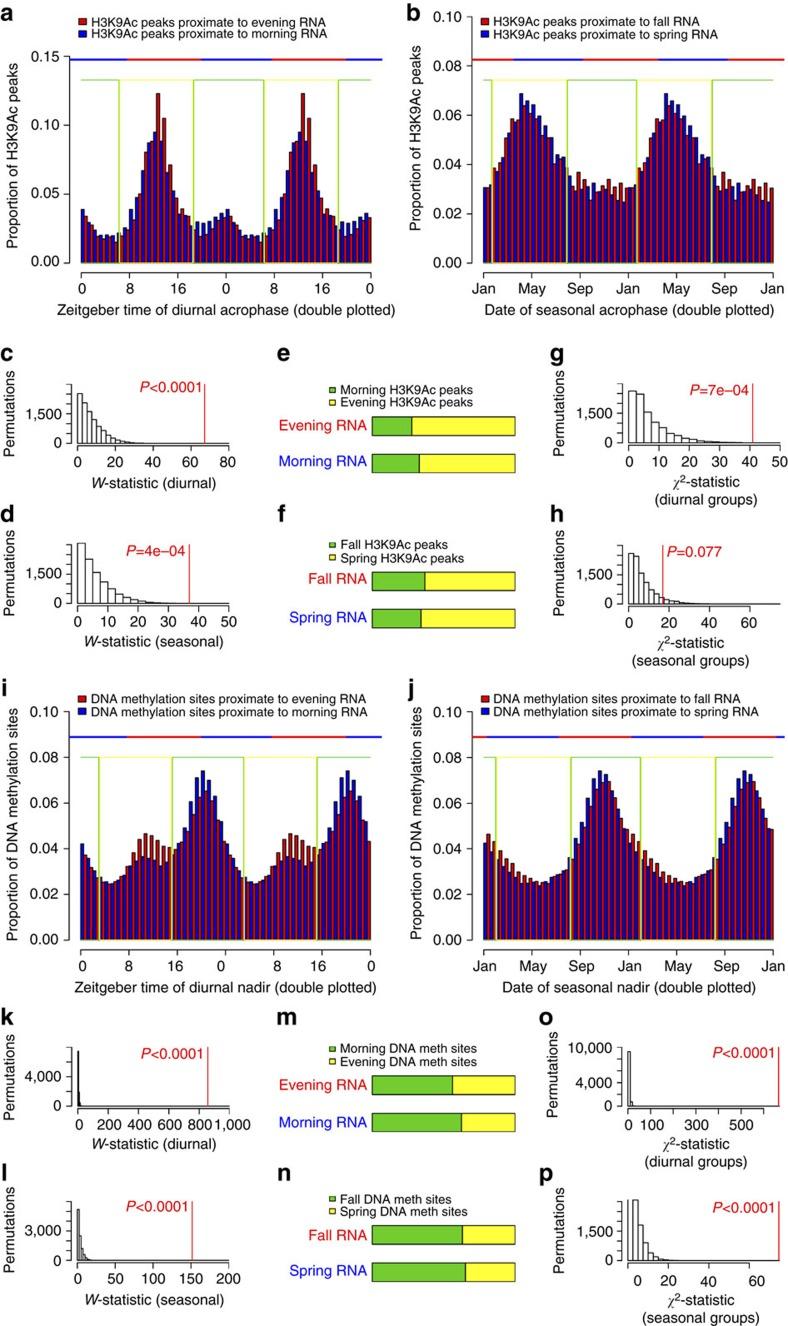
Circadian and seasonal rhythms are seen in many species, modulate several aspects of human physiology, including brain functions such as mood and cognition, and influence many neurological and psychiatric illnesses. However, there are few data regarding the genome-scale molecular correlates underlying these rhythms, especially in the human brain. Here, we report widespread, site-specific and interrelated diurnal and seasonal rhythms of gene expression in the human brain, and show their relationship with parallel rhythms of epigenetic modification including histone acetylation, and DNA methylation. We also identify transcription factor-binding sites that may drive these effects. Further, we demonstrate that Alzheimer's disease pathology disrupts these rhythms. These data suggest that interrelated diurnal and seasonal epigenetic and transcriptional rhythms may be an important feature of human brain biology, and perhaps human biology more broadly, and that changes in such rhythms may be consequences of, or contributors to, diseases such as Alzheimer's disease.
昼夜节律和季节性节律在许多物种中都存在,调节着人类生理学的多个方面,包括大脑功能,如情绪和认知,并影响许多神经和精神疾病。然而,关于这些节律的基因组规模分子相关性的数据很少,特别是在人类大脑中。在这里,我们报告了人类大脑中广泛存在的、特定部位的、相互关联的昼夜节律和季节性基因表达,并且表明它们与平行的表观遗传修饰(包括组蛋白乙酰化和 DNA 甲基化)节律之间存在关联。我们还鉴定了可能驱动这些效应的转录因子结合位点。此外,我们证明阿尔茨海默病病理学破坏了这些节律。这些数据表明,相互关联的昼夜和季节性表观遗传和转录节律可能是人类大脑生物学的一个重要特征,也许更广泛地说是人类生物学的一个重要特征,而这种节律的变化可能是阿尔茨海默病等疾病的后果或促成因素。

 Zotero 插件