
谷氨酸受体A1亚基泛素化介导淀粉样β蛋白诱导的细胞表面α-氨基-3-羟基-5-甲基-4-异恶唑丙酸(AMPA)受体丢失。
GluA1 subunit ubiquitination mediates amyloid-β-induced loss of surface α-amino-3-hydroxy-5-methyl-4-isoxazolepropionic acid (AMPA) receptors.
作者信息
Guntupalli Sumasri, Jang Se Eun, Zhu Tianyi, Huganir Richard L, Widagdo Jocelyn, Anggono Victor
机构信息
Clem Jones Centre for Ageing Dementia Research, Queensland Brain Institute, The University of Queensland, Brisbane, Queensland 4072, Australia.
Department of Neuroscience and Kavli Neuroscience Discovery Institute, The Johns Hopkins University School of Medicine, Baltimore, Maryland 21205.
出版信息
J Biol Chem. 2017 May 19;292(20):8186-8194. doi: 10.1074/jbc.M116.774554. Epub 2017 Apr 4.
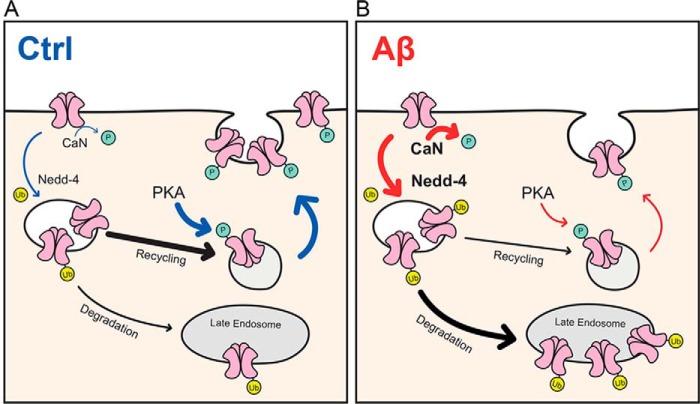
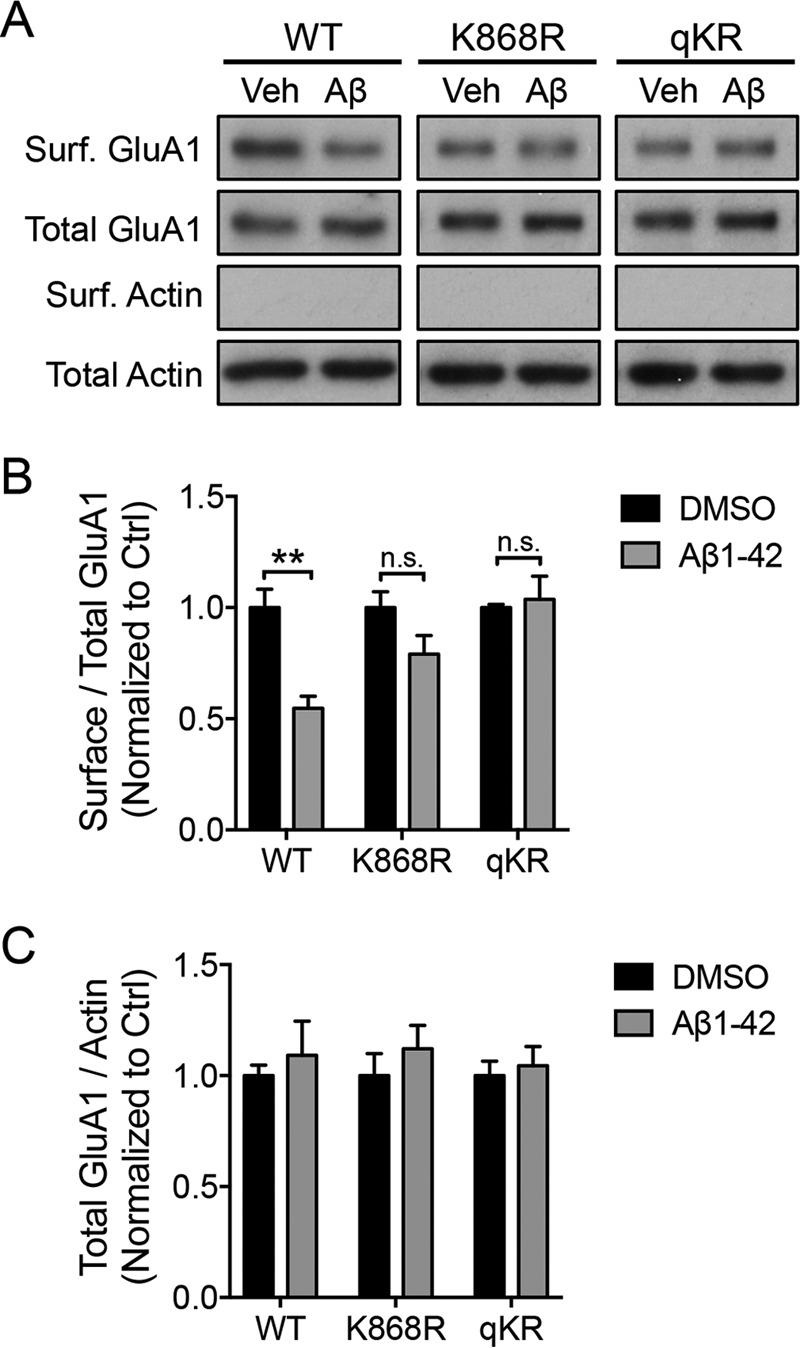
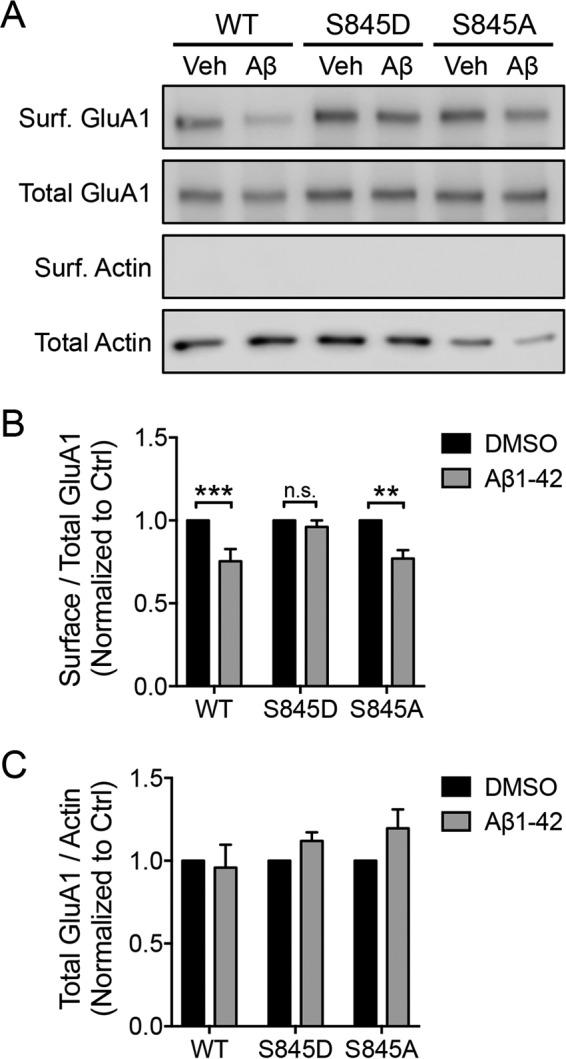
The accumulation of soluble amyloid-β (Aβ) peptides produces profound neuronal changes in the brain during the pathogenesis of Alzheimer's disease. Excessive levels of Aβ disrupt excitatory synaptic transmission by promoting the removal of synaptic AMPA receptors (AMPARs), dendritic spine loss, and synaptic depression. Recently, activity-dependent ubiquitination of the GluA1 subunit has been shown to regulate the intracellular sorting of AMPARs toward late endosomes for degradation. However, whether this ubiquitin signaling pathway mediates Aβ-induced loss of surface AMPARs is unknown. In this study, we demonstrate that acute exposure of cultured neurons to soluble Aβ oligomers induces AMPAR ubiquitination concomitant with the removal of AMPARs from the plasma membrane. Importantly, expression of the GluA1 ubiquitin-deficient mutants inhibited the adverse effects of Aβ on the surface expression of AMPARs in neurons. Furthermore, we revealed the cross-talk between GluA1 ubiquitination and phosphorylation, in particular phosphorylation at Ser-845, which is crucial for AMPAR recycling and is known to be dephosphorylated in the presence of Aβ. Our data showed that the GluA1 ubiquitin-deficient mutant enhances GluA1 phosphorylation on Ser-845. Conversely, the GluA1 S845D phosphomimetic mutant reduced binding with Nedd4-1 and hence the ubiquitination of AMPARs. Importantly, the GluA1 S845D mutant also prevented Aβ-induced removal of surface AMPARs. Taken together, these findings provide the first demonstration of the dynamic cross-modulation of GluA1 ubiquitination and phosphorylation, a process that is perturbed by Aβ, in regulating the membrane sorting decision that ultimately determines the number of AMPARs on the cell surface.
在阿尔茨海默病的发病过程中,可溶性淀粉样β(Aβ)肽的积累会在大脑中引发深刻的神经元变化。过量的Aβ通过促进突触AMPA受体(AMPARs)的移除、树突棘丢失和突触抑制来破坏兴奋性突触传递。最近,已表明GluA1亚基的活性依赖性泛素化可调节AMPARs向晚期内体的细胞内分选以进行降解。然而,这种泛素信号通路是否介导Aβ诱导的表面AMPARs丢失尚不清楚。在本研究中,我们证明将培养的神经元急性暴露于可溶性Aβ寡聚体可诱导AMPAR泛素化,同时伴随着AMPARs从质膜上的移除。重要的是,GluA1泛素缺陷突变体的表达抑制了Aβ对神经元中AMPARs表面表达的不利影响。此外,我们揭示了GluA1泛素化与磷酸化之间的相互作用,特别是Ser-845位点的磷酸化,这对AMPAR循环至关重要,并且已知在Aβ存在时会去磷酸化。我们的数据表明,GluA1泛素缺陷突变体增强了Ser-845位点的GluA1磷酸化。相反,GluA1 S845D磷酸模拟突变体减少了与Nedd4-1的结合,从而减少了AMPARs的泛素化。重要的是,GluA1 S845D突变体还阻止了Aβ诱导的表面AMPARs的移除。综上所述,这些发现首次证明了GluA1泛素化和磷酸化的动态交叉调节,这一过程受到Aβ的干扰,在调节膜分选决定中起着重要作用,最终决定细胞表面AMPARs的数量。



 Zotero 插件