
加巴喷丁可降低脊柱手术患者的急性疼痛及吗啡用量:一项随机对照试验的荟萃分析。
Gabapentin can decrease acute pain and morphine consumption in spinal surgery patients: A meta-analysis of randomized controlled trials.
作者信息
Peng Chuangang, Li Chen, Qu Ji, Wu Dankai
机构信息
Department of Orthopedics, The Second Hospital of Jilin University, Changchun, People's Republic of China.
出版信息
Medicine (Baltimore). 2017 Apr;96(15):e6463. doi: 10.1097/MD.0000000000006463.
BACKGROUND
Approximately 80% of patients who underwent spinal surgeries experience moderate to extreme postoperative pain. Gabapentin was used as an adjunct for the management of acute pain in approximately half of enhanced recovery programs. This meta-analysis aimed to illustrate the efficacy and safety of gabapentin for pain management following spinal surgery.
METHODS
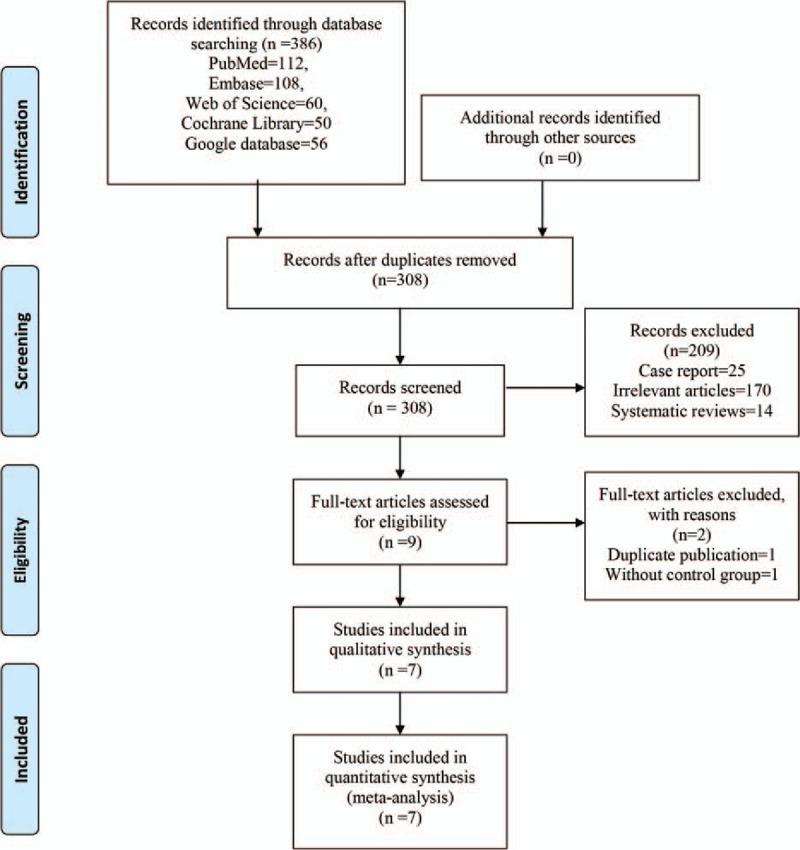
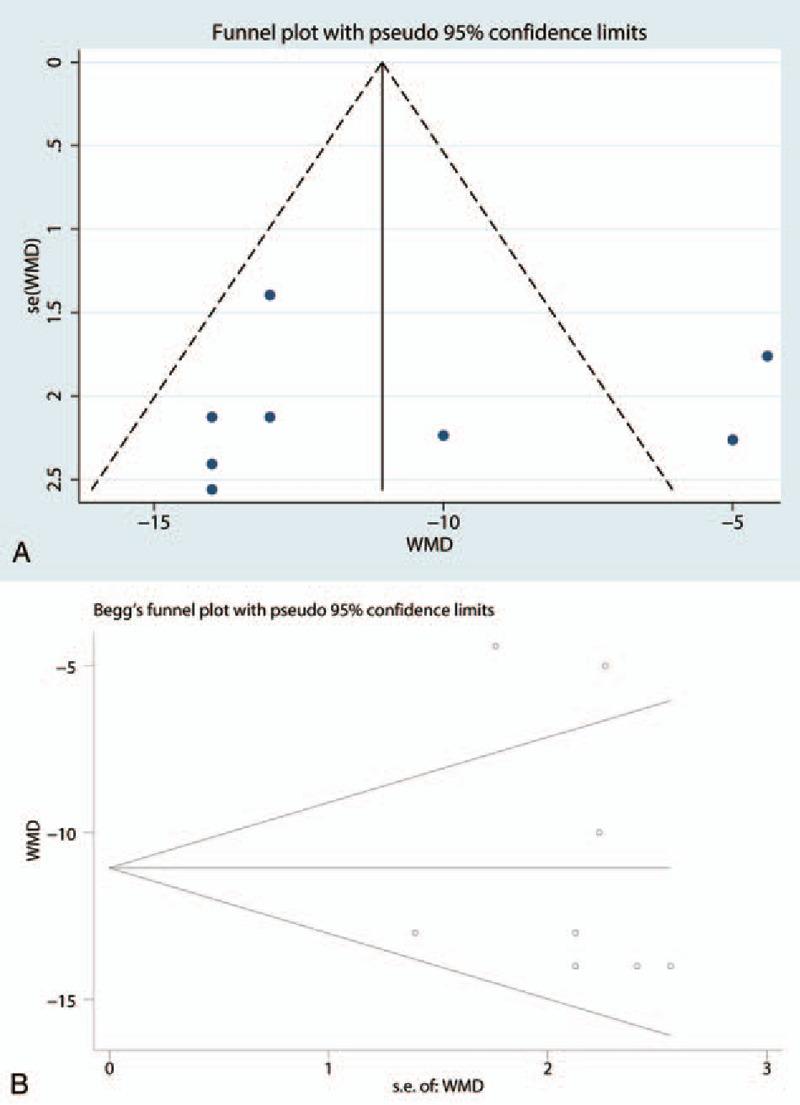
In January 2017, a systematic computer-based search was conducted in PubMed, EMBASE, Web of Science, Cochrane Database of Systematic Reviews, and Google database. Data on patients prepared for spine surgery in studies that compared gabapentin versus placebo were retrieved. The primary endpoint was the visual analog scale (VAS) at 12 hours and 24 hours and total morphine consumption. The secondary outcomes were complications that included nausea, dizziness, somnolence, headache, pruritus, urine retention, and vomiting. After testing for publication bias and heterogeneity between studies, data were aggregated for random-effects models when necessary.
RESULTS
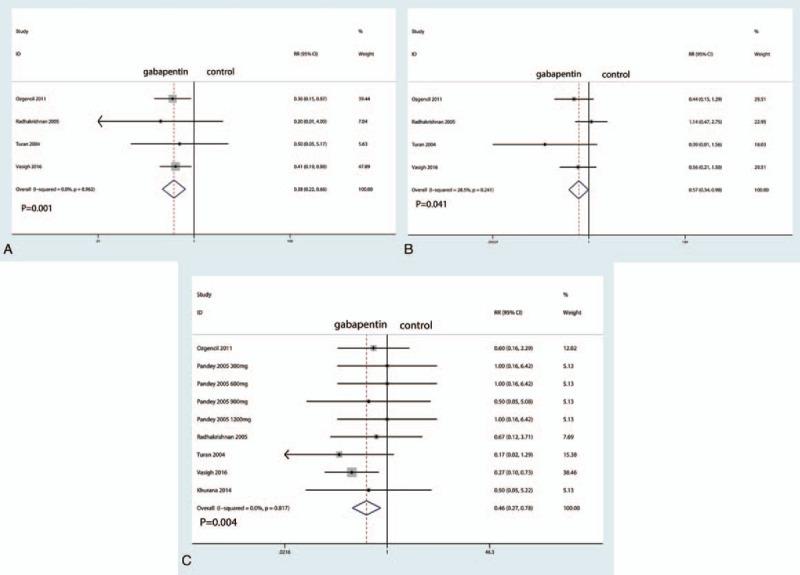
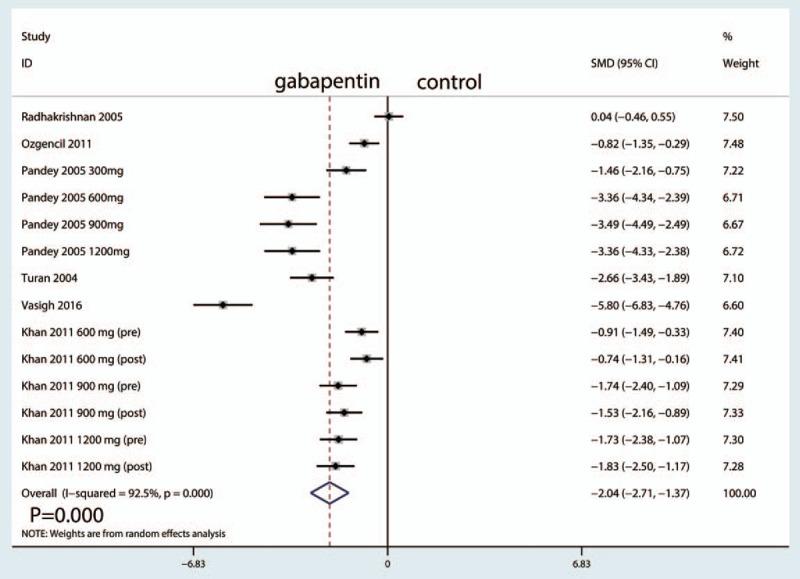
Seven clinical studies with 581 patients (gabapentin group=383, control group=198) were ultimately included in the meta-analysis. Gabapentin was associated with reduced pain scores at 12 hours and 24 hours, corresponding to a reduction of 11.18 points (95% CI, -13.85 to -8.52 points) at 12 hours and 9.94 points (95% CI, -13.99 to -5.89 points) at 24 hours on a 100-point VAS. Similarly, gabapentin was associated with a reduction in total morphine consumption (-2.04, 95% CI -2.71, -1.37). Furthermore, gabapentin can reduce the occurrence of vomiting (risk ratio [RR] 0.46, 95% CI 0.27, 0.78, P = 0.004), urine retention (RR = 0.57, 95% CI 0.34, 0.98, P = 0.041, NNT = 11.9) and pruritus (RR = 0.38, 95% CI 0.22, 0.66, P = 0.001, NNT = 5.6) and the number needed to treat (NNT = 20.1). There were no significant differences in the occurrence of nausea, dizziness, somnolence, or headache.
CONCLUSIONS
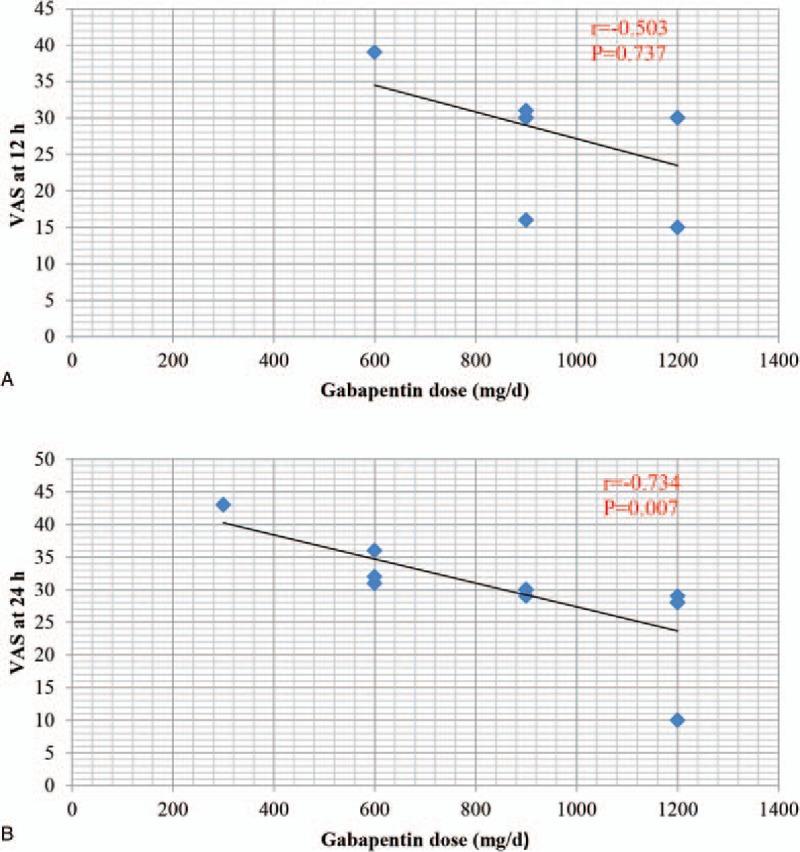
Gabapentin was efficacious in the reduction of postoperative pain, total morphine consumption, and morphine-related complications following spine surgery. In addition, a high dose (≥900 mg/d) of gabapentin is more effective than a low dose (<900 mg/d). The number of included studies is limited, and more studies are needed to verify the effects of gabapentin in spinal surgery patients.
背景
约80%接受脊柱手术的患者术后经历中度至重度疼痛。在约一半的加速康复计划中,加巴喷丁被用作急性疼痛管理的辅助药物。本荟萃分析旨在阐明加巴喷丁用于脊柱手术后疼痛管理的疗效和安全性。
方法
2017年1月,在PubMed、EMBASE、科学网、Cochrane系统评价数据库和谷歌数据库中进行了基于计算机的系统检索。检索了比较加巴喷丁与安慰剂的研究中准备接受脊柱手术患者的数据。主要终点是12小时和24小时的视觉模拟量表(VAS)以及吗啡总消耗量。次要结局是并发症,包括恶心、头晕、嗜睡、头痛、瘙痒、尿潴留和呕吐。在检测研究间的发表偏倚和异质性后,必要时对数据进行随机效应模型汇总。
结果
最终有7项临床研究共581例患者(加巴喷丁组 = 383例,对照组 = 198例)纳入荟萃分析。加巴喷丁与12小时和24小时疼痛评分降低相关,在100分VAS上,12小时时降低11.18分(95%CI,-13.85至-8.52分),24小时时降低9.94分(95%CI,-13.99至-5.89分)。同样,加巴喷丁与吗啡总消耗量降低相关(-2.04,95%CI -2.71,-1.37)。此外,加巴喷丁可降低呕吐(风险比[RR] 0.46,95%CI 0.27,0.78,P = 0.004)、尿潴留(RR = 0.57,95%CI 0.34,0.98,P = 0.041,需治疗人数[NNT] = 11.9)和瘙痒(RR = 0.38,95%CI 0.22,0.66,P = 0.001,NNT = 5.6)的发生率以及需治疗人数(NNT = 20.1)。恶心、头晕、嗜睡或头痛的发生率无显著差异。
结论
加巴喷丁在减轻脊柱手术后的术后疼痛、吗啡总消耗量和吗啡相关并发症方面有效。此外,高剂量(≥900mg/d)加巴喷丁比低剂量(<900mg/d)更有效。纳入研究数量有限,需要更多研究来验证加巴喷丁对脊柱手术患者的影响。





 Zotero 插件