
可溶性细胞毒性T淋巴细胞抗原4:治疗后恶性肿瘤的一个良好预测指标。
Soluble cytotoxic T-lymphocyte antigen 4: a favorable predictor in malignant tumors after therapy.
作者信息
Liu Qiqi, Hu Pingping, Deng Guodong, Zhang Jingxin, Liang Ning, Xie Jian, Qiao Lili, Luo Hui, Zhang Jiandong
机构信息
Department of Radiation Oncology, Qianfoshan Hospital Affiliated to Shandong University, Shandong University, Jinan.
Division of Oncology, Department of Graduate, Weifang Medical College, Weifang.
出版信息
Onco Targets Ther. 2017 Apr 12;10:2147-2154. doi: 10.2147/OTT.S128451. eCollection 2017.
PURPOSE
Soluble cytotoxic T-lymphocyte antigen 4 (sCTLA-4), one of the isoforms of CTLA-4, was discovered to be critical in downregulating the negative signal of CTLA-4 in T-cell responses. Contrary to the classical immunosuppressive effect of CTLA-4, its immunoregulatory function might be complicated. However, the clinical significance of sCTLA-4 to immune regulation and the variation in cancer therapy have not been elucidated. We postulated that the level of sCTLA-4 might affect the outcome of cancer prognosis.
PATIENTS AND METHODS
Serum concentrations of sCTLA-4 before and after therapy in 141 locally advanced and advanced cancer patients were measured and survival analyses was performed. Hazard ratio and 95% confidence interval for overall survival (OS) were calculated. Cutoffs were determined by median across the sCTLA-4 level of entire patients.
RESULTS
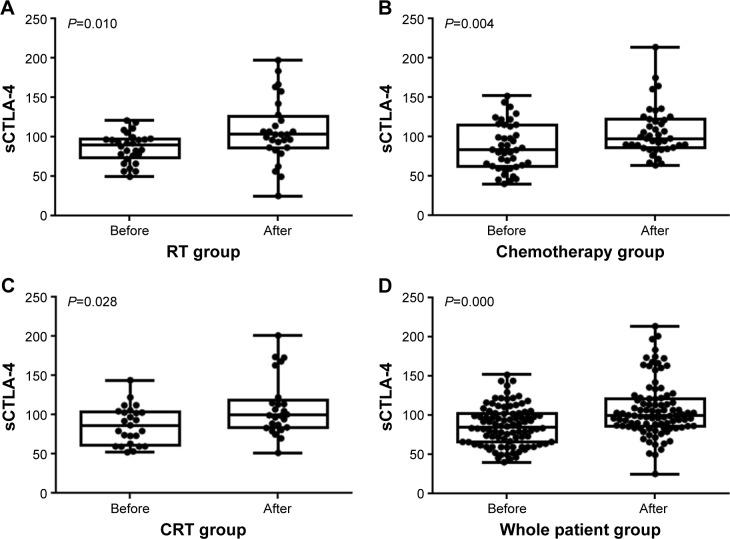
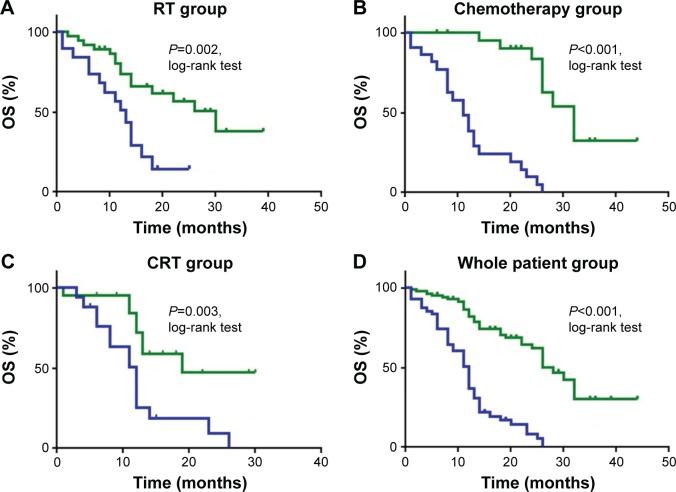
High expression of sCTLA-4 after therapy indicated significant longer OS and progression-free survival (PFS) (all <0.01). Among all subgroups, sCTLA-4 levels after therapies were found to be significantly higher than that of 1 day before, which was also negatively correlated with tumor node metastasis stage and lymph node metastasis (all <0.05). Multivariate analysis revealed that sCTLA-4 level was a strong independent prognostic factor for OS and PFS (all <0.05).
CONCLUSION
Our data demonstrated the favorable prognostic significance of sCTLA-4 and may lead to the development of new immunotherapy options for cancer patients.
目的
可溶性细胞毒性T淋巴细胞抗原4(sCTLA-4)是CTLA-4的异构体之一,被发现对下调T细胞反应中CTLA-4的负信号至关重要。与其经典的免疫抑制作用相反,其免疫调节功能可能较为复杂。然而,sCTLA-4对免疫调节的临床意义以及在癌症治疗中的变化尚未阐明。我们推测sCTLA-4的水平可能影响癌症预后的结果。
患者与方法
测量了141例局部晚期和晚期癌症患者治疗前后血清sCTLA-4浓度,并进行了生存分析。计算总生存期(OS)的风险比和95%置信区间。根据所有患者sCTLA-4水平的中位数确定临界值。
结果
治疗后sCTLA-4高表达表明OS和无进展生存期(PFS)显著延长(均<0.01)。在所有亚组中,发现治疗后sCTLA-4水平显著高于治疗前1天,且与肿瘤淋巴结转移分期和淋巴结转移呈负相关(均<0.05)。多变量分析显示,sCTLA-4水平是OS和PFS的强有力独立预后因素(均<0.05)。
结论
我们的数据证明了sCTLA-4具有良好的预后意义,并可能为癌症患者带来新的免疫治疗选择的发展。

 Zotero 插件