
PRISM 3:从微生物基因组中扩展预测天然产物化学结构。
PRISM 3: expanded prediction of natural product chemical structures from microbial genomes.
机构信息
Department of Biochemistry and Biomedical Sciences, Michael G. DeGroote Institute for Infectious Disease Research, McMaster University, Hamilton, ON, L8S 4K1, Canada.
Department of Chemistry and Chemical Biology, Michael G. DeGroote Institute for Infectious Disease Research, McMaster University, Hamilton, ON, L8S 4K1, Canada.
出版信息
Nucleic Acids Res. 2017 Jul 3;45(W1):W49-W54. doi: 10.1093/nar/gkx320.
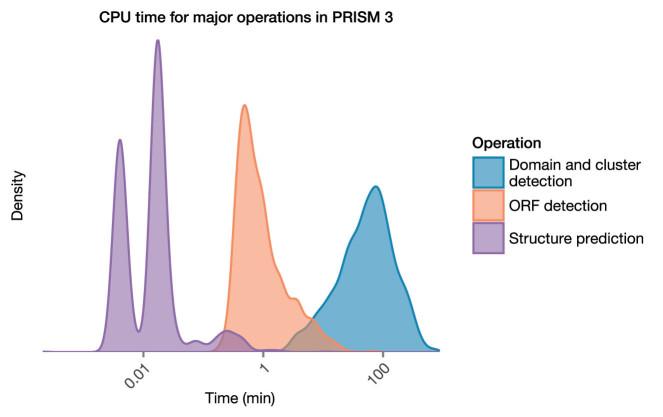
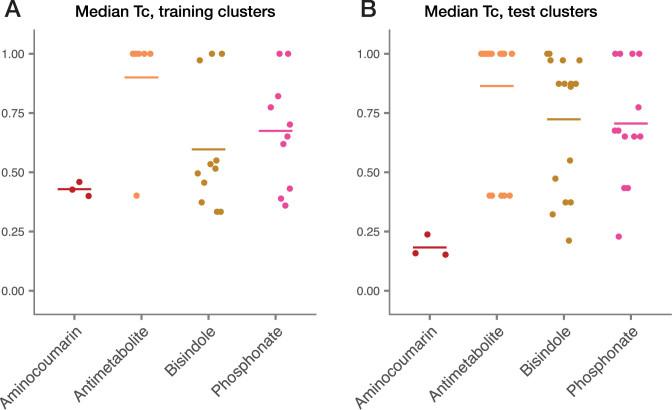
Microbial natural products represent a rich resource of pharmaceutically and industrially important compounds. Genome sequencing has revealed that the majority of natural products remain undiscovered, and computational methods to connect biosynthetic gene clusters to their corresponding natural products therefore have the potential to revitalize natural product discovery. Previously, we described PRediction Informatics for Secondary Metabolomes (PRISM), a combinatorial approach to chemical structure prediction for genetically encoded nonribosomal peptides and type I and II polyketides. Here, we present a ground-up rewrite of the PRISM structure prediction algorithm to derive prediction of natural products arising from non-modular biosynthetic paradigms. Within this new version, PRISM 3, natural product scaffolds are modeled as chemical graphs, permitting structure prediction for aminocoumarins, antimetabolites, bisindoles and phosphonate natural products, and building upon the addition of ribosomally synthesized and post-translationally modified peptides. Further, with the addition of cluster detection for 11 new cluster types, PRISM 3 expands to detect 22 distinct natural product cluster types. Other major modifications to PRISM include improved sequence input and ORF detection, user-friendliness and output. Distribution of PRISM 3 over a 300-core server grid improves the speed and capacity of the web application. PRISM 3 is available at http://magarveylab.ca/prism/.
微生物天然产物是具有重要药用和工业价值的化合物的丰富资源。基因组测序表明,大多数天然产物仍未被发现,因此将生物合成基因簇与相应天然产物联系起来的计算方法有可能使天然产物的发现重焕生机。此前,我们描述了用于次级代谢产物的预测信息学(PRediction Informatics for Secondary Metabolomes,PRISM),这是一种用于遗传编码非核糖体肽和 I 型和 II 型聚酮化合物的化学结构预测的组合方法。在这里,我们对 PRISM 结构预测算法进行了全面重写,以衍生出非模块化生物合成范例产生的天然产物的预测。在这个新版本中,PRISM 3 将天然产物支架建模为化学图,从而能够对氨基香豆素、抗代谢物、双吲哚和膦酸天然产物进行结构预测,并在此基础上增加了核糖体合成和翻译后修饰的肽。此外,通过添加 11 种新簇类型的簇检测,PRISM 3 扩展到检测 22 种不同的天然产物簇类型。PRISM 的其他主要修改包括改进的序列输入和 ORF 检测、用户友好性和输出。在 300 核服务器网格上分发 PRISM 3 提高了网络应用程序的速度和容量。PRISM 3 可在 http://magarveylab.ca/prism/ 获得。

 Zotero 插件