
实体瘤中PD-L1的预后意义:一项更新的荟萃分析。
Prognostic significance of PD-L1 in solid tumor: An updated meta-analysis.
作者信息
Wang Qianqian, Liu Fang, Liu Lei
机构信息
Laboratory of Molecular Diagnosis of Cancer Cancer Center, State Key Laboratory of Biotherapy, West China Hospital, Sichuan University, Chengdu, Sichuan, China.
出版信息
Medicine (Baltimore). 2017 May;96(18):e6369. doi: 10.1097/MD.0000000000006369.
BACKGROUND
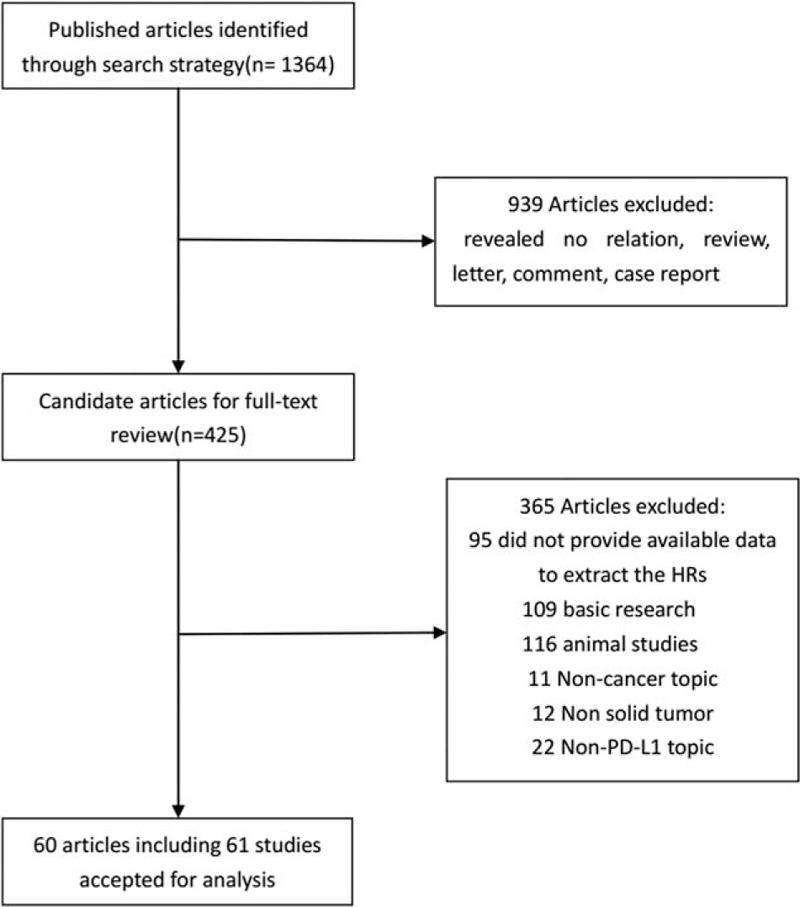
An increasing number of studies have examined the ability of programmed death-ligand 1 (PD-L1) to function as a marker for tumor prognosis. However, whether PD-L1 expression is a prognostic factor for the poor outcomes in many human cancers remains controversial. This study aims to investigate the prognostic role of PD-L1 expression through a meta-analysis update of 60 studies.
METHODS
The studies were identified by searching PubMed, Embase, Google Scholar, and Cochrane Library, and were assessed by further quality evaluation. The pooled hazard ratios (HRs) with 95% confidence intervals (CIs) for total and stratified analyses were calculated to investigate the association between the PD-L1 expression and the overall (OS) and disease-free (DFS) or progression-free survivals (PFS) of cancer patients. Heterogeneity and publication bias were also investigated.
RESULTS
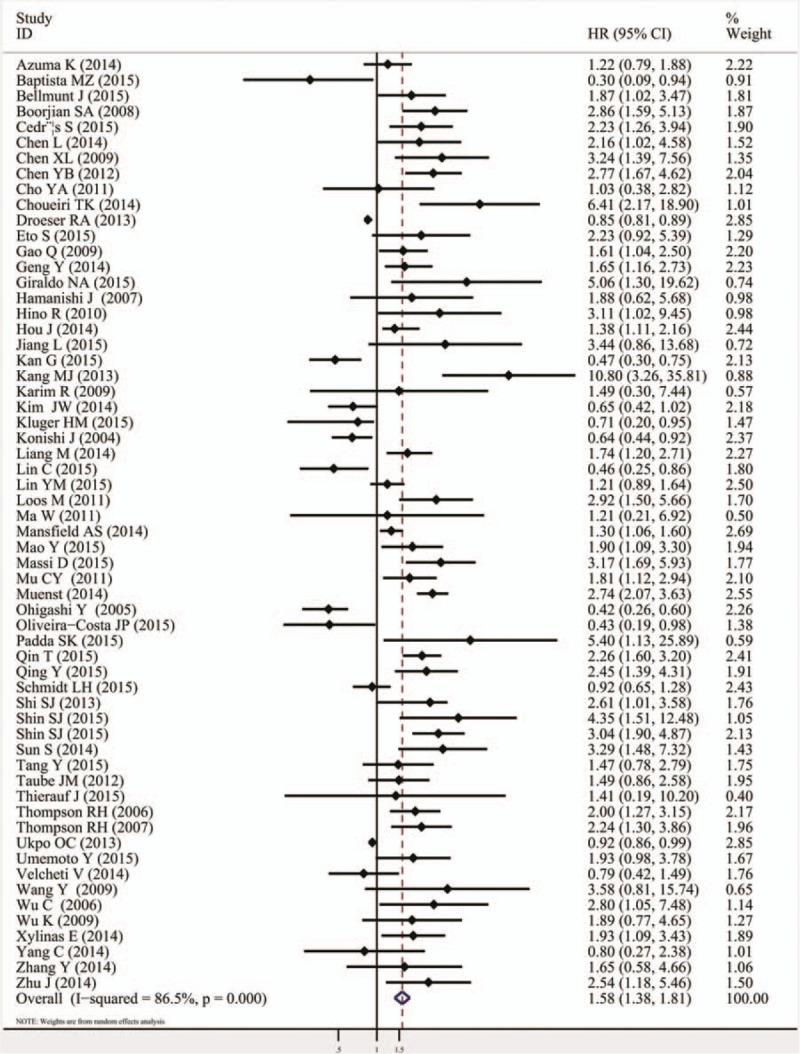
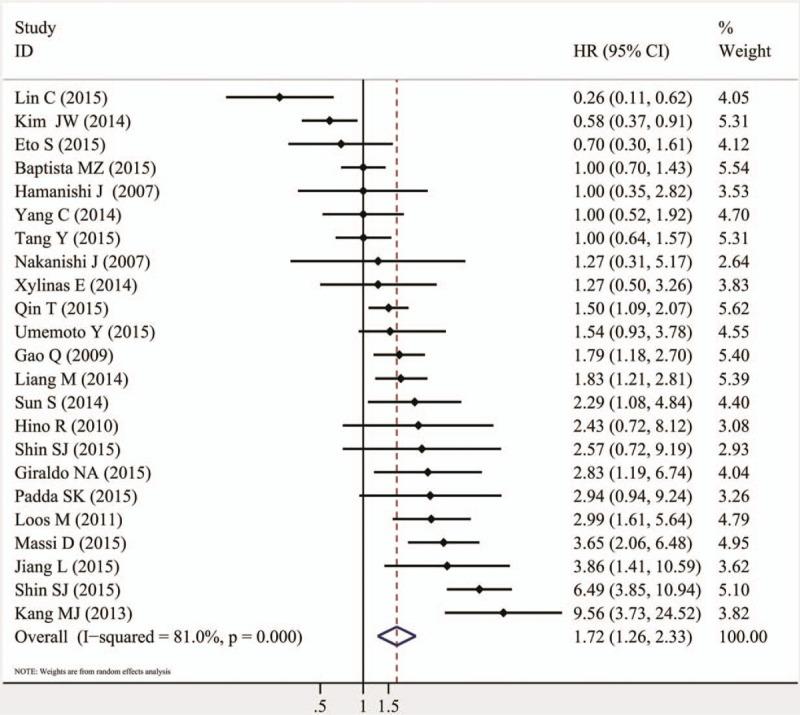
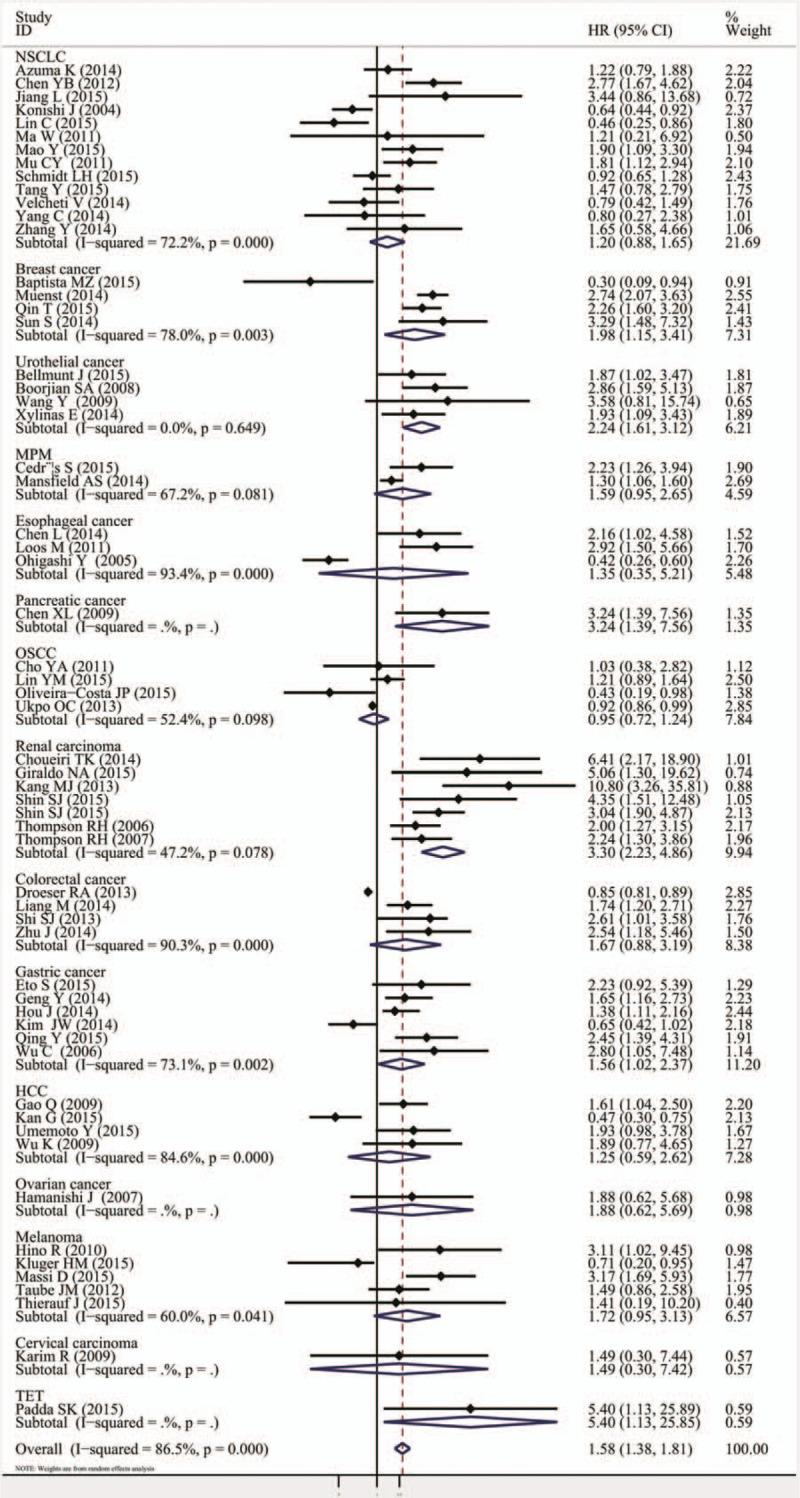
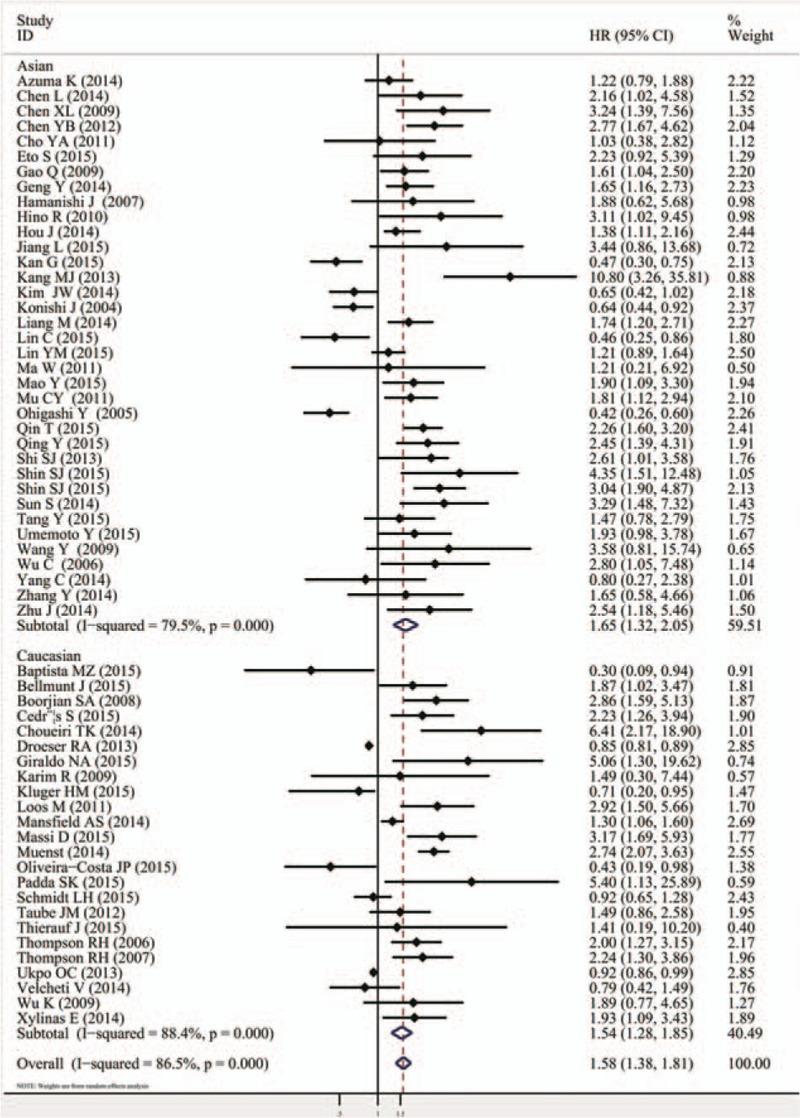
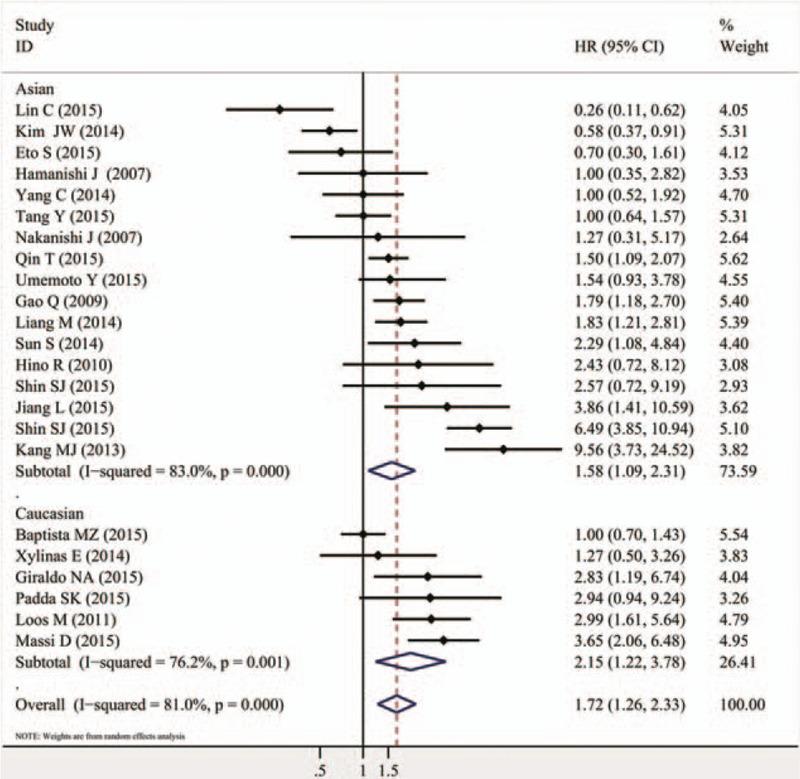
The results indicated that PD-L1 overexpression can predict a poor OS (HR = 1.58, 95% CI = 1.38-1.81, P <.000) and DFS/PFS (HR = 1.72, 95% CI = 1.26-2.33, P = .001). Subgroup analyses showed that PD-L1 overexpression was significantly related to the poor OS in patients with breast (HR = 1.98, 95% CI = 1.15-3.41, P = .014), urothelial (HR = 2.24, 95% CI = 1.61-3.12, P <.000), renal (HR = 3.30, 95% CI = 2.23-4.86, P <.000), and gastric cancers (HR = 1.56, 95% CI = 1.02-2.37, P = .040). Furthermore, PD-L1 overexpresion was significantly associated with poor DFS/PFS in patients with hepatocellular carcinoma (HCC) (HR = 1.72, 95% CI = 1.21-2.46, P = .003), melanoma (HR = 3.39, 95% CI = 2.02-5.69, P <.000), and renal carcinoma, (HR = 5.04, 95% CI = 2.87-8.86, P <.000). The adverse prognostic impact of PD-L1 was observed in patients of different ethnicities.
CONCLUSIONS
The findings of this meta-analysis suggest the correlation of PD-L1 overexpression with worse OS in patients with solid tumors. However, the correlations differed according to tumor types.
背景
越来越多的研究探讨了程序性死亡配体1(PD-L1)作为肿瘤预后标志物的能力。然而,PD-L1表达是否是许多人类癌症不良预后的一个因素仍存在争议。本研究旨在通过对60项研究的荟萃分析更新来调查PD-L1表达的预后作用。
方法
通过检索PubMed、Embase、谷歌学术和考克兰图书馆来识别研究,并通过进一步的质量评估进行评价。计算总分析和分层分析的合并风险比(HR)及95%置信区间(CI),以研究PD-L1表达与癌症患者总生存期(OS)、无病生存期(DFS)或无进展生存期(PFS)之间的关联。还调查了异质性和发表偏倚。
结果
结果表明,PD-L1过表达可预测较差的OS(HR = 1.58,95%CI = 1.38 - 1.81,P <.000)和DFS/PFS(HR = 1.72,95%CI = 1.26 - 2.33,P =.001)。亚组分析显示,PD-L1过表达与乳腺癌(HR = 1.98,95%CI = 1.15 - 3.41,P =.014)、尿路上皮癌(HR = 2.24,95%CI = 1.61 - 3.12,P <.000)、肾癌(HR = 3.30,95%CI = 2.23 - 4.86,P <.000)和胃癌(HR = 1.56,95%CI = 1.02 - 2.37,P =.040)患者较差的OS显著相关。此外,PD-L1过表达与肝细胞癌(HCC)(HR = 1.72,95%CI = 1.21 - 2.46,P =.003)、黑色素瘤(HR = 3.39,95%CI = 2.02 - 5.69,P <.000)和肾癌(HR = 5.04,95%CI = 2.87 - 8.86,P <.000)患者较差的DFS/PFS显著相关。在不同种族的患者中均观察到PD-L1的不良预后影响。
结论
这项荟萃分析的结果表明,PD-L1过表达与实体瘤患者较差的OS相关。然而,这种相关性因肿瘤类型而异。


 Zotero 插件