
肝细胞癌患者程序性细胞死亡配体 1(PD-L1)的临床病理意义和预后价值:一项荟萃分析。
Clinicopathologic Significance and Prognostic Value of Programmed Cell Death Ligand 1 (PD-L1) in Patients With Hepatocellular Carcinoma: A Meta-Analysis.
机构信息
Department of Hepatobiliary and Pancreatic Surgery, Zhongnan Hospital of Wuhan University, Wuhan, China.
Department of Evidence-Based Medicine and Clinical Epidemiology, Center for Evidence-Based and Translational Medicine, Second Clinical College of Wuhan University, Zhongnan Hospital of Wuhan University, Wuhan, China.
出版信息
Front Immunol. 2018 Sep 11;9:2077. doi: 10.3389/fimmu.2018.02077. eCollection 2018.
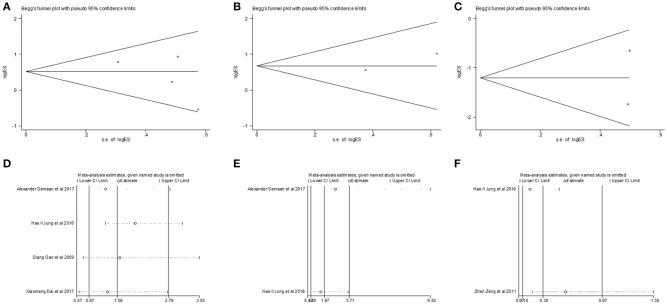
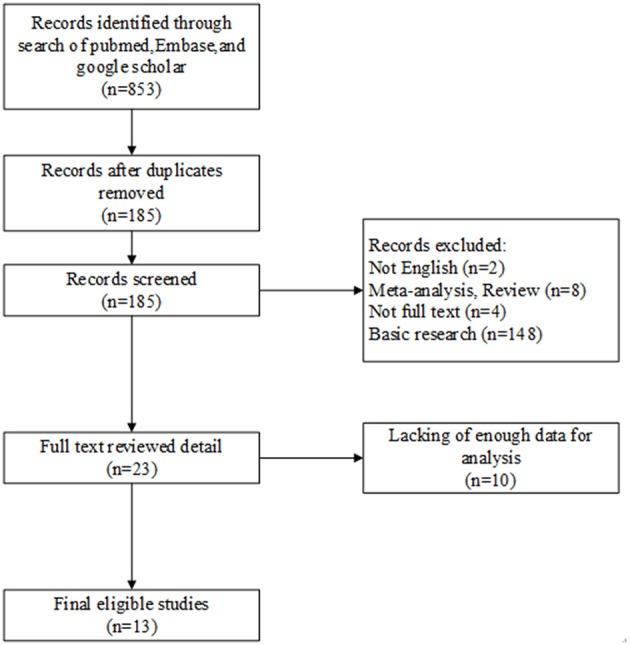
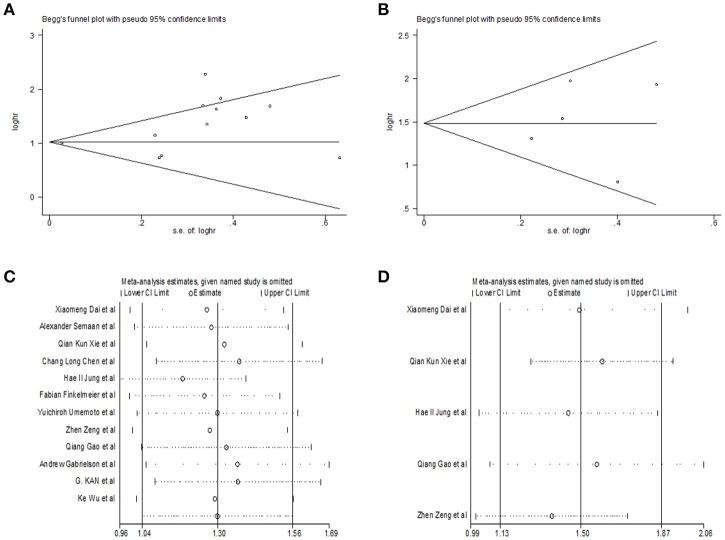
There is still a dispute over an issue of the clinical pathology and prognostic of programmed cell death ligand 1 (PD-L1) in hepatocellular carcinoma (HCC) patients. Here, we undertook this meta-analysis to survey the conceivable role of PD-L1 in HCC. We searched databases like MEDLINE, EMBASE, and Google Scholar for relevant studies published in English up to February 13, 2018. We implemented the appraisal of the eligible studies according to the choice criterion. We used Hazard ratio (HR) and its 95% confidence interval (95% CI) to evaluate the prognostic role of PD-L1 for overall survival (OS), disease-free survival (DFS), and recurrence-free survival (RFS). Odds ratio (OR) and the corresponding 95% CI were calculated to evaluate the connection between PD-L1 and clinicopathological features. Publication bias was tested. 13 studies, which published range from 2009 to 2017 were contained in this meta-analysis, involving 1,843 patients with HCC. The results indicated that high PD-L1 could predict shorter OS (HR = 1.57, 95% CI: 1.09-2.27, < 0.00001) as well as poorer DFS (HR = 2.07, 95% CI: 1.20-3.58, = 0.009). Additionally, high PD-L1 expression was correlated to liver cirrhosis (OR = 1.66, 95% CI: 1.10-2.50, = 0.02), poorer tumor Barcelona Clinical Liver Cancer (BCLC) stage (OR = 0.30, 95% CI: 0.10-0.88, = 0.03) and portal vein invasion (OR = 1.96, 95% CI: 1.04-3.68, = 0.04), but had no correlation with age, gender, tumor size, number of tumors, AFP, vascular invasion, HBVs-Ag, Anti-HCV, differentiation or TNM stage. Besides, no significant publication bias was found among these identified studies. The meta-analysis suggested that PD-L1 overexpression could foresee worse OS and DFS in HCC. Moreover, the PD-L1 expression has to bear on liver cirrhosis, portal vein invasion, and BCLC stage.
关于程序性死亡配体 1(PD-L1)在肝细胞癌(HCC)患者中的临床病理学和预后仍存在争议。在这里,我们进行了这项荟萃分析,以调查 PD-L1 在 HCC 中的可能作用。我们在 MEDLINE、EMBASE 和 Google Scholar 等数据库中搜索了截至 2018 年 2 月 13 日发表的英文相关研究。我们根据选择标准评估了合格研究的质量。我们使用风险比(HR)及其 95%置信区间(95%CI)来评估 PD-L1 对总生存期(OS)、无病生存期(DFS)和无复发生存期(RFS)的预后作用。计算比值比(OR)及其相应的 95%CI 以评估 PD-L1 与临床病理特征之间的关系。检测了发表偏倚。这项荟萃分析纳入了 13 项研究,这些研究发表于 2009 年至 2017 年之间,共涉及 1843 例 HCC 患者。结果表明,PD-L1 高表达可预测 OS 更短(HR=1.57,95%CI:1.09-2.27,<0.00001)和 DFS 更差(HR=2.07,95%CI:1.20-3.58,=0.009)。此外,高 PD-L1 表达与肝硬化(OR=1.66,95%CI:1.10-2.50,=0.02)、较差的巴塞罗那临床肝癌(BCLC)分期(OR=0.30,95%CI:0.10-0.88,=0.03)和门静脉侵犯(OR=1.96,95%CI:1.04-3.68,=0.04)相关,但与年龄、性别、肿瘤大小、肿瘤数量、AFP、血管侵犯、HBVs-Ag、Anti-HCV、分化或 TNM 分期无关。此外,在这些确定的研究中没有发现明显的发表偏倚。这项荟萃分析表明,PD-L1 过表达可预测 HCC 患者的 OS 和 DFS 更差。此外,PD-L1 的表达与肝硬化、门静脉侵犯和 BCLC 分期有关。


 Zotero 插件