
在对厌氧环境的实验适应过程中的动态变化与遗传多样化
Dynamics and genetic diversification of during experimental adaptation to an anaerobic environment.
作者信息
Finn Thomas J, Shewaramani Sonal, Leahy Sinead C, Janssen Peter H, Moon Christina D
机构信息
Grasslands Research Centre, AgResearch Ltd, Palmerston North, New Zealand.
New Zealand Institute for Advanced Study, Massey University, Auckland, New Zealand.
出版信息
PeerJ. 2017 May 3;5:e3244. doi: 10.7717/peerj.3244. eCollection 2017.
BACKGROUND
Many bacteria are facultative anaerobes, and can proliferate in both anoxic and oxic environments. Under anaerobic conditions, fermentation is the primary means of energy generation in contrast to respiration. Furthermore, the rates and spectra of spontaneous mutations that arise during anaerobic growth differ to those under aerobic growth. A long-term selection experiment was undertaken to investigate the genetic changes that underpin how the facultative anaerobe, , adapts to anaerobic environments.
METHODS
Twenty-one populations of REL4536, an aerobically evolved 10,000th generation descendent of the B strain, REL606, were established from a clonal ancestral culture. These were serially sub-cultured for 2,000 generations in a defined minimal glucose medium in strict aerobic and strict anaerobic environments, as well as in a treatment that fluctuated between the two environments. The competitive fitness of the evolving lineages was assessed at approximately 0, 1,000 and 2,000 generations, in both the environment of selection and the alternative environment. Whole genome re-sequencing was performed on random colonies from all lineages after 2,000-generations. Mutations were identified relative to the ancestral genome, and based on the extent of parallelism, traits that were likely to have contributed towards adaptation were inferred.
RESULTS
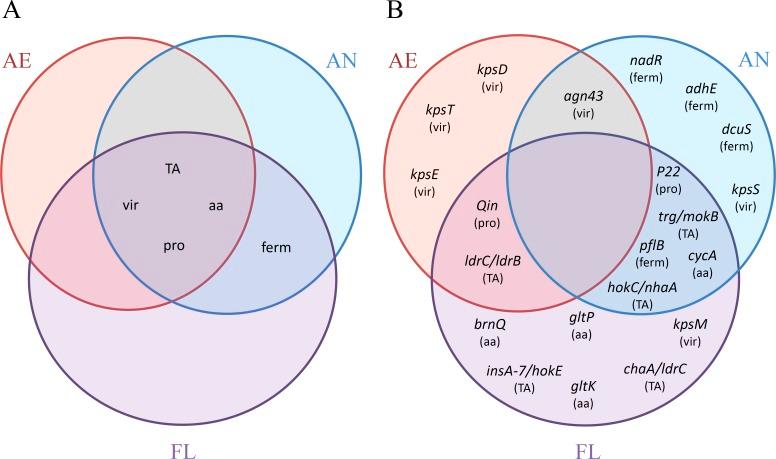
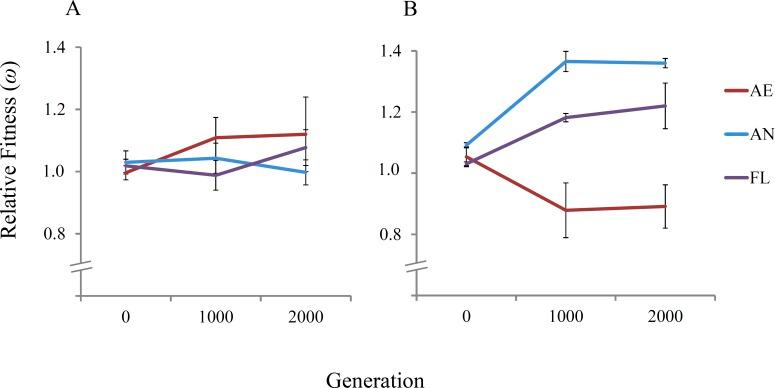
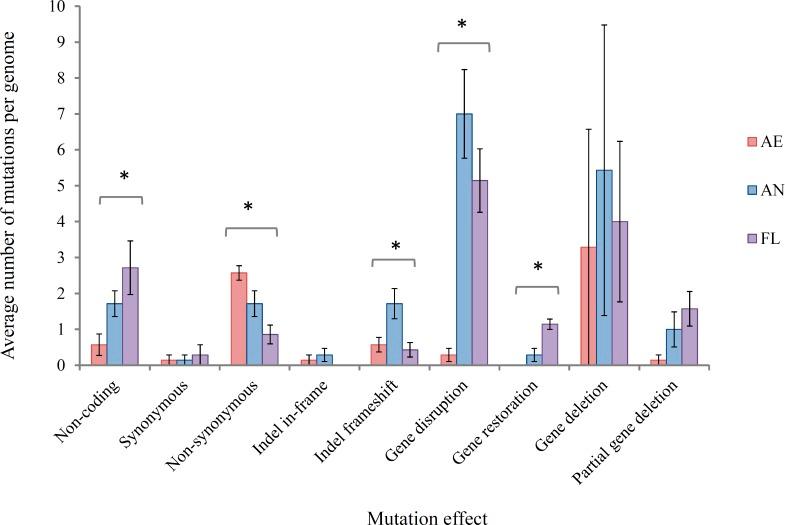
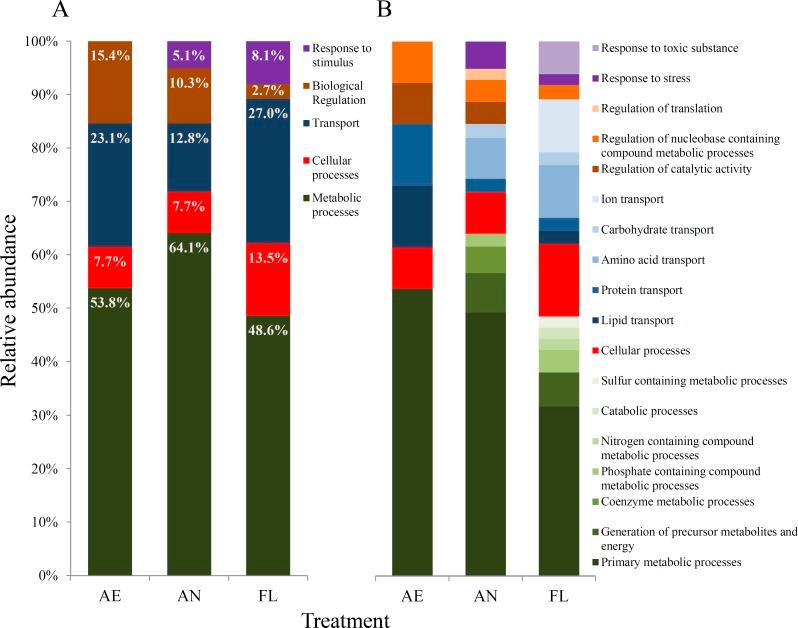
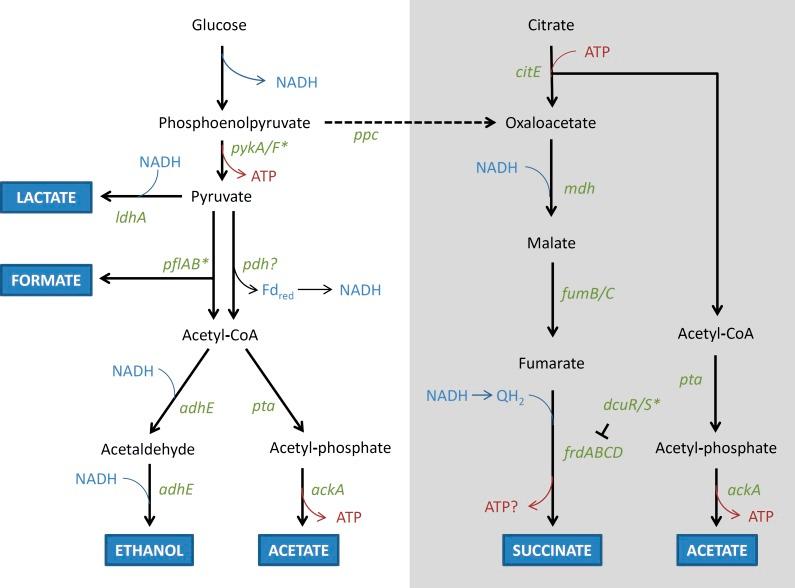
There were increases in fitness relative to the ancestor among anaerobically evolved lineages when tested in the anaerobic environment, but no increases were found in the aerobic environment. For lineages that had evolved under the fluctuating regime, relative fitness increased significantly in the anaerobic environment, but did not increase in the aerobic environment. The aerobically-evolved lineages did not increase in fitness when tested in either the aerobic or anaerobic environments. The strictly anaerobic lineages adapted more rapidly to the anaerobic environment than did the fluctuating lineages. Two main strategies appeared to predominate during adaptation to the anaerobic environment: modification of energy generation pathways, and inactivation of non-essential functions. Fermentation pathways appeared to alter through selection for mutations in genes such as , and . Mutations were frequently identified in genes for presumably dispensable functions such as toxin-antitoxin systems, prophages, virulence and amino acid transport. Adaptation of the fluctuating lineages to the anaerobic environments involved mutations affecting traits similar to those observed in the anaerobically evolved lineages.
DISCUSSION
There appeared to be strong selective pressure for activities that conferred cell yield advantages during anaerobic growth, which include restoring activities that had previously been inactivated under long-term continuous aerobic evolution of the ancestor.
背景
许多细菌是兼性厌氧菌,能够在缺氧和有氧环境中增殖。在厌氧条件下,与呼吸作用相比,发酵是产生能量的主要方式。此外,厌氧生长过程中出现的自发突变的速率和谱与有氧生长时不同。开展了一项长期选择实验,以研究兼性厌氧菌适应厌氧环境背后的遗传变化。
方法
从克隆的祖先培养物中建立了21个REL4536群体,REL4536是B菌株REL606经过10000代有氧进化后的后代。将这些群体在限定的最低葡萄糖培养基中,在严格的有氧和严格的厌氧环境中,以及在两种环境之间波动的处理条件下连续传代培养2000代。在大约第0、1000和2000代时,在选择环境和替代环境中评估进化谱系的竞争适应性。在2000代后,对所有谱系的随机菌落进行全基因组重测序。相对于祖先基因组鉴定突变,并根据平行程度推断可能有助于适应的性状。
结果
在厌氧环境中测试时,厌氧进化谱系相对于祖先的适应性有所提高,但在有氧环境中未发现提高。对于在波动条件下进化的谱系,在厌氧环境中相对适应性显著提高,但在有氧环境中没有提高。在有氧或厌氧环境中测试时,有氧进化谱系的适应性没有提高。严格厌氧谱系比波动谱系更快地适应厌氧环境。在适应厌氧环境的过程中,似乎有两种主要策略占主导地位:能量产生途径的改变和非必需功能的失活。发酵途径似乎通过选择如[具体基因1]、[具体基因2]等基因中的突变而发生改变。在可能具有可 dispensable 功能的基因中经常鉴定到突变,如毒素-抗毒素系统、原噬菌体、毒力和氨基酸转运相关基因。波动谱系对厌氧环境的适应涉及影响与厌氧进化谱系中观察到的性状相似的突变。
讨论
在厌氧生长过程中,对于赋予细胞产量优势的活动似乎存在强大的选择压力;这包括恢复在祖先长期连续有氧进化过程中先前失活的活动。

 Zotero 插件