
在恒定环境中产生的新有益突变和突变谱系的进化动态和结构后果。
Evolutionary dynamics and structural consequences of de novo beneficial mutations and mutant lineages arising in a constant environment.
机构信息
Division of Biological Sciences, The University of Montana, Missoula, MT, 59812, USA.
Department of Genetics, Stanford University School of Medicine, Stanford, CA, 94305-5120, USA.
出版信息
BMC Biol. 2021 Feb 4;19(1):20. doi: 10.1186/s12915-021-00954-0.
BACKGROUND
Microbial evolution experiments can be used to study the tempo and dynamics of evolutionary change in asexual populations, founded from single clones and growing into large populations with multiple clonal lineages. High-throughput sequencing can be used to catalog de novo mutations as potential targets of selection, determine in which lineages they arise, and track the fates of those lineages. Here, we describe a long-term experimental evolution study to identify targets of selection and to determine when, where, and how often those targets are hit.
RESULTS
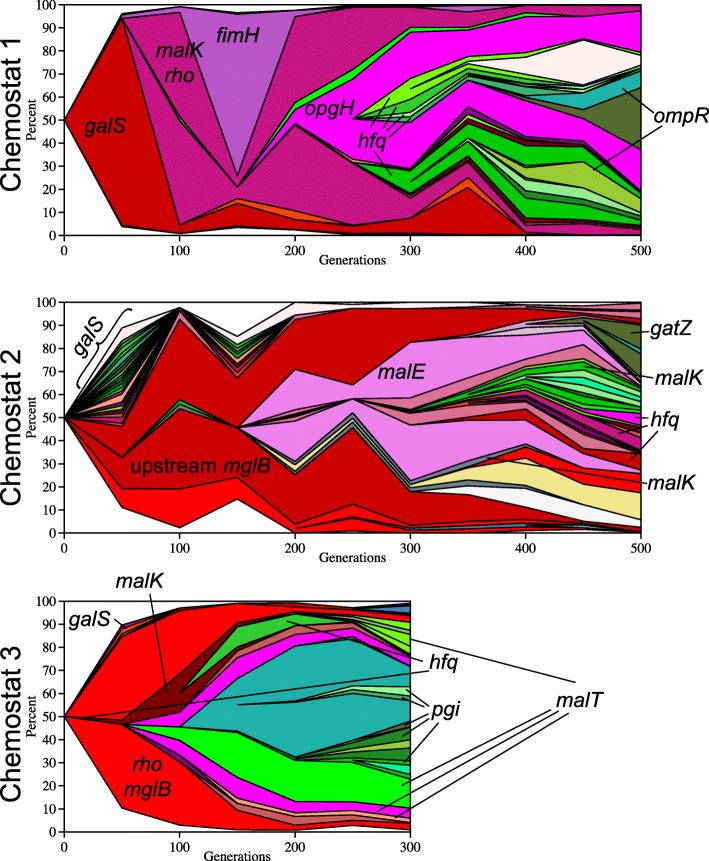
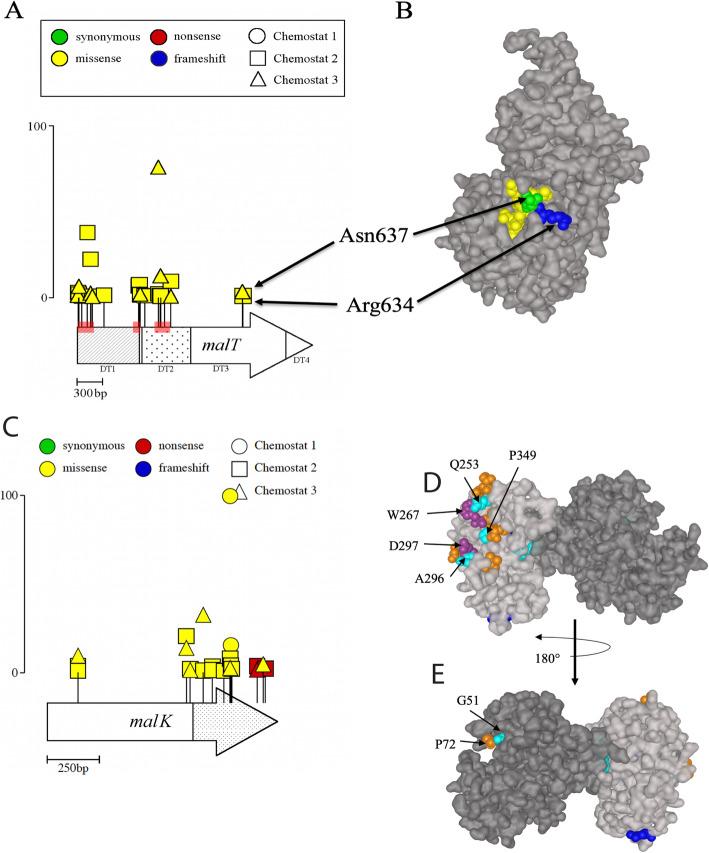
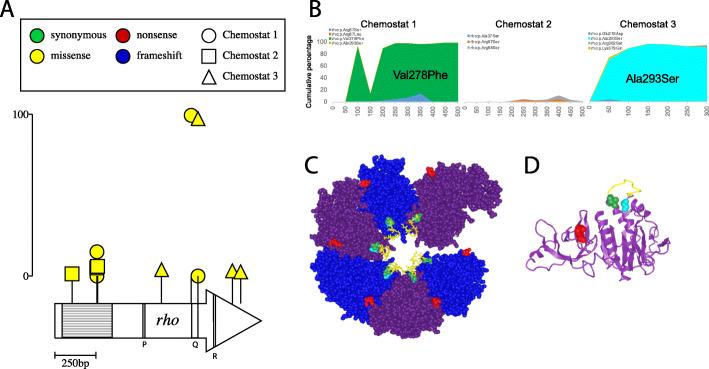
We experimentally evolved replicate Escherichia coli populations that originated from a mutator/nonsense suppressor ancestor under glucose limitation for between 300 and 500 generations. Whole-genome, whole-population sequencing enabled us to catalog 3346 de novo mutations that reached > 1% frequency. We sequenced the genomes of 96 clones from each population when allelic diversity was greatest in order to establish whether mutations were in the same or different lineages and to depict lineage dynamics. Operon-specific mutations that enhance glucose uptake were the first to rise to high frequency, followed by global regulatory mutations. Mutations related to energy conservation, membrane biogenesis, and mitigating the impact of nonsense mutations, both ancestral and derived, arose later. New alleles were confined to relatively few loci, with many instances of identical mutations arising independently in multiple lineages, among and within replicate populations. However, most never exceeded 10% in frequency and were at a lower frequency at the end of the experiment than at their maxima, indicating clonal interference. Many alleles mapped to key structures within the proteins that they mutated, providing insight into their functional consequences.
CONCLUSIONS
Overall, we find that when mutational input is increased by an ancestral defect in DNA repair, the spectrum of high-frequency beneficial mutations in a simple, constant resource-limited environment is narrow, resulting in extreme parallelism where many adaptive mutations arise but few ever go to fixation.
背景
微生物进化实验可用于研究无性种群中进化变化的节奏和动态,这些种群由单个克隆体创立,并在具有多个克隆谱系的大群体中生长。高通量测序可用于编目新出现的突变作为潜在的选择靶点,确定它们在哪些谱系中出现,并追踪这些谱系的命运。在这里,我们描述了一项长期的实验进化研究,以确定选择的靶点,并确定何时、何地以及经常发生这些靶点。
结果
我们对复制的大肠杆菌种群进行了实验进化,这些种群起源于葡萄糖限制下的突变异种/无义抑制子祖先,经历了 300 到 500 代的进化。全基因组、全种群测序使我们能够编目 3346 个达到 >1%频率的新出现突变。当群体中的等位基因多样性最大时,我们对每个群体的 96 个克隆进行了基因组测序,以确定突变是否在相同或不同的谱系中,并描绘谱系动态。增强葡萄糖摄取的操纵子特异性突变首先达到高频,其次是全局性调控突变。与能量守恒、膜生物发生以及减轻祖先和衍生的无义突变影响有关的突变则较晚出现。新等位基因局限于相对较少的基因座,许多实例的相同突变在多个谱系中独立出现,在群体内和群体间均有发生。然而,大多数突变的频率从未超过 10%,而且在实验结束时的频率低于其最大值,表明克隆干扰。许多等位基因映射到它们突变的蛋白质的关键结构内,提供了对其功能后果的深入了解。
结论
总的来说,我们发现,当突变输入因 DNA 修复的祖先缺陷而增加时,在简单、恒定的资源限制环境中,高频有益突变的范围很窄,导致极端的平行性,许多适应性突变出现,但很少有突变能固定下来。




 Zotero 插件