
硬化蛋白的循环水平而非 Dickkopf-1(DKK1)的循环水平与慢性肾脏病-矿物质和骨异常(CKD-MBD)的实验室指标相关。
Circulating levels of sclerostin but not DKK1 associate with laboratory parameters of CKD-MBD.
作者信息
Behets Geert J, Viaene Liesbeth, Meijers Björn, Blocki Frank, Brandenburg Vincent M, Verhulst Anja, D'Haese Patrick C, Evenepoel Pieter
机构信息
University of Antwerp, Dept. Biomedical Sciences, Laboratory of Pathophysiology, Wilrijk, Belgium.
KUL Leuven, Department of Immunology and Microbiology, Laboratory of Nephrology, Leuven, Belgium.
出版信息
PLoS One. 2017 May 11;12(5):e0176411. doi: 10.1371/journal.pone.0176411. eCollection 2017.
INTRODUCTION
Mounting evidence indicates that a disturbed Wnt-β-catenin signaling may be involved in the pathogenesis of chronic kidney disease-mineral and bone and mineral disorder (CKD-MBD). Data on the impact of CKD on circulating levels of the Wnt antagonists sclerostin and Dickkopf related protein 1 (DKK1) and the relationship with laboratory parameters of CKD-MBD are incomplete.
METHODS
We analyzed serum sclerostin and DKK1 in 308 patients across the stages of chronic kidney disease (kDOQI stage 1-2 n = 41; CKD stage 3 n = 54; CKD stage 4-5 n = 54; hemodialysis n = 100; peritoneal dialysis n = 59) as well as in 49 healthy controls. We investigated associations with demographics, renal function, parameters of mineral metabolism including 25(OH) vitamin D, 1,25(OH)2 vitamin D, biointact fibroblast growth factor 23 (FGF23), and parathyroid hormone (PTH), and bone turnover markers.
RESULTS
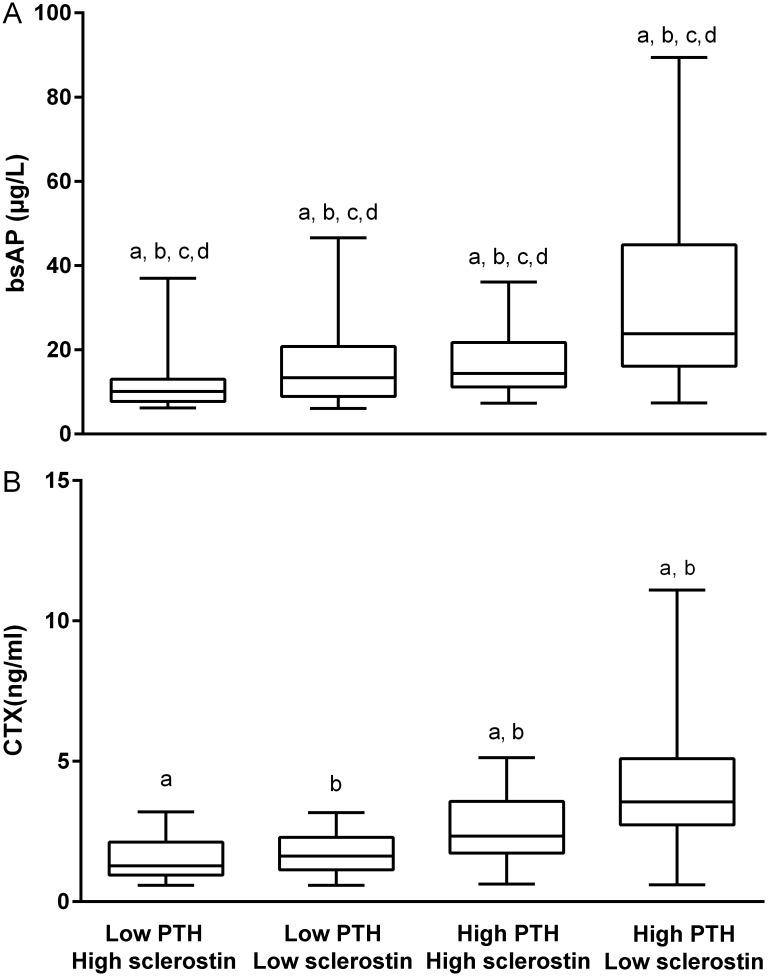
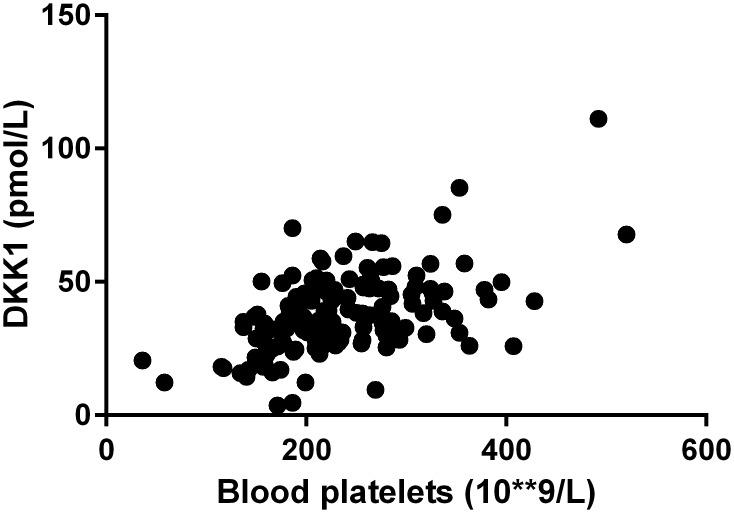
Serum sclerostin, but not DKK1, increases in more advanced stages of CKD and associates with PTH, phosphate, and 1,25(OH)2 vitamin D concentrations. Bone turnover markers are highest in hemodialysis patients presenting the combination of high PTH with low sclerostin level. Serum DKK1 levels are lower in CKD patients than in controls and are not associated with laboratory parameters of mineral metabolism. Interestingly, a direct association between DKK1 and platelet count was observed.
CONCLUSION
In CKD, serum levels of the Wnt inhibitors DKK1 and sclerostin are unrelated, indicating different sites of origin and/ or different regulatory mechanisms. Sclerostin, as opposed to DKK1, may qualify as a biomarker of CKD-MBD, particularly in dialysis patients. DKK1 serum levels, remarkably, correlate almost uniquely with blood platelet counts.
引言
越来越多的证据表明,Wnt-β-连环蛋白信号通路紊乱可能参与慢性肾脏病-矿物质和骨代谢紊乱(CKD-MBD)的发病机制。关于CKD对Wnt拮抗剂硬化蛋白和Dickkopf相关蛋白1(DKK1)循环水平的影响以及与CKD-MBD实验室参数之间关系的数据尚不完整。
方法
我们分析了308例慢性肾脏病各阶段患者(肾脏病预后质量倡议组织(kDOQI)1-2期n = 41;CKD 3期n = 54;CKD 4-5期n = 54;血液透析n = 100;腹膜透析n = 59)以及49名健康对照者的血清硬化蛋白和DKK1。我们研究了其与人口统计学、肾功能、矿物质代谢参数(包括25(OH)维生素D、1,25(OH)2维生素D、生物活性完整的成纤维细胞生长因子23(FGF23)和甲状旁腺激素(PTH))以及骨转换标志物之间的关联。
结果
血清硬化蛋白在CKD更晚期阶段升高,而DKK1未升高,且与PTH、磷酸盐和1,25(OH)2维生素D浓度相关。骨转换标志物在PTH高且硬化蛋白水平低的血液透析患者中最高。CKD患者的血清DKK1水平低于对照组,且与矿物质代谢实验室参数无关。有趣的是,观察到DKK1与血小板计数之间存在直接关联。
结论
在CKD中,Wnt抑制剂DKK1和硬化蛋白的血清水平无关,表明其起源部位不同和/或调节机制不同。与DKK1不同,硬化蛋白可能有资格作为CKD-MBD的生物标志物,尤其是在透析患者中。值得注意的是,DKK1血清水平几乎仅与血小板计数相关。

 Zotero 插件