
在接受有效治疗的HIV患者中,人体肠道固有淋巴细胞的特定区室分布发生了改变。
Compartment-specific distribution of human intestinal innate lymphoid cells is altered in HIV patients under effective therapy.
作者信息
Krämer Benjamin, Goeser Felix, Lutz Philipp, Glässner Andreas, Boesecke Christoph, Schwarze-Zander Carolynne, Kaczmarek Dominik, Nischalke Hans Dieter, Branchi Vittorio, Manekeller Steffen, Hüneburg Robert, van Bremen Tobias, Weismüller Tobias, Strassburg Christian P, Rockstroh Jürgen K, Spengler Ulrich, Nattermann Jacob
机构信息
Department of Internal Medicine I, University of Bonn, Bonn, Germany.
German Center for Infection Research (DZIF), Bonn, Germany.
出版信息
PLoS Pathog. 2017 May 15;13(5):e1006373. doi: 10.1371/journal.ppat.1006373. eCollection 2017 May.
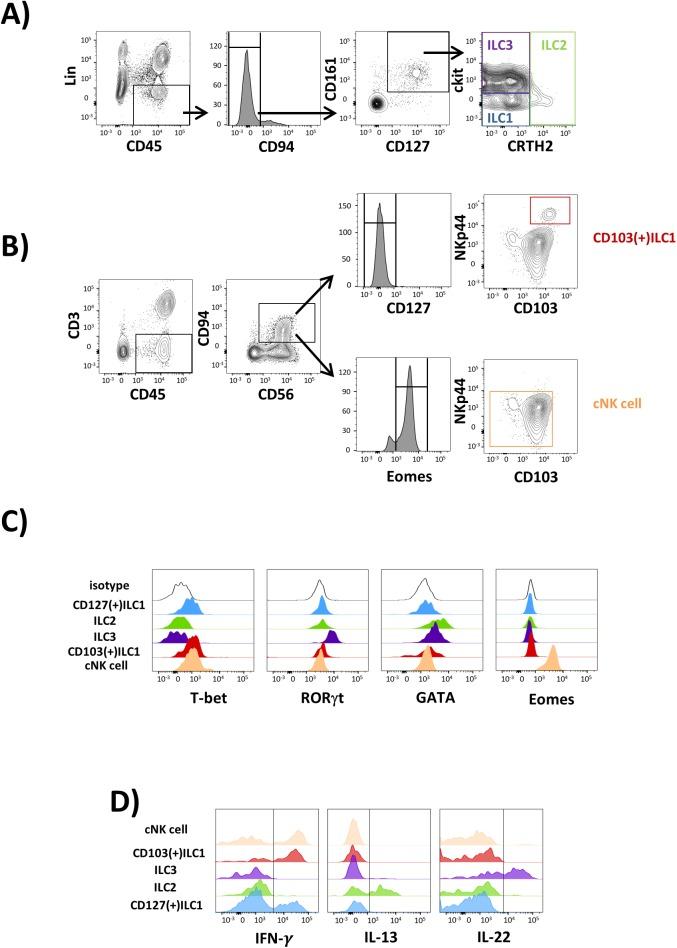
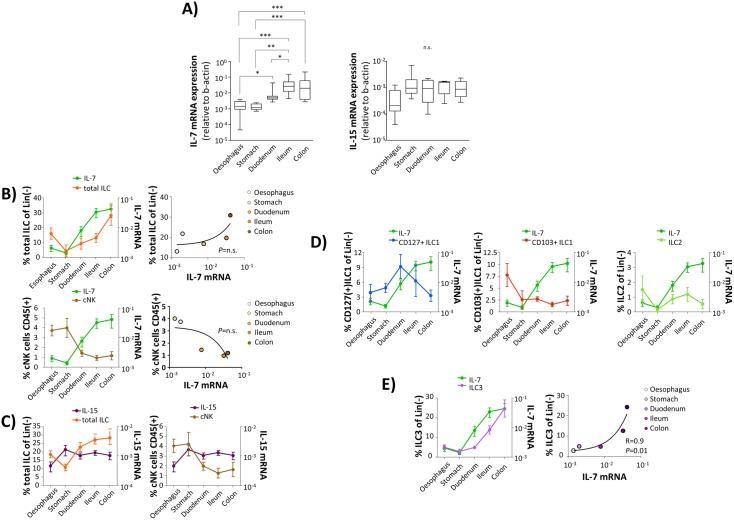
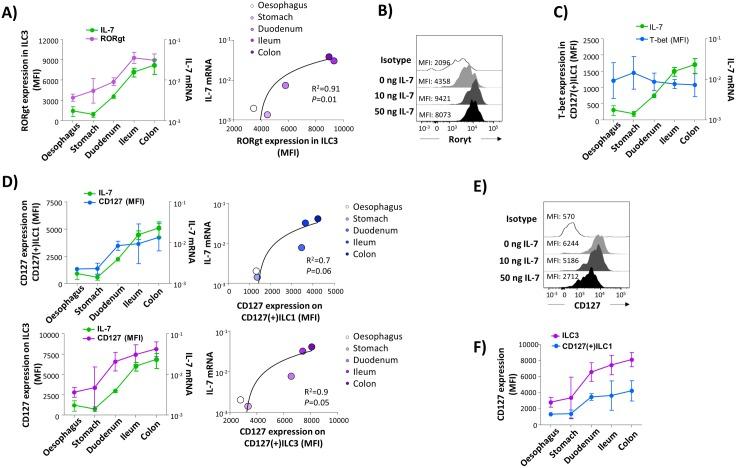
Innate lymphocyte cells (ILCs), a novel family of innate immune cells are considered to function as key orchestrators of immune defences at mucosal surfaces and to be crucial for maintaining an intact intestinal barrier. Accordingly, first data suggest depletion of ILCs to be involved in human immunodeficiency virus (HIV)-associated damage of the intestinal mucosa and subsequent microbial translocation. However, although ILCs are preferentially localized at mucosal surfaces, only little is known regarding distribution and function of ILCs in the human gastrointestinal tract. Here, we show that in HIV(-) individuals composition and functional capacity of intestinal ILCs is compartment-specific with group 1 ILCs representing the major fraction in the upper gastrointestinal (GI) tract, whereas ILC3 are the predominant population in ileum and colon, respectively. In addition, we present first data indicating that local cytokine concentrations, especially that of IL-7, might modulate composition of gut ILCs. Distribution of intestinal ILCs was significantly altered in HIV patients, who displayed decreased frequency of total ILCs in ileum and colon owing to reduced numbers of both CD127(+)ILC1 and ILC3. Of note, frequency of colonic ILC3 was inversely correlated with serum levels of I-FABP and sCD14, surrogate markers for loss of gut barrier integrity and microbial translocation, respectively. Both expression of the IL-7 receptor CD127 on ILCs as well as mucosal IL-7 mRNA levels were decreased in HIV(+) patients, especially in those parts of the GI tract with reduced ILC frequencies, suggesting that impaired IL-7 responses of ILCs might contribute to incomplete reconstitution of ILCs under effective anti-retroviral therapy. This is the first report comparing distribution and function of ILCs along the intestinal mucosa of the entire human gastrointestinal tract in HIV(+) and HIV(-) individuals.
固有淋巴细胞(ILCs)是一类新型的固有免疫细胞,被认为是黏膜表面免疫防御的关键协调者,对维持完整的肠道屏障至关重要。相应地,初步数据表明ILCs的耗竭与人类免疫缺陷病毒(HIV)相关的肠道黏膜损伤及随后的微生物易位有关。然而,尽管ILCs优先定位于黏膜表面,但关于其在人类胃肠道中的分布和功能却知之甚少。在此,我们表明,在HIV阴性个体中,肠道ILCs的组成和功能能力具有区域特异性,第1组ILCs是上胃肠道(GI)的主要部分,而ILC3分别是回肠和结肠中的主要群体。此外,我们还提供了初步数据,表明局部细胞因子浓度,尤其是IL-7的浓度,可能会调节肠道ILCs的组成。HIV患者肠道ILCs的分布发生了显著改变,由于CD127(+)ILC1和ILC3数量减少,回肠和结肠中总ILCs的频率降低。值得注意的是,结肠ILC3的频率与血清I-FABP水平和sCD14水平呈负相关,I-FABP和sCD14分别是肠道屏障完整性丧失和微生物易位的替代标志物。HIV阳性患者中,ILCs上IL-7受体CD127的表达以及黏膜IL-7 mRNA水平均降低,尤其是在ILCs频率降低的胃肠道部位,这表明ILCs的IL-7反应受损可能导致在有效的抗逆转录病毒治疗下ILCs的不完全重建。这是第一份比较HIV阳性和HIV阴性个体整个胃肠道肠道黏膜中ILCs分布和功能的报告。




 Zotero 插件