
染色质状态决定肿瘤特异性T细胞功能障碍和重编程。
Chromatin states define tumour-specific T cell dysfunction and reprogramming.
作者信息
Philip Mary, Fairchild Lauren, Sun Liping, Horste Ellen L, Camara Steven, Shakiba Mojdeh, Scott Andrew C, Viale Agnes, Lauer Peter, Merghoub Taha, Hellmann Matthew D, Wolchok Jedd D, Leslie Christina S, Schietinger Andrea
机构信息
Immunology Program, Memorial Sloan Kettering Cancer Center, New York, New York 10065, USA.
Computational Biology Program, Memorial Sloan Kettering Cancer Center, New York, New York 10065, USA.
出版信息
Nature. 2017 May 25;545(7655):452-456. doi: 10.1038/nature22367. Epub 2017 May 17.
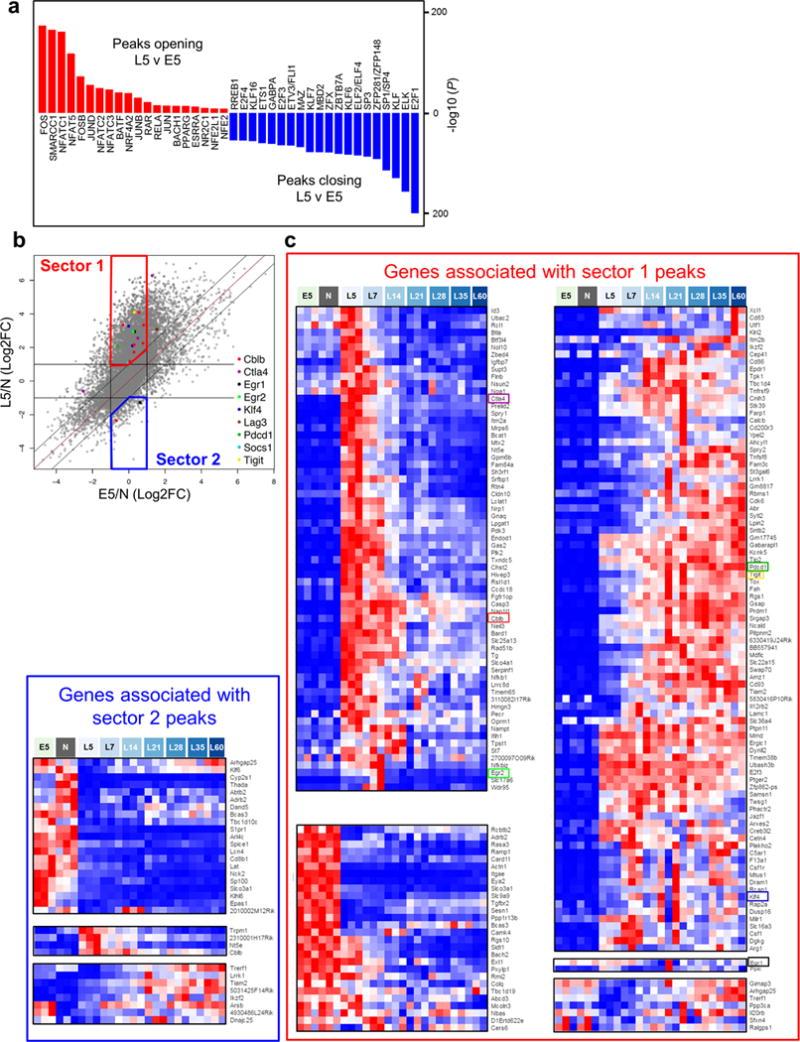
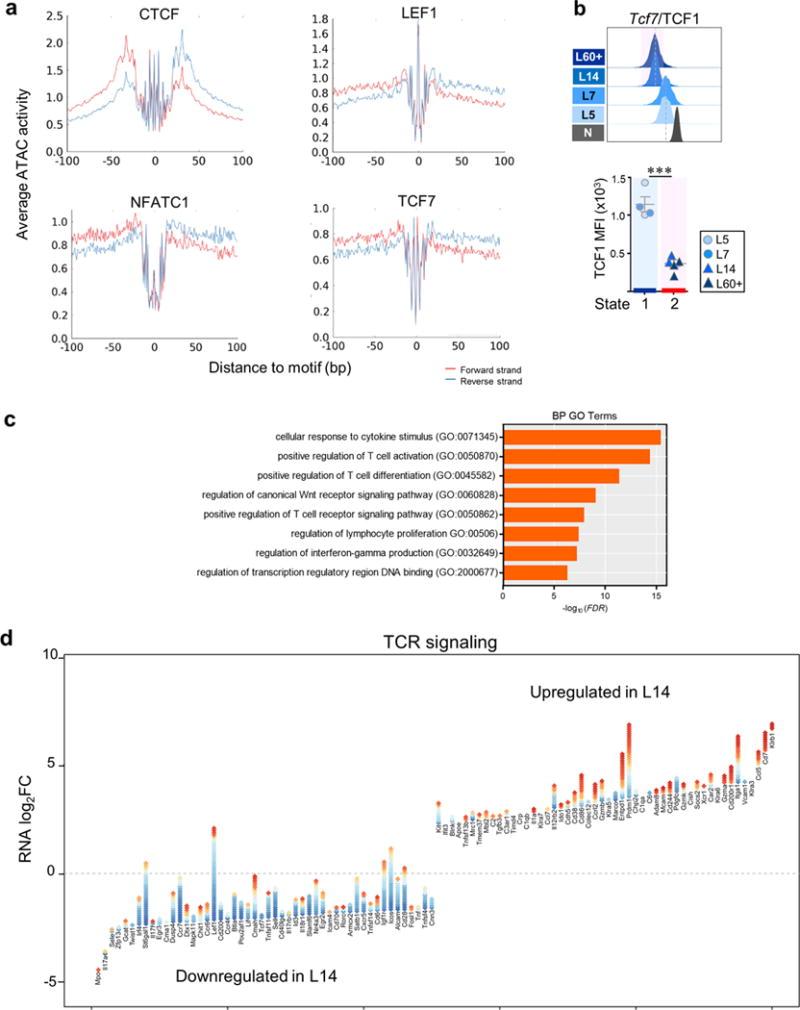
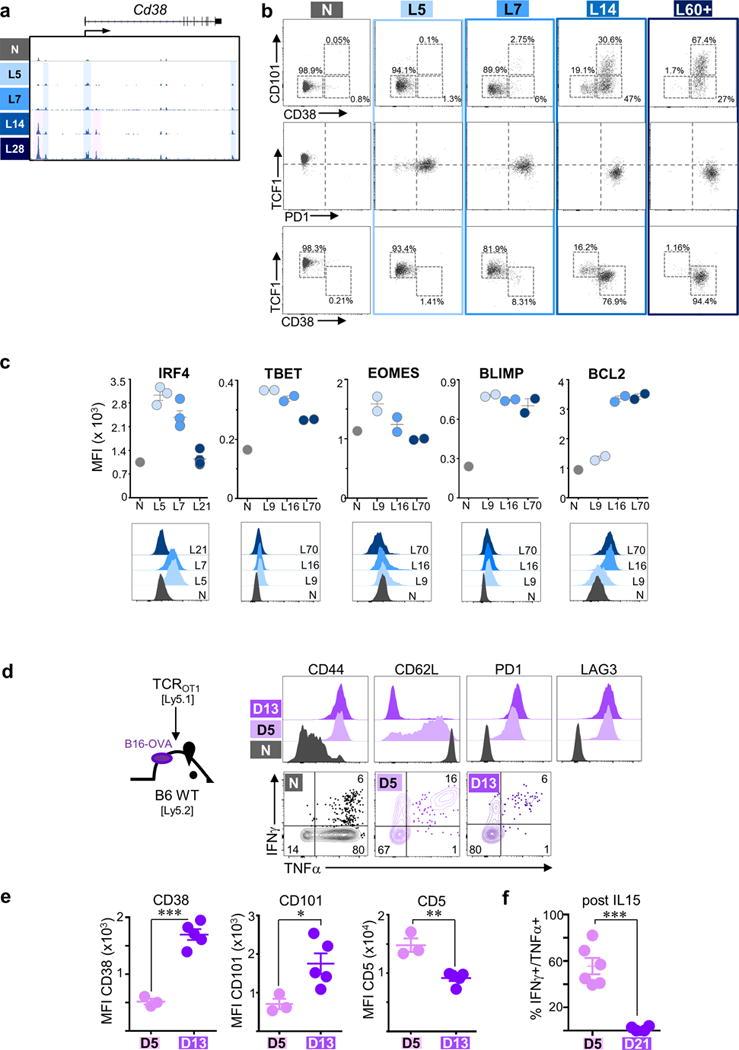
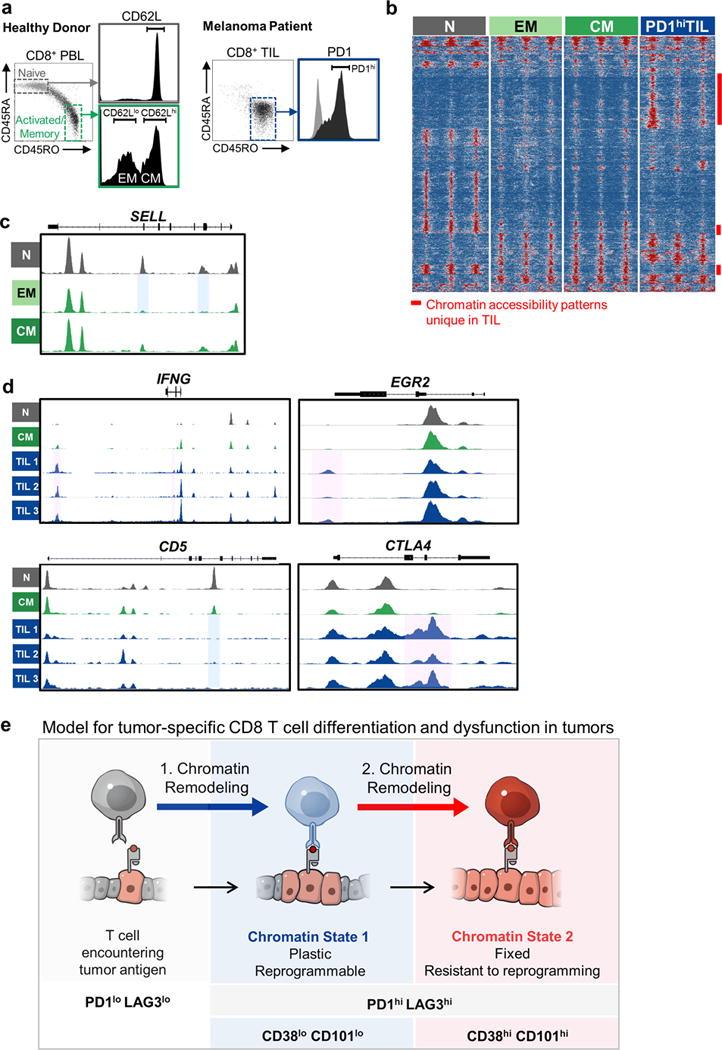
Tumour-specific CD8 T cells in solid tumours are dysfunctional, allowing tumours to progress. The epigenetic regulation of T cell dysfunction and therapeutic reprogrammability (for example, to immune checkpoint blockade) is not well understood. Here we show that T cells in mouse tumours differentiate through two discrete chromatin states: a plastic dysfunctional state from which T cells can be rescued, and a fixed dysfunctional state in which the cells are resistant to reprogramming. We identified surface markers associated with each chromatin state that distinguished reprogrammable from non-reprogrammable PD1 dysfunctional T cells within heterogeneous T cell populations from tumours in mice; these surface markers were also expressed on human PD1 tumour-infiltrating CD8 T cells. Our study has important implications for cancer immunotherapy as we define key transcription factors and epigenetic programs underlying T cell dysfunction and surface markers that predict therapeutic reprogrammability.
实体瘤中的肿瘤特异性CD8 T细胞功能失调,从而使肿瘤得以进展。T细胞功能失调和治疗性重编程能力(例如对免疫检查点阻断的反应)的表观遗传调控尚未得到充分理解。在此,我们表明小鼠肿瘤中的T细胞通过两种不同的染色质状态进行分化:一种可塑性功能失调状态,T细胞可从中恢复;另一种固定性功能失调状态,细胞对重编程具有抗性。我们鉴定出了与每种染色质状态相关的表面标志物,这些标志物可区分小鼠肿瘤异质性T细胞群体中可重编程与不可重编程的PD1功能失调T细胞;这些表面标志物在人PD1肿瘤浸润性CD8 T细胞上也有表达。我们的研究对癌症免疫疗法具有重要意义,因为我们定义了T细胞功能失调背后的关键转录因子和表观遗传程序以及预测治疗性重编程能力的表面标志物。






 Zotero 插件