
HIV天冬氨酸蛋白酶抑制剂调节与……生理病理事件相关的表面分子和酶活性。 (原文结尾处不完整,翻译可能会受影响)
HIV Aspartic Peptidase Inhibitors Modulate Surface Molecules and Enzyme Activities Involved with Physiopathological Events in .
作者信息
Palmeira Vanila F, Alviano Daniela S, Braga-Silva Lys A, Goulart Fátima R V, Granato Marcela Q, Rozental Sonia, Alviano Celuta S, Santos André L S, Kneipp Lucimar F
机构信息
Laboratório de Investigação de Peptidases, Departamento de Microbiologia Geral, Instituto de Microbiologia Paulo de Góes, Universidade Federal do Rio de JaneiroRio de Janeiro, Brazil.
Laboratório de Estrutura de Microrganismos, Departamento de Microbiologia Geral, Universidade Federal do Rio de JaneiroRio de Janeiro, Brazil.
出版信息
Front Microbiol. 2017 May 19;8:918. doi: 10.3389/fmicb.2017.00918. eCollection 2017.
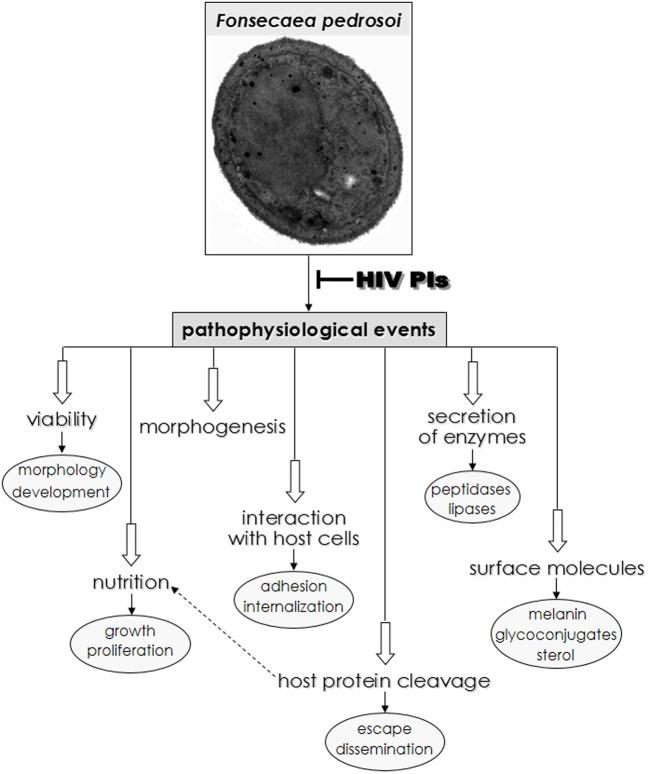
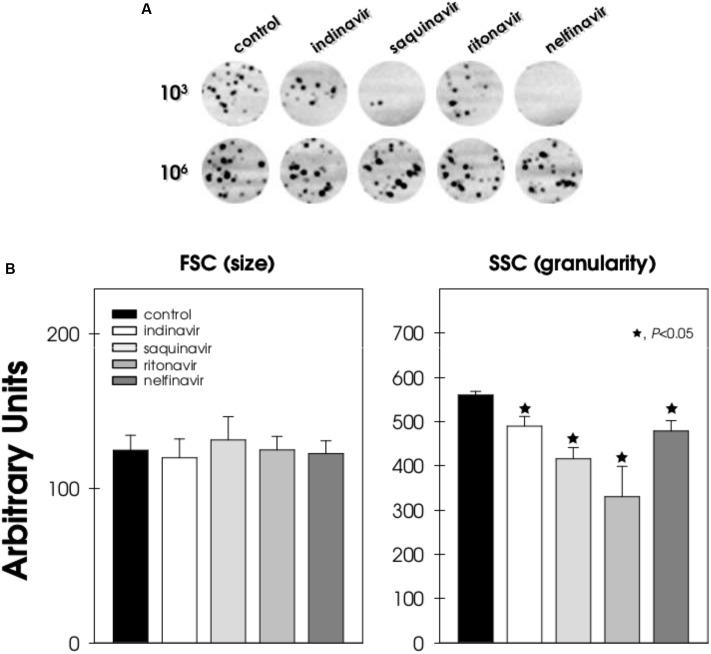
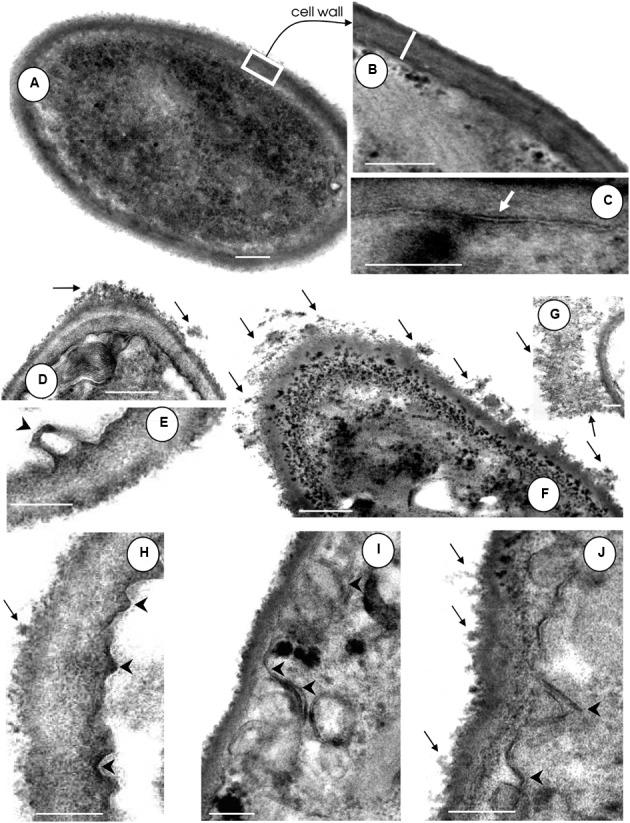
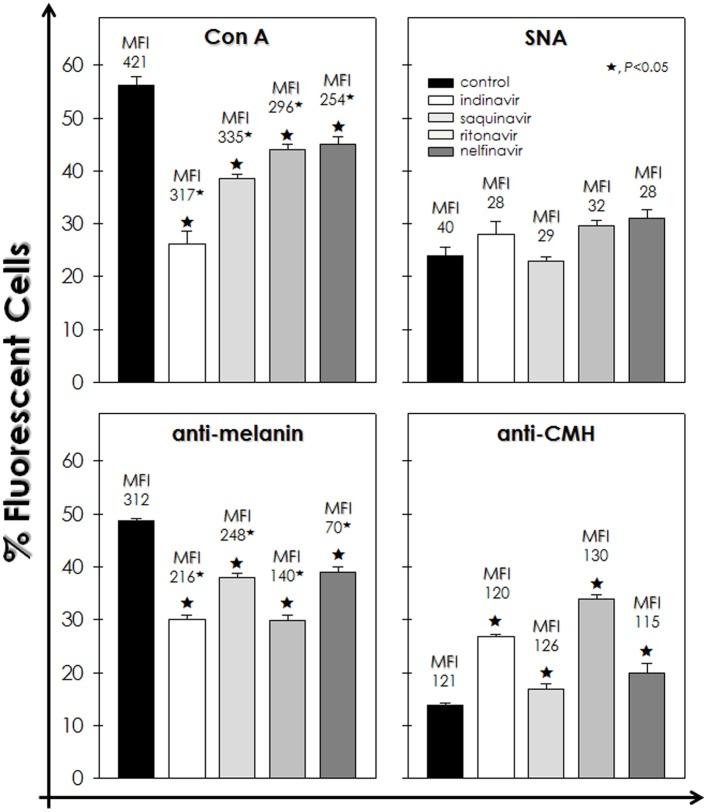
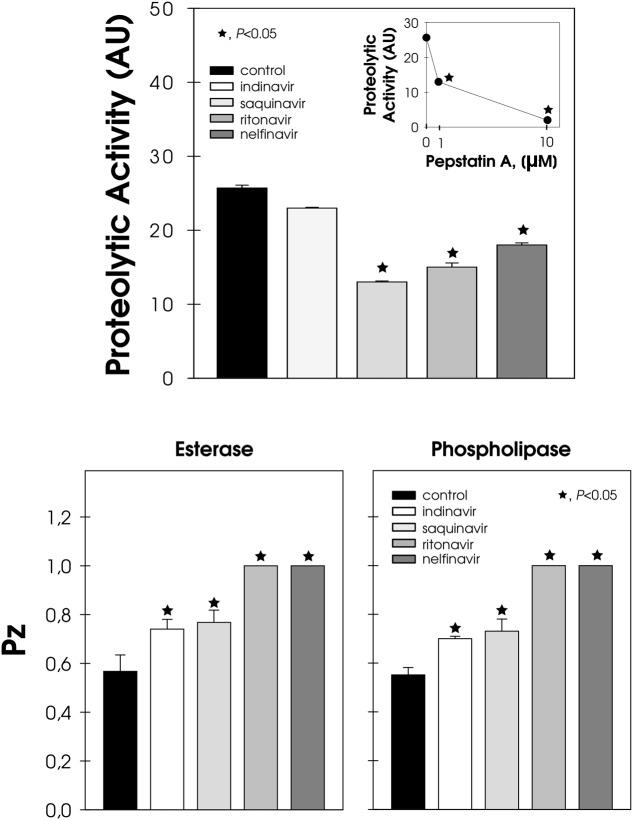
is the main etiological agent of chromoblastomycosis, a recalcitrant disease that is extremely difficult to treat. Therefore, new chemotherapeutics to combat this fungal infection are urgently needed. Although aspartic peptidase inhibitors (PIs) currently used in the treatment of human immunodeficiency virus (HIV) have shown anti- activity their exact mechanisms of action have not been elucidated. In the present study, we have investigated the effects of four HIV-PIs on crucial virulence attributes expressed by conidial cells, including surface molecules and secreted enzymes, both of which are directly involved in the disease development. In all the experiments, conidia were treated with indinavir, nelfinavir, ritonavir and saquinavir (100 μM) for 24 h, and then fungal cells were used to evaluate the effects of HIV-PIs on different virulence attributes expressed by . In comparison to untreated controls, exposure of cells to HIV-PIs caused (i) reduction on the conidial granularity; (ii) irreversible surface ultrastructural alterations, such as shedding of electron dense and amorphous material from the cell wall, undulations/invaginations of the plasma membrane with and withdrawal of this membrane from the cell wall; (iii) a decrease in both mannose-rich glycoconjugates and melanin molecules and an increase in glucosylceramides on the conidial surface; (iv) inhibition of ergosterol and lanosterol production; (v) reduction in the secretion of aspartic peptidase, esterase and phospholipase; (vi) significant reduction in the viability of non-pigmented conidia compared to pigmented ones. In summary, HIV-PIs are efficient drugs with an ability to block crucial biological processes of and can be seriously considered as potential compounds for the development of new chromoblastomycosis chemotherapeutics.
是着色芽生菌病的主要病原体,这是一种极难治疗的顽固性疾病。因此,迫切需要新的化疗药物来对抗这种真菌感染。尽管目前用于治疗人类免疫缺陷病毒(HIV)的天冬氨酸蛋白酶抑制剂(PIs)已显示出抗活性,但其确切作用机制尚未阐明。在本研究中,我们研究了四种HIV-PIs对分生孢子细胞表达的关键毒力属性的影响,包括表面分子和分泌酶,这两者都直接参与疾病发展。在所有实验中,分生孢子用茚地那韦、奈非那韦、利托那韦和沙奎那韦(100μM)处理24小时,然后使用真菌细胞评估HIV-PIs对所表达的不同毒力属性的影响。与未处理的对照相比,将细胞暴露于HIV-PIs导致:(i)分生孢子粒度降低;(ii)不可逆的表面超微结构改变,如从细胞壁脱落电子致密和无定形物质、质膜起伏/内陷以及该膜从细胞壁撤回;(iii)分生孢子表面富含甘露糖的糖缀合物和黑色素分子减少,葡糖神经酰胺增加;(iv)麦角固醇和羊毛固醇产生受到抑制;(v)天冬氨酸蛋白酶、酯酶和磷脂酶分泌减少;(vi)与有色素的分生孢子相比,无色素分生孢子的活力显著降低。总之,HIV-PIs是有效的药物,能够阻断的关键生物学过程,可被认真考虑作为开发新的着色芽生菌病化疗药物的潜在化合物。


 Zotero 插件