
大西洋黑线鳕和鳕鱼胚胎中油滴污染及多环芳烃的差异毒代动力学
Oil droplet fouling and differential toxicokinetics of polycyclic aromatic hydrocarbons in embryos of Atlantic haddock and cod.
作者信息
Sørensen Lisbet, Sørhus Elin, Nordtug Trond, Incardona John P, Linbo Tiffany L, Giovanetti Laura, Karlsen Ørjan, Meier Sonnich
机构信息
Institute of Marine Research, Bergen, Norway.
Department of Chemistry, University of Bergen, Bergen, Norway.
出版信息
PLoS One. 2017 Jul 5;12(7):e0180048. doi: 10.1371/journal.pone.0180048. eCollection 2017.
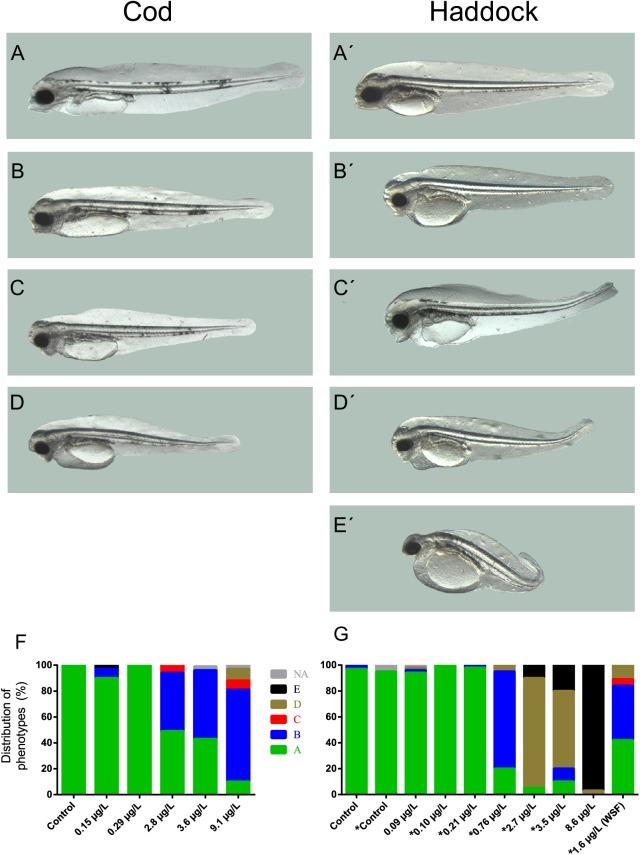
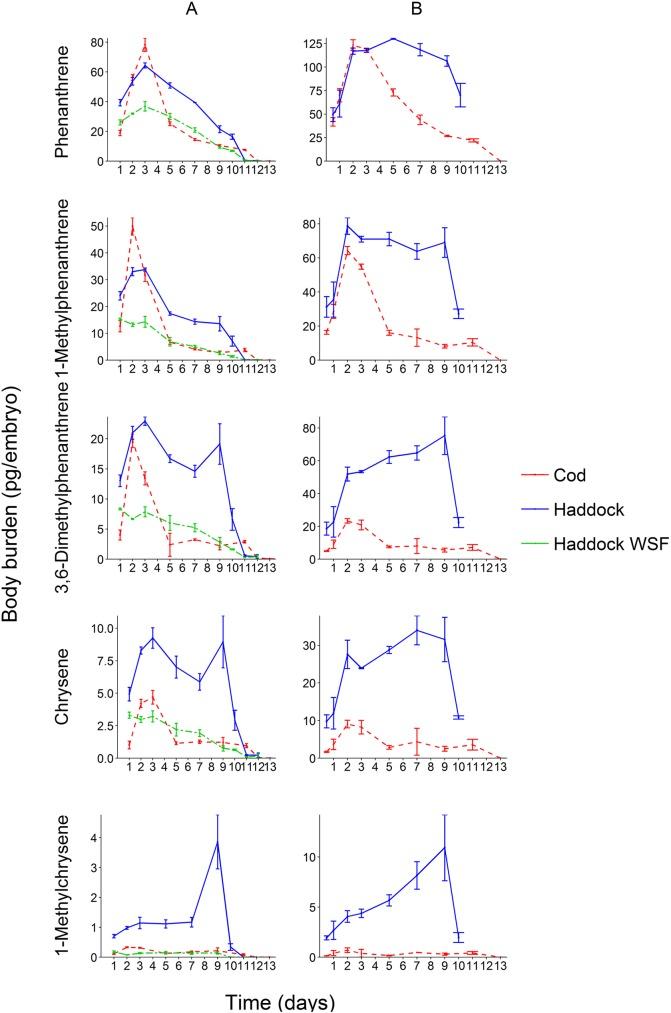
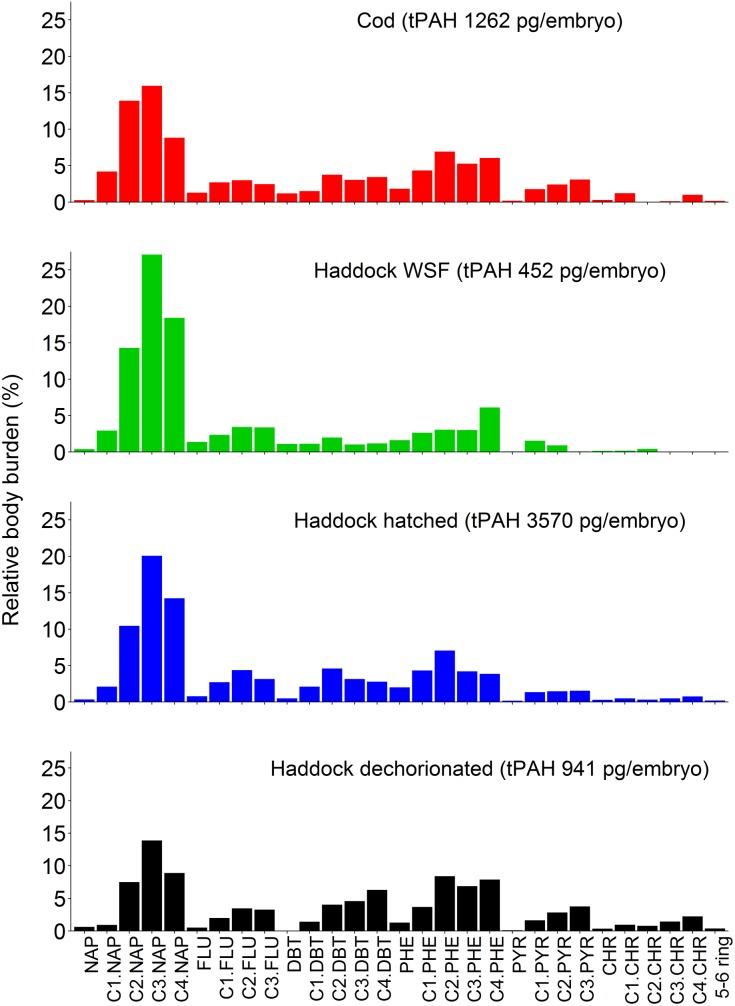
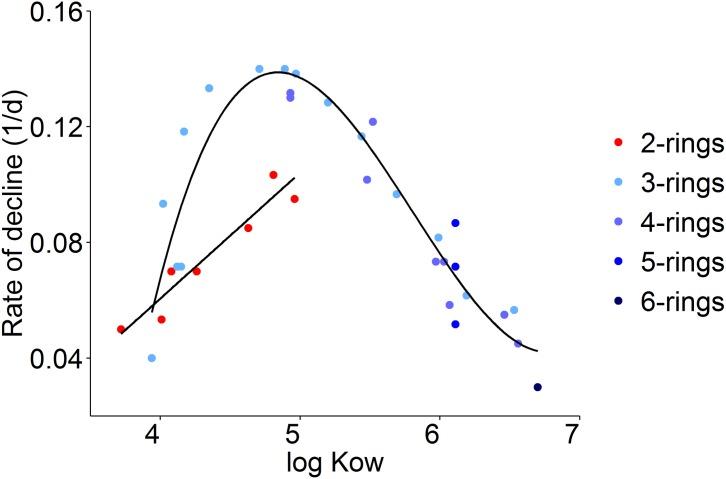
The impact of crude oil pollution on early life stages (ELS) of fish, including larvae and embryos, has received considerable attention in recent years. Of the organic components present in crude oil, polycyclic aromatic hydrocarbons (PAHs) are considered the main class of compounds responsible for toxic effects in marine organisms. Although evidence suggests that they are more toxic, alkylated PAHs remain much less studied than their unsubstituted congeners. Recently, it was established that embryos of Atlantic haddock (Melanogrammus aeglefinus) are particularly sensitive to dispersed crude oil, and it was hypothesized that this was caused by direct interaction with crude oil droplets, which adhered to the chorion of exposed embryos. Such a phenomenon would increase the potential for uptake of less water-soluble compounds, including alkylated PAHs. In the current study, we compared the uptake of parent and alkylated PAHs in Atlantic cod (Gadus morhua) and haddock embryos exposed to dispersed crude oil at a range of environmentally relevant concentrations (10-600 μg oil/liter seawater). Although the species are biologically very similar, the cod chorion does not become fouled with oil droplets, even when the two species are exposed to dispersions of crude oil droplets under similar conditions. A close correlation between the degree of fouling and toxicological response (heart defects, craniofacial malformation) was observed. Oil droplet fouling in haddock led to both quantitative and qualitative differences in PAH uptake. Finally, kinetic data on a large suite of PAHs showed differential elimination, suggesting differential metabolism of unsubstituted versus alkylated compounds.
原油污染对鱼类早期生命阶段(包括幼体和胚胎)的影响近年来受到了广泛关注。在原油所含的有机成分中,多环芳烃(PAHs)被认为是对海洋生物产生毒性作用的主要化合物类别。尽管有证据表明烷基化多环芳烃毒性更强,但与未取代的同系物相比,对它们的研究仍然少得多。最近发现,大西洋黑线鳕(Melanogrammus aeglefinus)的胚胎对分散的原油特别敏感,据推测这是由于与附着在暴露胚胎卵膜上的原油滴直接相互作用所致。这种现象会增加包括烷基化多环芳烃在内的水溶性较差的化合物的吸收可能性。在本研究中,我们比较了大西洋鳕鱼(Gadus morhua)和黑线鳕胚胎在一系列环境相关浓度(10 - 600微克油/升海水)下暴露于分散原油时母体和烷基化多环芳烃的吸收情况。尽管这两个物种在生物学上非常相似,但鳕鱼的卵膜不会被油滴污染,即使这两个物种在相似条件下暴露于原油滴分散液中也是如此。观察到污染程度与毒理学反应(心脏缺陷、颅面畸形)之间存在密切相关性。黑线鳕的油滴污染导致多环芳烃吸收在数量和质量上都存在差异。最后,大量多环芳烃的动力学数据显示出不同的消除情况,表明未取代化合物与烷基化化合物的代谢存在差异。





 Zotero 插件