
生命体征:2006 - 2015年美国阿片类药物处方的变化
Vital Signs: Changes in Opioid Prescribing in the United States, 2006-2015.
作者信息
Guy Gery P, Zhang Kun, Bohm Michele K, Losby Jan, Lewis Brian, Young Randall, Murphy Louise B, Dowell Deborah
出版信息
MMWR Morb Mortal Wkly Rep. 2017 Jul 7;66(26):697-704. doi: 10.15585/mmwr.mm6626a4.
BACKGROUND
Prescription opioid-related overdose deaths increased sharply during 1999-2010 in the United States in parallel with increased opioid prescribing. CDC assessed changes in national-level and county-level opioid prescribing during 2006-2015.
METHODS
CDC analyzed retail prescription data from QuintilesIMS to assess opioid prescribing in the United States from 2006 to 2015, including rates, amounts, dosages, and durations prescribed. CDC examined county-level prescribing patterns in 2010 and 2015.
RESULTS
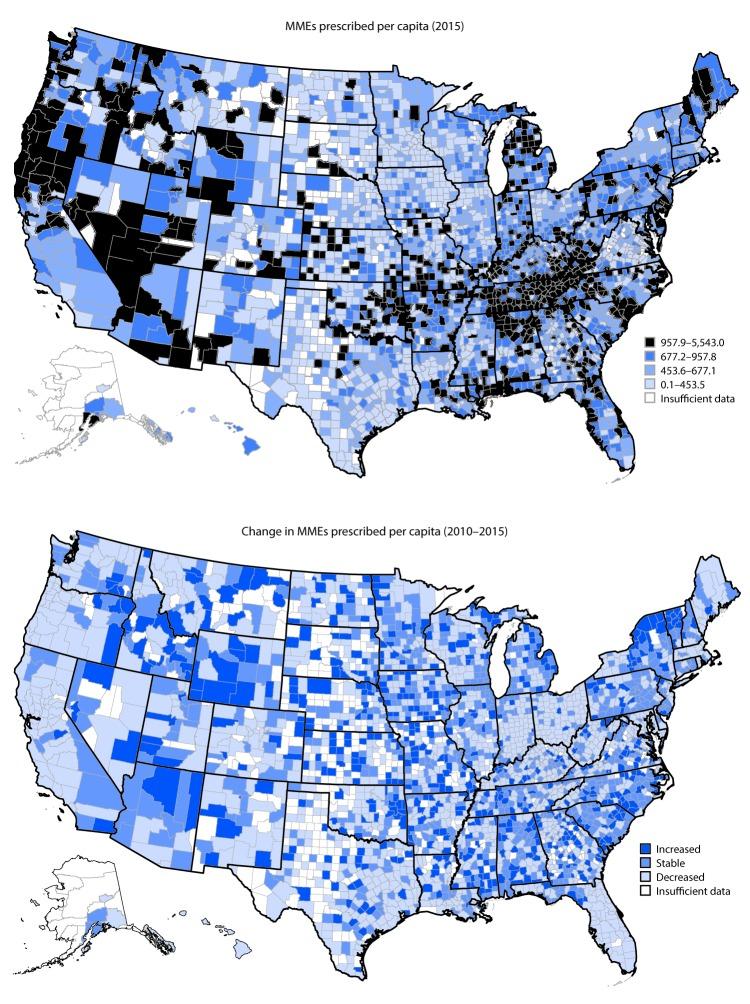
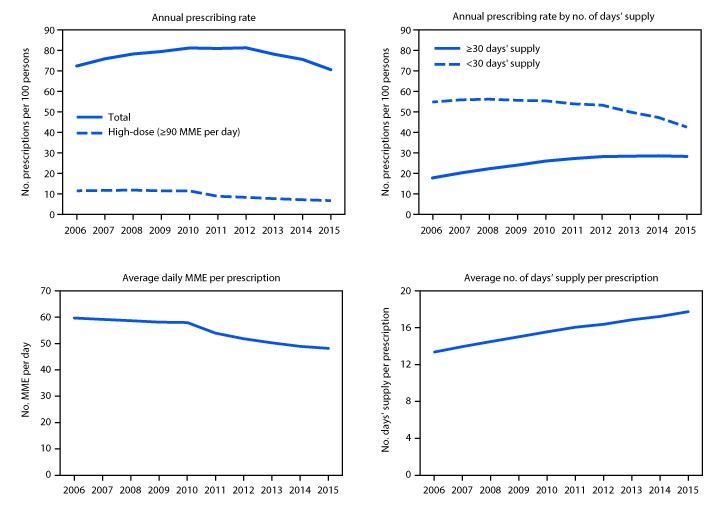
The amount of opioids prescribed in the United States peaked at 782 morphine milligram equivalents (MME) per capita in 2010 and then decreased to 640 MME per capita in 2015. Despite significant decreases, the amount of opioids prescribed in 2015 remained approximately three times as high as in 1999 and varied substantially across the country. County-level factors associated with higher amounts of prescribed opioids include a larger percentage of non-Hispanic whites; a higher prevalence of diabetes and arthritis; micropolitan status (i.e., town/city; nonmetro); and higher unemployment and Medicaid enrollment.
CONCLUSIONS AND IMPLICATIONS FOR PUBLIC HEALTH PRACTICE
Despite reductions in opioid prescribing in some parts of the country, the amount of opioids prescribed remains high relative to 1999 levels and varies substantially at the county-level. Given associations between opioid prescribing, opioid use disorder, and overdose rates, health care providers should carefully weigh the benefits and risks when prescribing opioids outside of end-of-life care, follow evidence-based guidelines, such as CDC's Guideline for Prescribing Opioids for Chronic Pain, and consider nonopioid therapy for chronic pain treatment. State and local jurisdictions can use these findings combined with Prescription Drug Monitoring Program data to identify areas with prescribing patterns that place patients at risk for opioid use disorder and overdose and to target interventions with prescribers based on opioid prescribing guidelines.
背景
1999 - 2010年期间,美国与阿片类药物处方量增加同步,与处方阿片类药物相关的过量死亡人数急剧上升。美国疾病控制与预防中心(CDC)评估了2006 - 2015年期间国家层面和县级阿片类药物处方的变化情况。
方法
CDC分析了昆泰公司(QuintilesIMS)的零售处方数据,以评估2006年至2015年美国阿片类药物的处方情况,包括处方率、处方量、剂量和疗程。CDC研究了2010年和2015年的县级处方模式。
结果
美国阿片类药物的处方量在2010年达到峰值,人均782毫克吗啡当量(MME),然后在2015年降至人均640 MME。尽管有显著下降,但2015年的阿片类药物处方量仍约为1999年的三倍,且全国各地差异很大。与较高阿片类药物处方量相关的县级因素包括非西班牙裔白人比例较高;糖尿病和关节炎患病率较高;微型都市地位(即城镇/城市;非大都市);以及较高的失业率和医疗补助登记率。
结论及对公共卫生实践的启示
尽管该国一些地区的阿片类药物处方量有所减少,但相对于1999年的水平,阿片类药物的处方量仍然很高,且在县级层面差异很大。鉴于阿片类药物处方、阿片类药物使用障碍和过量使用率之间的关联,医疗保健提供者在开具临终关怀以外的阿片类药物处方时应仔细权衡利弊,遵循循证指南,如CDC的《慢性疼痛阿片类药物处方指南》,并考虑采用非阿片类疗法治疗慢性疼痛。州和地方司法管辖区可以利用这些发现以及处方药监测计划数据,识别出那些处方模式使患者有阿片类药物使用障碍和过量风险的地区,并根据阿片类药物处方指南对开处方者进行有针对性的干预。
 Zotero 插件