
胃发育异常内镜切除术后异时性胃癌发生的危险因素:一项回顾性单中心研究
Risk factors for metachronous gastric carcinoma development after endoscopic resection of gastric dysplasia: Retrospective, single-center study.
作者信息
Moon Hee Seok, Yun Gee Young, Kim Ju Seok, Eun Hyuk Soo, Kang Sun Hyung, Sung Jae Kyu, Jeong Hyun Yong, Song Kyu-Sang
机构信息
Hee Seok Moon, Gee Young Yun, Ju Seok Kim, Hyuk Soo Eun, Sun Hyung Kang, Jae Kyu Sung, Hyun Yong Jeong, Department of Internal Medicine, Chungnam National University Hospital, Chungnam National University School of Medicine, Daejeon 35015, South Korea.
出版信息
World J Gastroenterol. 2017 Jun 28;23(24):4407-4415. doi: 10.3748/wjg.v23.i24.4407.
AIM
To determine the gastric adenocarcinoma (GAC) occurrence rate and related factors, we evaluated the follow-up results of patients confirmed to have gastric dysplasia after endoscopic resection (ER).
METHODS
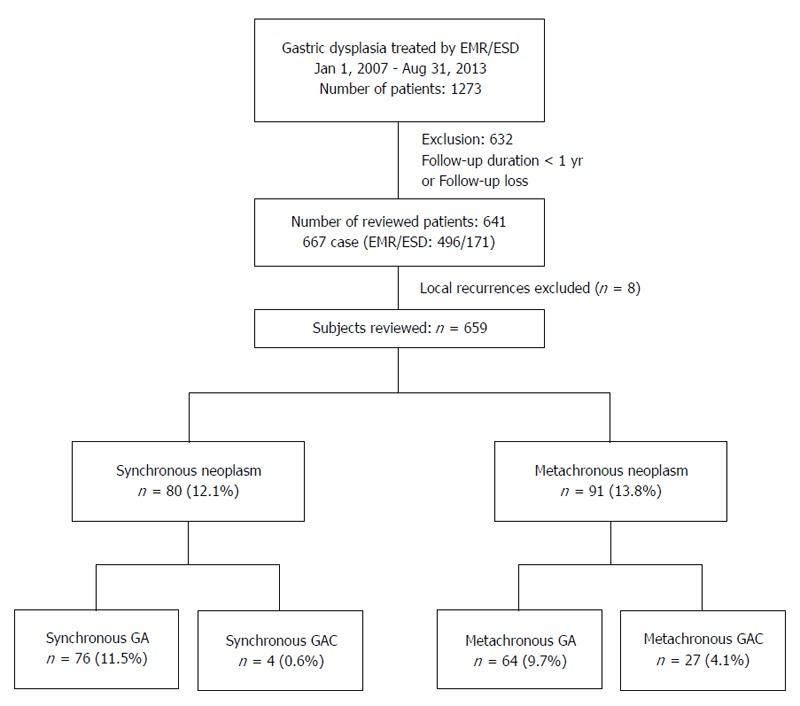
We retrospectively analyzed the medical records, endoscopic examination records, endoscopic procedure records, and histological records of 667 cases from 641 patients who were followed-up for at least 12 mo, from among 1273 patients who were conformed to have gastric dysplasia after Endoscopic mucosal resection (EMR) or endoscopic submucosal dissection (ESD) of gastric mucosal lesions between January 2007 and August 2013 at the Chungnam National University Hospital.
RESULTS
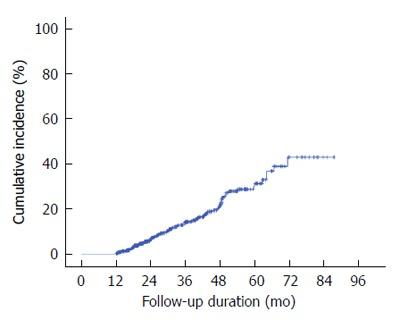
The mean follow-up period was 33.8 mo, and the median follow-up period was 29 mo (range: 12-87). During the follow-up period, the occurrence of metachronous GAC was 4.0% (27/667). The mean and median interval periods between the occurrence of metachronous GAC and endoscopic treatment of gastric dysplasia were 36.3 and 34 mo, respectively (range: 16-71). The factors related to metachronous GAC occurrence after ER for gastric dysplasia were male sex (5.3% 1.0%), open-type atrophic gastritis (9.5% 3.4%), intestinal metaplasia (6.8% 2.4%), and high-grade dysplasia (HGD; 8.4% 3.2%). Among them, male sex [OR: 5.05 (1.18-21.68), = 0.029], intestinal metaplasia [OR: 2.78 (1.24-6.23), = 0.013], and HGD [OR: 2.70 (1.16-6.26), = 0.021] were independent related factors in multivariate analysis. Furthermore, 24 of 27 GAC cases (88.9%) occurred at sites other than the previous resection sites, and 3 (11.1%) occurred at the same site as the previous resection site.
CONCLUSION
Male sex, intestinal metaplasia, and HGD were significantly related to the occurrence of metachronous GAC after ER of gastric dysplasia, and most GACs occurred at sites other than the previous resection sites.
目的
为了确定胃腺癌(GAC)的发生率及相关因素,我们评估了经内镜切除(ER)确诊为胃发育异常患者的随访结果。
方法
我们回顾性分析了2007年1月至2013年8月在忠南国立大学医院因胃黏膜病变接受内镜黏膜切除术(EMR)或内镜黏膜下剥离术(ESD)后确诊为胃发育异常的1273例患者中641例患者的667份病历、内镜检查记录、内镜操作记录及组织学记录,这些患者至少随访了12个月。
结果
平均随访期为33.8个月,中位随访期为29个月(范围:12 - 87个月)。在随访期间,异时性GAC的发生率为4.0%(27/667)。异时性GAC发生与胃发育异常内镜治疗之间的平均间隔期和中位间隔期分别为36.3个月和34个月(范围:16 - 71个月)。胃发育异常ER术后异时性GAC发生的相关因素有男性(5.3%对1.0%)、开放型萎缩性胃炎(9.5%对 3.4%)、肠化生(6.8%对2.4%)和高级别异型增生(HGD;8.4%对3.2%)。其中,男性[比值比(OR):5.05(1.18 - 21.68),P = 0.029]、肠化生[OR:2.78(1.24 - 6.23),P = 0.013]和HGD[OR:2.70(1.16 - 6.26),P = 0.021]在多因素分析中是独立相关因素。此外,2
 Zotero 插件