
一种用于毒理基因组学的果蝇模型:重金属暴露易感性的基因变异。
A Drosophila model for toxicogenomics: Genetic variation in susceptibility to heavy metal exposure.
作者信息
Zhou Shanshan, Luoma Sarah E, St Armour Genevieve E, Thakkar Esha, Mackay Trudy F C, Anholt Robert R H
机构信息
Program in Genetics, W. M. Keck Center for Behavioral Biology, and Department of Biological Sciences, North Carolina State University, Raleigh, North Carolina, United States of America.
Enloe Magnet High School, Raleigh, North Carolina, United States of America.
出版信息
PLoS Genet. 2017 Jul 21;13(7):e1006907. doi: 10.1371/journal.pgen.1006907. eCollection 2017 Jul.
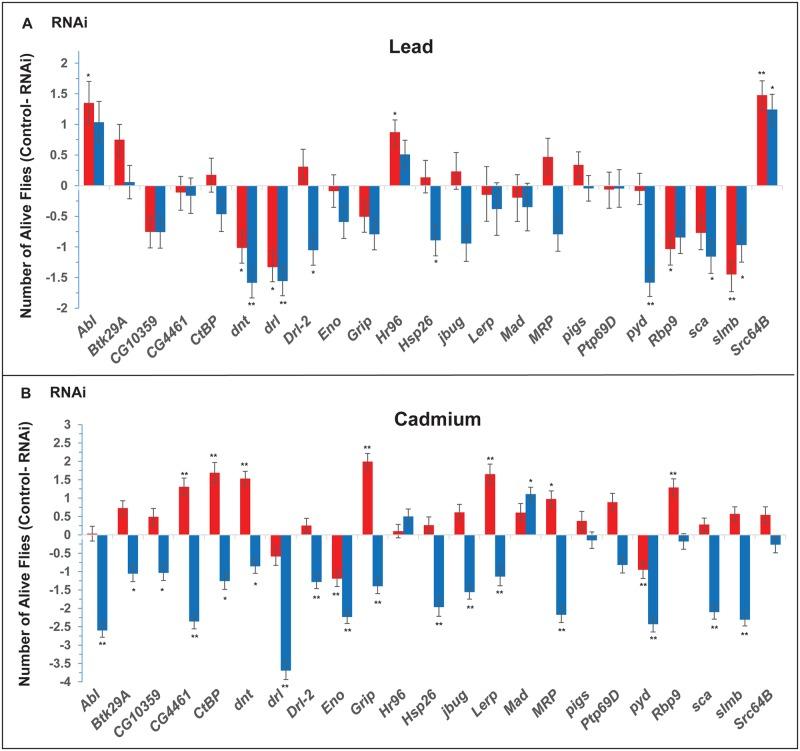
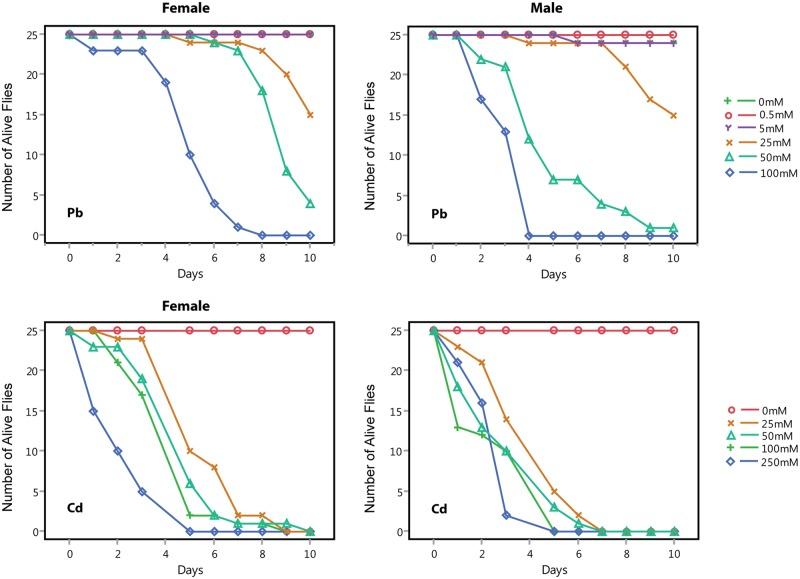
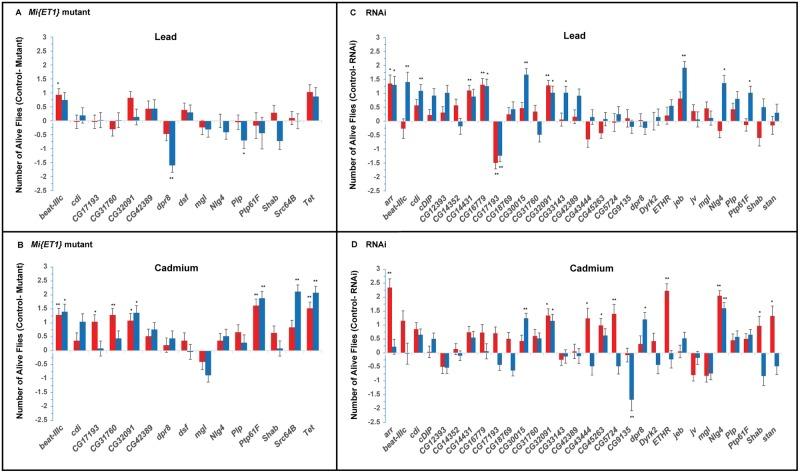
The genetic factors that give rise to variation in susceptibility to environmental toxins remain largely unexplored. Studies on genetic variation in susceptibility to environmental toxins are challenging in human populations, due to the variety of clinical symptoms and difficulty in determining which symptoms causally result from toxic exposure; uncontrolled environments, often with exposure to multiple toxicants; and difficulty in relating phenotypic effect size to toxic dose, especially when symptoms become manifest with a substantial time lag. Drosophila melanogaster is a powerful model that enables genome-wide studies for the identification of allelic variants that contribute to variation in susceptibility to environmental toxins, since the genetic background, environmental rearing conditions and toxic exposure can be precisely controlled. Here, we used extreme QTL mapping in an outbred population derived from the D. melanogaster Genetic Reference Panel to identify alleles associated with resistance to lead and/or cadmium, two ubiquitous environmental toxins that present serious health risks. We identified single nucleotide polymorphisms (SNPs) associated with variation in resistance to both heavy metals as well as SNPs associated with resistance specific to each of them. The effects of these SNPs were largely sex-specific. We applied mutational and RNAi analyses to 33 candidate genes and functionally validated 28 of them. We constructed networks of candidate genes as blueprints for orthologous networks of human genes. The latter not only provided functional contexts for known human targets of heavy metal toxicity, but also implicated novel candidate susceptibility genes. These studies validate Drosophila as a translational toxicogenomics gene discovery system.
导致对环境毒素易感性产生差异的遗传因素在很大程度上仍未得到探索。在人类群体中,研究对环境毒素易感性的遗传变异具有挑战性,这是由于临床症状多种多样,且难以确定哪些症状是由有毒物质暴露因果导致的;环境不受控制,通常会接触多种有毒物质;以及难以将表型效应大小与有毒剂量相关联,尤其是当症状在相当长的时间滞后才显现时。黑腹果蝇是一种强大的模型,能够进行全基因组研究,以鉴定导致对环境毒素易感性差异的等位基因变异,因为其遗传背景、环境饲养条件和有毒物质暴露都可以精确控制。在这里,我们在源自黑腹果蝇遗传参考面板的远交群体中使用极端QTL定位来鉴定与对铅和/或镉的抗性相关的等位基因,铅和镉是两种普遍存在且对健康构成严重风险的环境毒素。我们鉴定出了与对这两种重金属抗性变异相关的单核苷酸多态性(SNP),以及与对每种重金属特异性抗性相关的SNP。这些SNP的效应在很大程度上具有性别特异性。我们对33个候选基因进行了突变和RNAi分析,并对其中28个进行了功能验证。我们构建了候选基因网络,作为人类基因直系同源网络的蓝图。后者不仅为已知的人类重金属毒性靶点提供了功能背景,还暗示了新的候选易感基因。这些研究验证了果蝇作为一种转化毒理基因组学基因发现系统的有效性。



 Zotero 插件