
三羧酸循环在癌症代谢中的新作用和靶向性。
The emerging role and targetability of the TCA cycle in cancer metabolism.
机构信息
Abramson Family Cancer Research Institute, University of Pennsylvania, Philadelphia, PA, 19104-6160, USA.
Perelman School of Medicine at the University of Pennsylvania, Philadelphia, PA, 19104, USA.
出版信息
Protein Cell. 2018 Feb;9(2):216-237. doi: 10.1007/s13238-017-0451-1. Epub 2017 Jul 26.
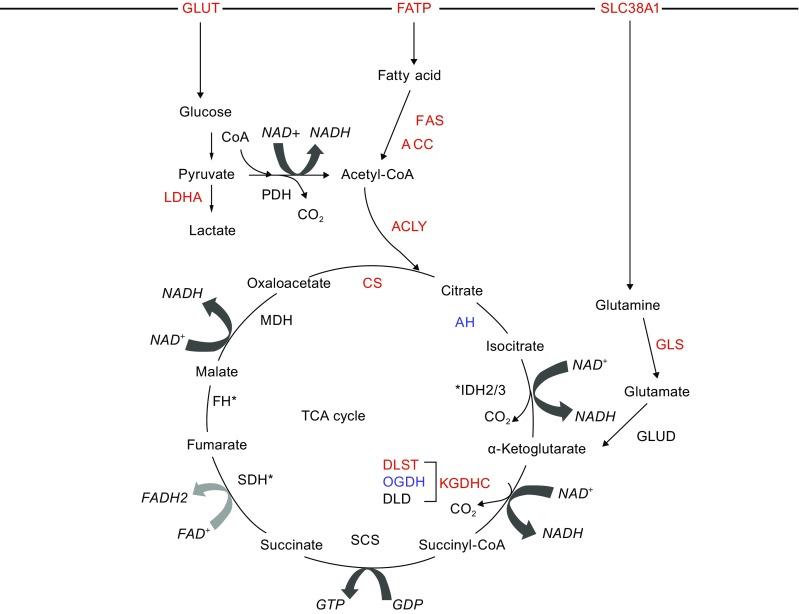
The tricarboxylic acid (TCA) cycle is a central route for oxidative phosphorylation in cells, and fulfills their bioenergetic, biosynthetic, and redox balance requirements. Despite early dogma that cancer cells bypass the TCA cycle and primarily utilize aerobic glycolysis, emerging evidence demonstrates that certain cancer cells, especially those with deregulated oncogene and tumor suppressor expression, rely heavily on the TCA cycle for energy production and macromolecule synthesis. As the field progresses, the importance of aberrant TCA cycle function in tumorigenesis and the potentials of applying small molecule inhibitors to perturb the enhanced cycle function for cancer treatment start to evolve. In this review, we summarize current knowledge about the fuels feeding the cycle, effects of oncogenes and tumor suppressors on fuel and cycle usage, common genetic alterations and deregulation of cycle enzymes, and potential therapeutic opportunities for targeting the TCA cycle in cancer cells. With the application of advanced technology and in vivo model organism studies, it is our hope that studies of this previously overlooked biochemical hub will provide fresh insights into cancer metabolism and tumorigenesis, subsequently revealing vulnerabilities for therapeutic interventions in various cancer types.
三羧酸 (TCA) 循环是细胞氧化磷酸化的中心途径,满足了它们的生物能量、生物合成和氧化还原平衡需求。尽管早期有观点认为癌细胞绕过 TCA 循环,主要利用有氧糖酵解,但新出现的证据表明,某些癌细胞,特别是那些具有失调的癌基因和肿瘤抑制因子表达的癌细胞,严重依赖 TCA 循环来产生能量和合成大分子。随着该领域的发展,异常 TCA 循环功能在肿瘤发生中的重要性以及应用小分子抑制剂干扰增强的循环功能来治疗癌症的潜力开始显现。在这篇综述中,我们总结了目前关于循环燃料、癌基因和肿瘤抑制因子对燃料和循环利用的影响、常见的遗传改变和循环酶的失调以及针对癌细胞 TCA 循环的潜在治疗机会的知识。随着先进技术和体内模式生物研究的应用,我们希望对这个以前被忽视的生化枢纽的研究将为癌症代谢和肿瘤发生提供新的见解,从而为各种癌症类型的治疗干预揭示脆弱性。
 Zotero 插件