
磨砺精准癌症免疫疗法的利刃:通过溶瘤疫苗靶向肿瘤抗原
Sharpening the Edge for Precision Cancer Immunotherapy: Targeting Tumor Antigens through Oncolytic Vaccines.
作者信息
Holay Namit, Kim Youra, Lee Patrick, Gujar Shashi
机构信息
Department of Pathology, Dalhousie University, Halifax, NS, Canada.
Department of Microbiology and Immunology, Dalhousie University, Halifax, NS, Canada.
出版信息
Front Immunol. 2017 Jul 13;8:800. doi: 10.3389/fimmu.2017.00800. eCollection 2017.
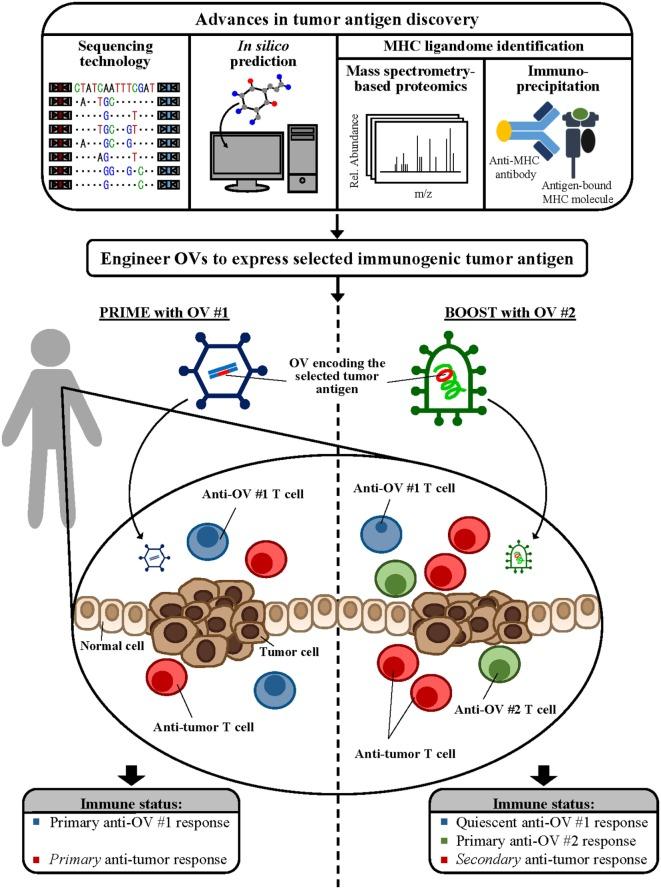
Cancer immunotherapy represents a promising, modern-age option for treatment of cancers. Among the many immunotherapies being developed, oncolytic viruses (OVs) are slowly moving to the forefront of potential clinical therapeutic agents, especially considering the fact that the first oncolytic virus was recently approved by the Food and Drug Administration for the treatment of melanoma. OVs were originally discovered for their ability to kill cancer cells, but they have emerged as unconventional cancer immunotherapeutics due to their ability to activate a long-term antitumor immune response. This immune response not only eliminates cancer cells but also offers potential for preventing cancer recurrence. A fundamental requirement for the generation of such a strong antitumor T cell response is the recognition of an immunogenic tumor antigen by the antitumor T cell. Several tumor antigens capable of activating these antitumor T cells have been identified and are now being expressed through genetically engineered OVs to potentiate antitumor immunity. With the emergence of novel technologies for identifying tumor antigens and immunogenic epitopes in a myriad of cancers, design of "oncolytic vaccines" expressing highly specific tumor antigens provides a great strategy for targeting tumors. Here, we highlight the various OVs engineered to target tumor antigens and discuss multiple studies and strategies used to develop oncolytic vaccine regimens. We also contend how, going forward, a combination of technologies for identifying novel immunogenic tumor antigens and rational design of oncolytic vaccines will pave the way for the next generation of clinically efficacious cancer immunotherapies.
癌症免疫疗法是一种很有前景的现代癌症治疗选择。在众多正在研发的免疫疗法中,溶瘤病毒正逐渐成为潜在临床治疗药物的前沿,尤其是考虑到首款溶瘤病毒最近已获美国食品药品监督管理局批准用于治疗黑色素瘤这一事实。溶瘤病毒最初因其杀死癌细胞的能力而被发现,但由于其激活长期抗肿瘤免疫反应的能力,它们已成为非传统的癌症免疫疗法。这种免疫反应不仅能消除癌细胞,还具有预防癌症复发的潜力。产生如此强大的抗肿瘤T细胞反应的一个基本要求是抗肿瘤T细胞识别免疫原性肿瘤抗原。已经鉴定出几种能够激活这些抗肿瘤T细胞的肿瘤抗原,目前正通过基因工程改造的溶瘤病毒来表达这些抗原,以增强抗肿瘤免疫力。随着在众多癌症中识别肿瘤抗原和免疫原性表位的新技术的出现,设计表达高度特异性肿瘤抗原的“溶瘤疫苗”为靶向肿瘤提供了一个很好的策略。在此,我们重点介绍了多种经工程改造以靶向肿瘤抗原的溶瘤病毒,并讨论了用于开发溶瘤疫苗方案的多项研究和策略。我们还探讨了未来如何将识别新型免疫原性肿瘤抗原的技术与溶瘤疫苗的合理设计相结合,为下一代临床有效的癌症免疫疗法铺平道路。
 Zotero 插件