
临床稳定期和加重期支气管扩张症患者肺部微生物群的差异
Differences of lung microbiome in patients with clinically stable and exacerbated bronchiectasis.
作者信息
Byun Min Kwang, Chang Joon, Kim Hyung Jung, Jeong Seok Hoon
机构信息
Division of Pulmonology, Department of Internal Medicine, Gangnam Severance Hospital, Yonsei University College of Medicine, Seoul, Korea.
Division of Pulmonology, Department of Internal Medicine, Severance Hospital, Yonsei University College of Medicine, Seoul, Korea.
出版信息
PLoS One. 2017 Aug 22;12(8):e0183553. doi: 10.1371/journal.pone.0183553. eCollection 2017.
BACKGROUND
Molecular-based diagnostic techniques can compensate for the inherent limitations of culture-based microbiology and provide a more comprehensive description of an entire community of bacteria at a particular anatomical site. Using culture-independent DNA-based molecular techniques, the aim of the present study was to characterize, differentiate, and compare the composition of lower airway bacterial microbiome between clinically stable and acutely infected patients with bronchiectasis experiencing exacerbation.
METHODS
Patients with clinically stable bronchiectasis and those experiencing acutely exacerbated bronchiectasis were recruited. All patients underwent bronchoscopy. Paired sputum and bronchoalveolar lavage (BAL) samples were collected for microbiological tests. Molecular analysis was performed for BAL samples using 16S ribosomal RNA (rRNA) gene sequencing.
RESULTS
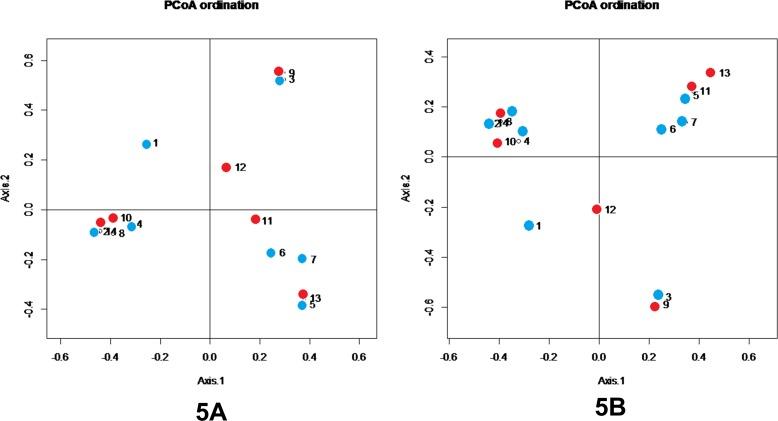
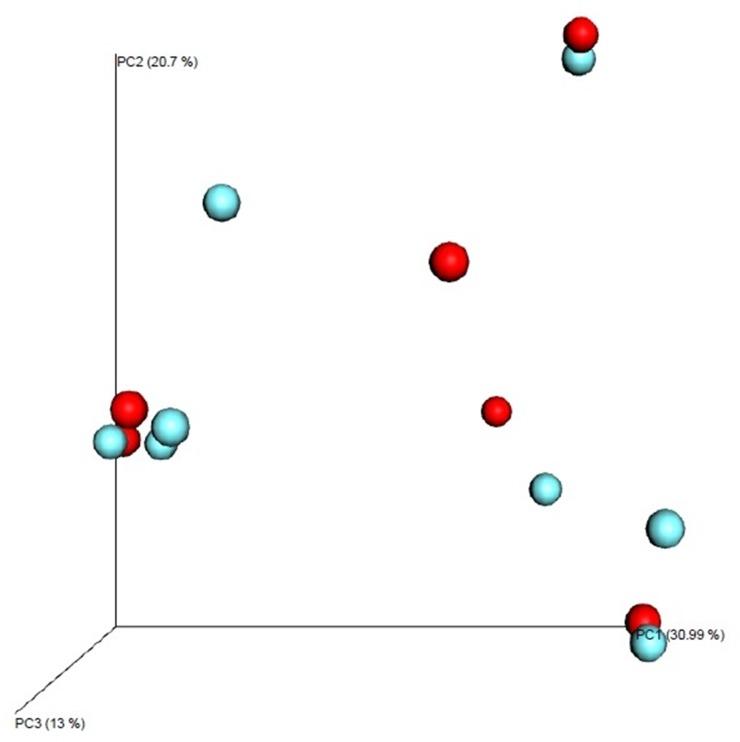
The mean age of the 14 recruited patients was 60 years (range 42 to 78 years), and nine (64%) were female. Using quantitative culture and 16S rRNA sequencing, the common organisms identified from 14 BAL samples were Haemophilus influenzae, Pseudomonas aeruginosa and Moraxella catarrhalis, and Prevotella. Molecular techniques revealed Prevotella and Veillonella as potentially pathogenic anaerobic species. 16S rRNA gene sequencing yielded similar relative abundances and distributions of taxa in the stable and exacerbated bronchiectasis groups. Alpha diversity with richness, Simpson's and Shannon indices, and beta diversity using principal coordinate analysis revealed no significant differences in lung microbiome between patients with clinically stable and exacerbated bronchiectasis.
CONCLUSION
Culture-based microbiological and molecular-based techniques did not reveal significant differences in the lung microbiome of patients who were clinically stable and those experiencing exacerbated bronchiectasis. Patient-specific microbial communities were dominated by one or several genera, regardless of clinical status. DNA sequencing could identify potentially pathogenic organisms unable to be identified using microbiological methods.
背景
基于分子的诊断技术可以弥补基于培养的微生物学的固有局限性,并能更全面地描述特定解剖部位的整个细菌群落。本研究旨在使用不依赖培养的基于DNA的分子技术,对支气管扩张症急性加重期临床稳定和急性感染患者下呼吸道细菌微生物群的组成进行表征、鉴别和比较。
方法
招募临床稳定的支气管扩张症患者和急性加重的支气管扩张症患者。所有患者均接受支气管镜检查。收集配对的痰液和支气管肺泡灌洗(BAL)样本进行微生物检测。对BAL样本进行16S核糖体RNA(rRNA)基因测序的分子分析。
结果
招募的14名患者的平均年龄为60岁(范围42至78岁),其中9名(64%)为女性。通过定量培养和16S rRNA测序,从14份BAL样本中鉴定出的常见微生物为流感嗜血杆菌、铜绿假单胞菌、卡他莫拉菌和普雷沃菌属。分子技术显示普雷沃菌属和韦荣球菌属为潜在致病厌氧菌。16S rRNA基因测序在稳定期和加重期支气管扩张症组中产生了相似的分类单元相对丰度和分布。使用丰富度、辛普森指数和香农指数的α多样性,以及使用主坐标分析的β多样性显示,临床稳定和加重期支气管扩张症患者的肺部微生物群无显著差异。
结论
基于培养的微生物学技术和基于分子的技术未显示临床稳定和急性加重期支气管扩张症患者肺部微生物群的显著差异。无论临床状态如何,患者特异性微生物群落均由一个或几个属主导。DNA测序可鉴定出使用微生物学方法无法鉴定的潜在致病生物。


 Zotero 插件