
赖氨酰 - tRNA合成酶的基因验证表明其对寄生虫的生长和感染性不可或缺。
Genetic Validation of Lysyl-tRNA Synthetase Shows that It Is Indispensable for Parasite Growth and Infectivity.
作者信息
Chadha Sanya, Mallampudi N Arjunreddy, Mohapatra Debendra K, Madhubala Rentala
机构信息
School of Life Sciences, Jawaharlal Nehru University, New Delhi, India.
Natural Products Chemistry Division, CSIR-Indian Institute of Chemical Technology, Hyderabad, India.
出版信息
mSphere. 2017 Aug 30;2(4). doi: 10.1128/mSphereDirect.00340-17. eCollection 2017 Jul-Aug.
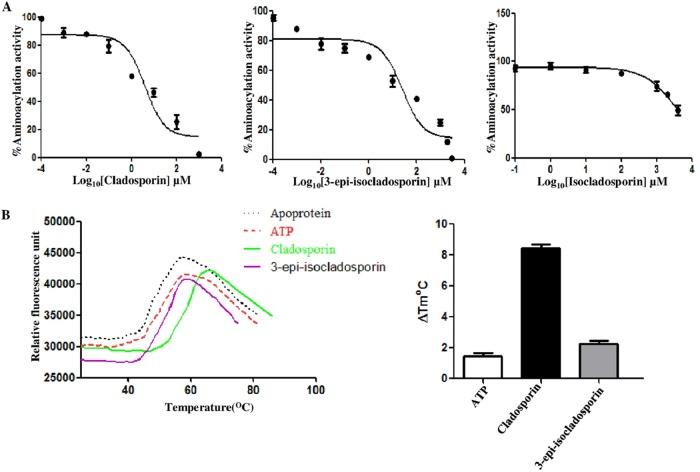
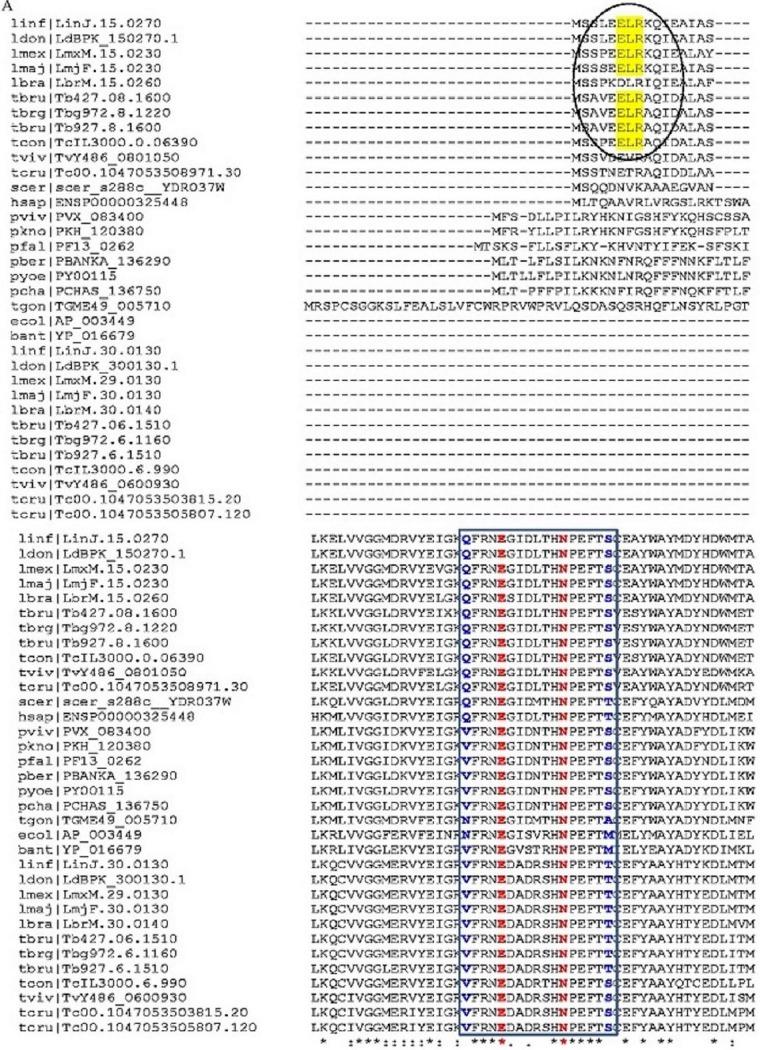
is a protozoan parasite that causes visceral leishmaniasis. Increasing resistance and severe side effects of existing drugs have led to the need to identify new chemotherapeutic targets. Aminoacyl-tRNA synthetases (aaRSs) are ubiquitous and are required for protein synthesis. aaRSs are known drug targets for bacterial and fungal pathogens. Here, we have characterized and evaluated the essentiality of lysyl-tRNA synthetase (LysRS). Two different coding sequences for lysyl-tRNA synthetases are annotated in the genome database. LysRS-1 (LdBPK_150270.1), located on chromosome 15, is closer to apicomplexans and eukaryotes, whereas LysRS-2 (LdBPK_300130.1), present on chromosome 30, is closer to bacteria. In the present study, we have characterized LysRS-1. Recombinant LysRS-1 displayed aminoacylation activity, and the protein localized to the cytosol. The LysRS-1 heterozygous mutants had a restrictive growth phenotype and attenuated infectivity. LysRS-1 appears to be an essential gene, as a chromosomal knockout of LysRS-1 could be generated when the gene was provided on a rescuing plasmid. Cladosporin, a fungal secondary metabolite and a known inhibitor of LysRS, was more potent against promastigotes (50% inhibitory concentration [IC], 4.19 µM) and intracellular amastigotes (IC, 1.09 µM) than were isomers of cladosporin (3-epi-isocladosporin and isocladosporin). These compounds exhibited low toxicity to mammalian cells. The specificity of inhibition of parasite growth caused by these inhibitors was further assessed using LysRS-1 heterozygous mutant strains and rescue mutant promastigotes. These inhibitors inhibited the aminoacylation activity of recombinant LysRS. Our data provide a framework for the development of a new class of drugs against this parasite. Aminoacyl-tRNA synthetases are housekeeping enzymes essential for protein translation, providing charged tRNAs for the proper construction of peptide chains. These enzymes provide raw materials for protein translation and also ensure fidelity of translation. is a protozoan parasite that causes visceral leishmaniasis. It is a continuously proliferating parasite that depends heavily on efficient protein translation. Lysyl-tRNA synthetase is one of the aaRSs which charges lysine to its cognate tRNA. Two different coding sequences for lysyl-tRNA synthetases (LysRS) are present in this parasite. LysRS-1 is closer to apicomplexans and eukaryotes, whereas LysRS-2 is closer to bacteria. Here, we have characterized LysRS-1 of . LysRS-1 appears to be an essential gene, as the chromosomal null mutants did not survive. The heterozygous mutants showed slower growth kinetics and exhibited attenuated virulence. This study also provides a platform to explore LysRS-1 as a potential drug target.
是一种导致内脏利什曼病的原生动物寄生虫。现有药物耐药性的增加和严重的副作用导致需要确定新的化疗靶点。氨酰 - tRNA合成酶(aaRSs)普遍存在,是蛋白质合成所必需的。aaRSs是已知的针对细菌和真菌病原体的药物靶点。在此,我们对赖氨酰 - tRNA合成酶(LysRS)的必要性进行了表征和评估。基因组数据库中注释了两种不同的赖氨酰 - tRNA合成酶编码序列。位于15号染色体上的LysRS - 1(LdBPK_150270.1)与顶复门生物和真核生物更为接近,而位于30号染色体上的LysRS - 2(LdBPK_300130.1)与细菌更为接近。在本研究中,我们对LysRS - 1进行了表征。重组LysRS - 1表现出氨酰化活性,且该蛋白定位于细胞质溶胶。LysRS - 1杂合突变体具有生长受限的表型和减弱的感染性。LysRS - 1似乎是一个必需基因,因为当该基因在拯救质粒上提供时,可以产生LysRS - 1的染色体敲除。枝孢菌素是一种真菌次生代谢产物,也是已知的LysRS抑制剂,它对前鞭毛体(50%抑制浓度[IC],4.19 μM)和细胞内无鞭毛体(IC,1.09 μM)的抑制作用比枝孢菌素的异构体(3 - 表 - 异枝孢菌素和异枝孢菌素)更强。这些化合物对哺乳动物细胞表现出低毒性。使用LysRS - 1杂合突变体菌株和拯救突变前鞭毛体进一步评估了这些抑制剂对寄生虫生长抑制的特异性。这些抑制剂抑制了重组LysRS的氨酰化活性。我们的数据为开发针对这种寄生虫的新型药物提供了框架。氨酰 - tRNA合成酶是蛋白质翻译所必需的管家酶,为肽链的正确构建提供带电荷的tRNA。这些酶为蛋白质翻译提供原材料,并确保翻译的保真度。是一种导致内脏利什曼病的原生动物寄生虫。它是一种持续增殖的寄生虫,严重依赖高效的蛋白质翻译。赖氨酰 - tRNA合成酶是将赖氨酸加载到其同源tRNA上的aaRSs之一。该寄生虫中存在两种不同的赖氨酰 - tRNA合成酶(LysRS)编码序列。LysRS - 1与顶复门生物和真核生物更为接近,而LysRS - 2与细菌更为接近。在此,我们对的LysRS - 1进行了表征。LysRS - 1似乎是一个必需基因,因为染色体缺失突变体无法存活。杂合突变体显示出较慢的生长动力学并表现出减弱的毒力。本研究还提供了一个平台来探索LysRS - 1作为潜在的药物靶点。





 Zotero 插件