
来那度胺和泊马度胺对卡波西肉瘤相关疱疹病毒感染细胞免疫表面分子的恢复作用
Restoration of immune surface molecules in Kaposi sarcoma-associated herpes virus infected cells by lenalidomide and pomalidomide.
作者信息
Davis David A, Mishra Suraj, Anagho Holda A, Aisabor Ashley I, Shrestha Prabha, Wang Victoria, Takamatsu Yuki, Maeda Kenji, Mitsuya Hiroaki, Zeldis Jerome B, Yarchoan Robert
机构信息
HIV and AIDS Malignancy Branch, Center for Cancer Research, National Cancer Institute, Bethesda, MD, USA.
Celgene Corp., Summit, NJ, USA.
出版信息
Oncotarget. 2017 May 17;8(31):50342-50358. doi: 10.18632/oncotarget.17960. eCollection 2017 Aug 1.
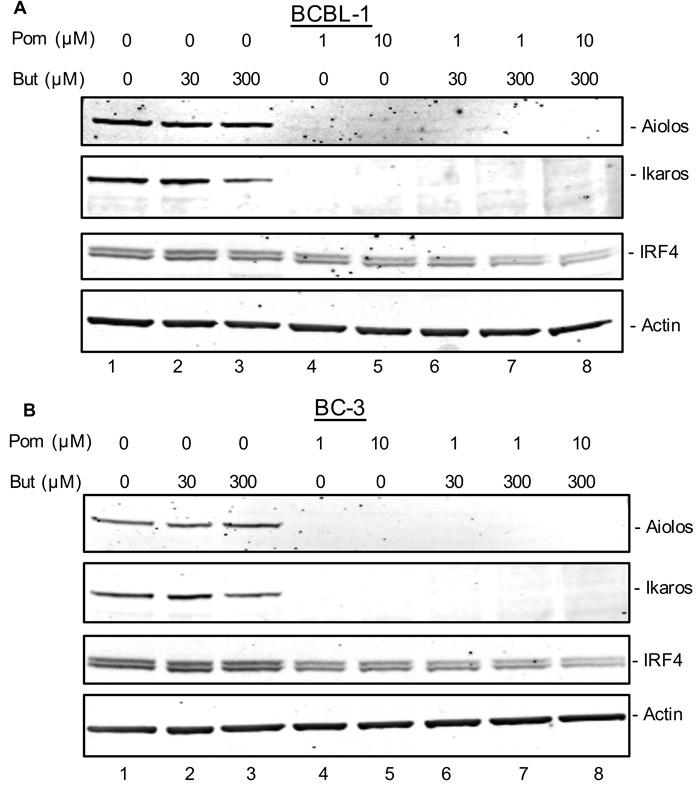
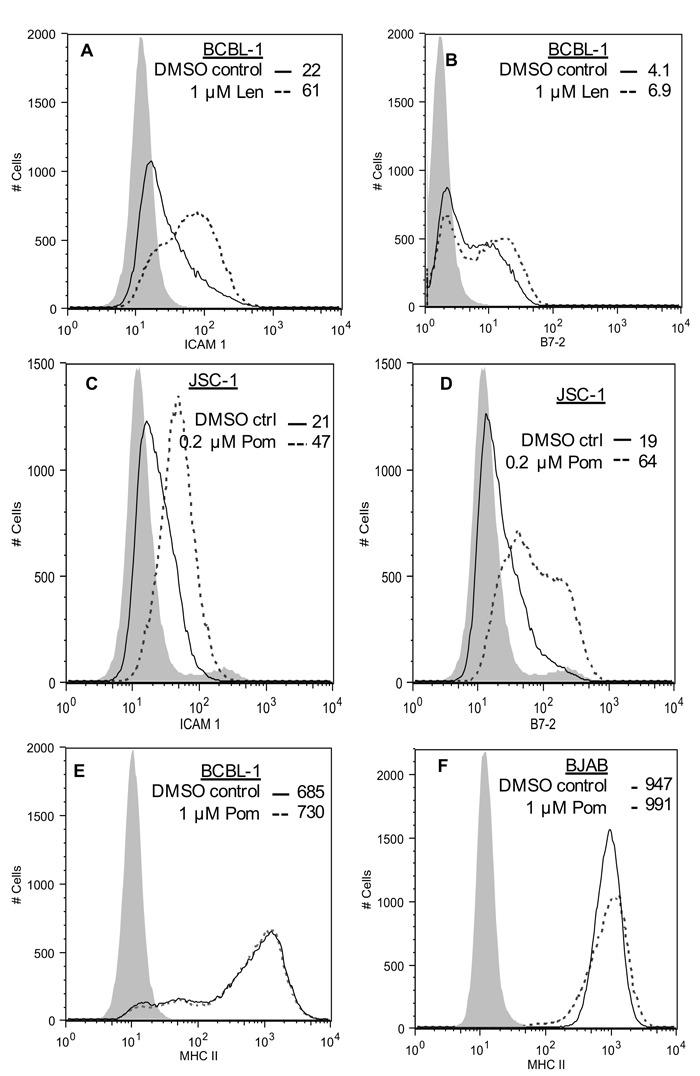
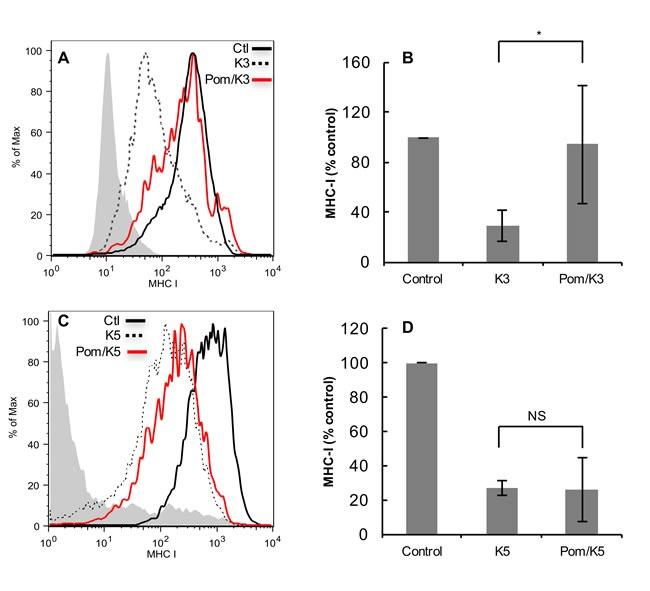
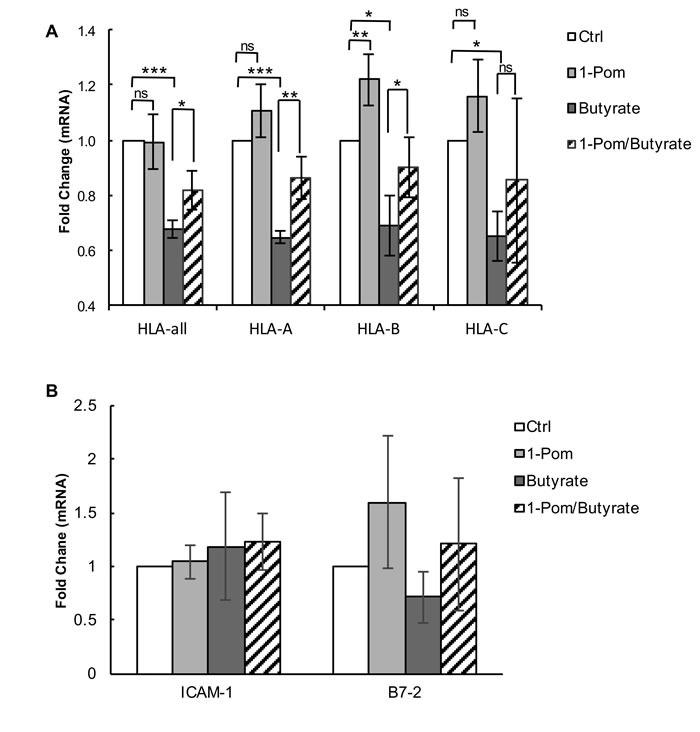
Kaposi sarcoma-associated herpesvirus (KSHV) is the cause of several tumors, including Kaposi sarcoma and primary effusion lymphoma (PEL). Most viruses have evolved means of escaping immune recognition. KSHV downregulates MHC-I expression during lytic infection, and expression of ICAM-1 and B7-2 (CD86) during latent infection, allowing evasion of T cell and natural killer immunity respectively. These effects are largely mediated by two KSHV-encoded proteins, K3 and K5. We show here that lenalidomide (Len) and pomalidomide (Pom) prevent down-regulation of MHC-I during lytic activation, and restore ICAM-1 and B7-2 surface expression in latently infected PEL cells. Importantly, these changes occurred at clinically achievable concentrations and prior to any cytotoxic effects. Exploration of the mechanism revealed that Pom blocked lytic down-regulation of MHC-I induced by transfection with K3 but not K5. Although Pom alone did not significantly increase HLA mRNA expression in PEL cells, it did blunt the butyrate-induced decrease in MHC-I mRNA expression and decreased the upregulation of K3 mRNA in lytic cells. Virus-induced tumors express foreign antigens, but immunotherapy can be thwarted by viral strategies to evade immune recognition. The effects of Pom and Len described here can prevent these strategies and support the use of these drugs to treat KSHV-induced tumors.
卡波西肉瘤相关疱疹病毒(KSHV)是包括卡波西肉瘤和原发性渗出性淋巴瘤(PEL)在内的多种肿瘤的病因。大多数病毒已经进化出逃避免疫识别的方法。KSHV在裂解感染期间下调MHC-I的表达,在潜伏感染期间下调ICAM-1和B7-2(CD86)的表达,从而分别逃避T细胞和自然杀伤免疫。这些作用主要由两种KSHV编码的蛋白K3和K5介导。我们在此表明,来那度胺(Len)和泊马度胺(Pom)可防止裂解激活期间MHC-I的下调,并恢复潜伏感染的PEL细胞中ICAM-1和B7-2的表面表达。重要的是,这些变化发生在临床可达到的浓度下,且在任何细胞毒性作用之前。机制探索表明,Pom可阻断由K3转染而非K5诱导的MHC-I的裂解下调。尽管单独使用Pom不会显著增加PEL细胞中HLA mRNA的表达,但它确实减弱了丁酸盐诱导的MHC-I mRNA表达的降低,并降低了裂解细胞中K3 mRNA的上调。病毒诱导的肿瘤表达外来抗原,但免疫疗法可能会被病毒逃避免疫识别的策略所阻碍。此处描述的Pom和Len的作用可以防止这些策略,并支持使用这些药物治疗KSHV诱导的肿瘤。


 Zotero 插件