
FGFR19 基因扩增作为肺鳞癌的潜在治疗靶点。
FGF19 genetic amplification as a potential therapeutic target in lung squamous cell carcinomas.
机构信息
Department of Medical Oncology, The First Affiliated Hospital, College of Medicine, Zhejiang University, Hangzhou, China.
Department of Pathology, The First Affiliated Hospital, College of Medicine, Zhejiang University, Hangzhou, China.
出版信息
Thorac Cancer. 2017 Nov;8(6):655-665. doi: 10.1111/1759-7714.12504. Epub 2017 Sep 14.
BACKGROUND
Although FGF19 gene aberrations are associated with carcinogenesis and progression in human cancers, the roles of FGF19 genetic amplification and expression in Chinese patients with lung squamous cell carcinoma (LSCC) and FGF19 amplification as a potential therapeutic target for LSCC are not well understood.
METHODS
Fluorescence in situ hybridization analysis and quantitative real-time-PCR was used to detect FGF19 genetic amplification and FGF19 messenger RNA expression in LSCC tumor and paired adjacent samples. Small interfering RNA and short hairpin RNA were used to knockdown FGF19 in vitro and in vivo.
RESULTS
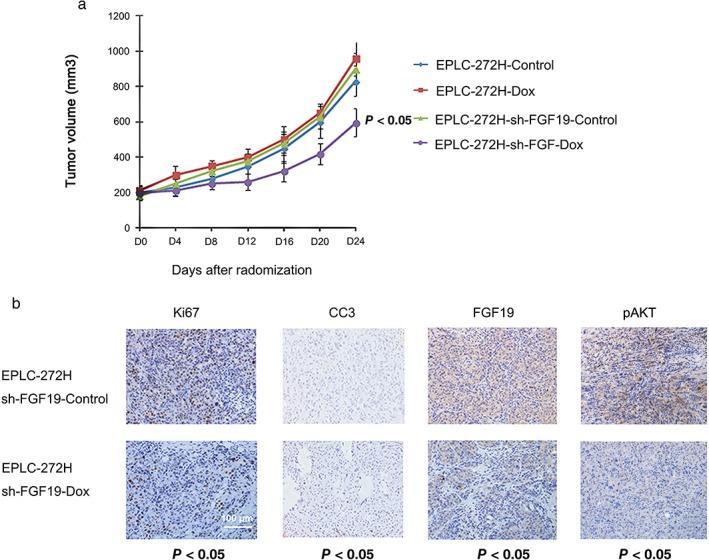
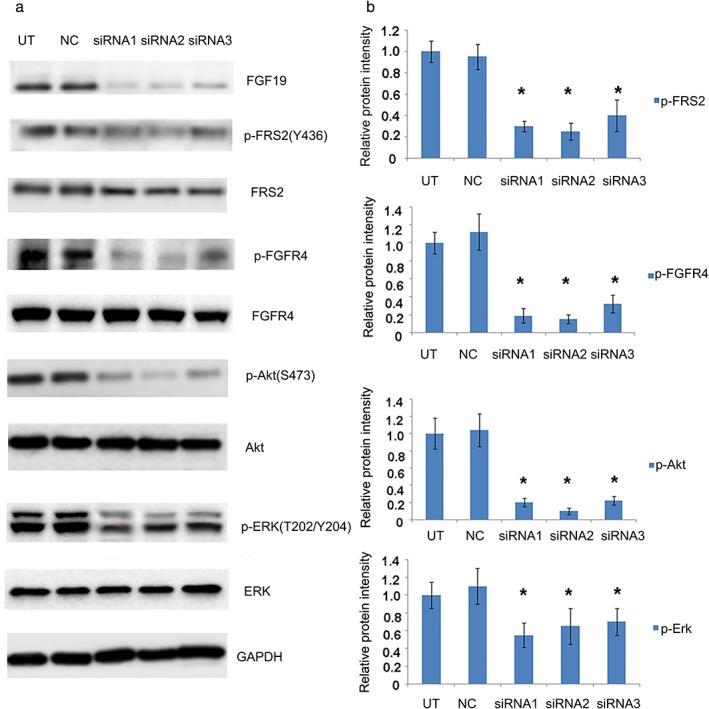
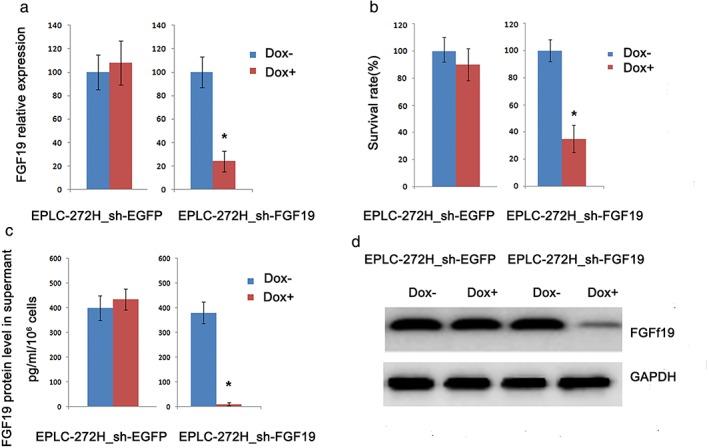
FGF19 amplification was identified in a subset of LSCC patients (37.5%, 15/40), and upregulation of FGF19 expression was found in 60% (24/40) of tumor tissues compared to adjacent non-tumorous tissues. Correlation analysis with clinicopathologic parameters showed that FGF19 upregulation was significantly associated with heavy smoking. Small interfering RNA knockdown of FGF19 led to the significant inhibition of cell growth and induced apoptosis in LSCC cells carrying the amplified FGF19 gene, but these effects was not observed in non-amplified LSCC cells. Interfering FGF19 expression with short hairpin RNA also resulted in tumor growth inhibition and induced apoptosis in LSCC xenografts with amplified FGF19 in tumor cells.
CONCLUSION
Our results suggested that FGF19 signaling activation is required for cell growth and survival of FGF19 amplified LSCC cells, both in vitro and in vivo. Intervention of FGF19 activation could be a potential therapeutic strategy for LSCC patients with FGF19 amplification.
背景
尽管 FGF19 基因异常与人类癌症的发生和进展有关,但 FGF19 基因扩增和表达在中国人肺鳞癌(LSCC)患者中的作用以及 FGF19 扩增作为 LSCC 的潜在治疗靶点尚不清楚。
方法
荧光原位杂交分析和实时定量 PCR 用于检测 LSCC 肿瘤和配对的相邻样本中的 FGF19 基因扩增和 FGF19 信使 RNA 表达。使用小干扰 RNA 和短发夹 RNA 在体外和体内敲低 FGF19。
结果
在一部分 LSCC 患者中发现了 FGF19 扩增(37.5%,15/40),与相邻非肿瘤组织相比,60%(24/40)的肿瘤组织中发现 FGF19 表达上调。与临床病理参数的相关性分析表明,FGF19 上调与重度吸烟显著相关。携带扩增 FGF19 基因的 LSCC 细胞中 FGF19 的小干扰 RNA 敲低导致细胞生长显著抑制并诱导细胞凋亡,但在非扩增 LSCC 细胞中未观察到这些效应。短发夹 RNA 干扰 FGF19 表达也导致携带肿瘤细胞中扩增 FGF19 的 LSCC 异种移植瘤的肿瘤生长抑制和诱导细胞凋亡。
结论
我们的结果表明,FGF19 信号激活是 FGF19 扩增 LSCC 细胞体外和体内生长和存活所必需的。干预 FGF19 激活可能是 FGF19 扩增 LSCC 患者的潜在治疗策略。


 Zotero 插件