
隐匿性听力损失?常见娱乐噪声暴露对人类耳蜗神经反应幅度无影响。
Hidden Hearing Loss? No Effect of Common Recreational Noise Exposure on Cochlear Nerve Response Amplitude in Humans.
作者信息
Grinn Sarah K, Wiseman Kathryn B, Baker Jason A, Le Prell Colleen G
机构信息
School of Behavioral and Brain Sciences, University of Texas at DallasDallas, TX, United States.
College of Public Health and Health Professions, University of FloridaGainesville, FL, United States.
出版信息
Front Neurosci. 2017 Sep 1;11:465. doi: 10.3389/fnins.2017.00465. eCollection 2017.
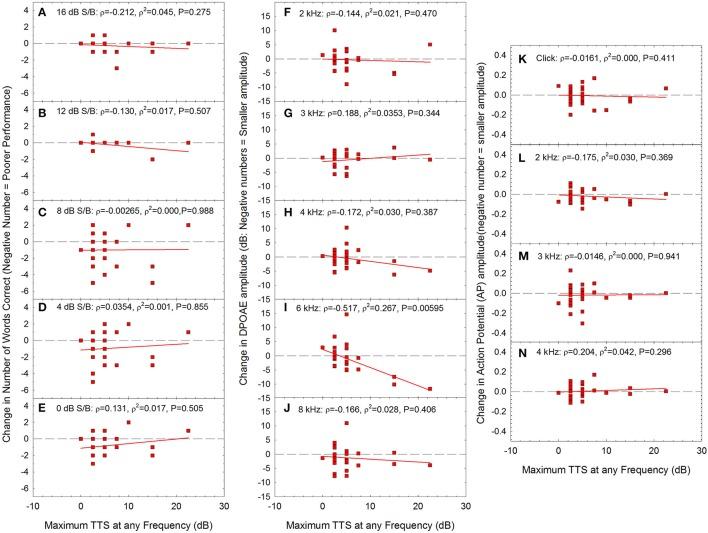
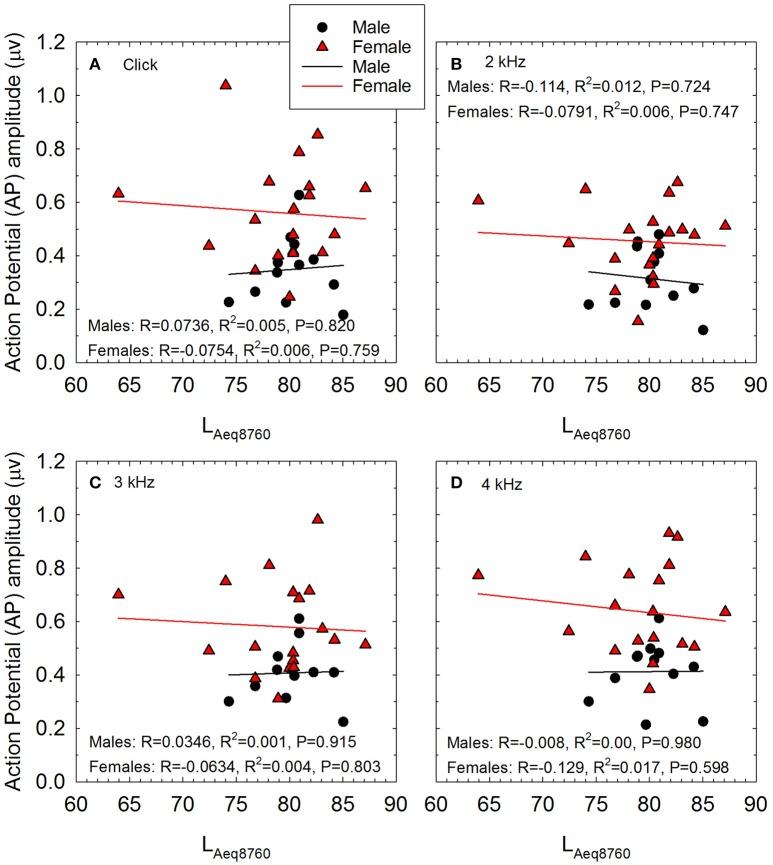
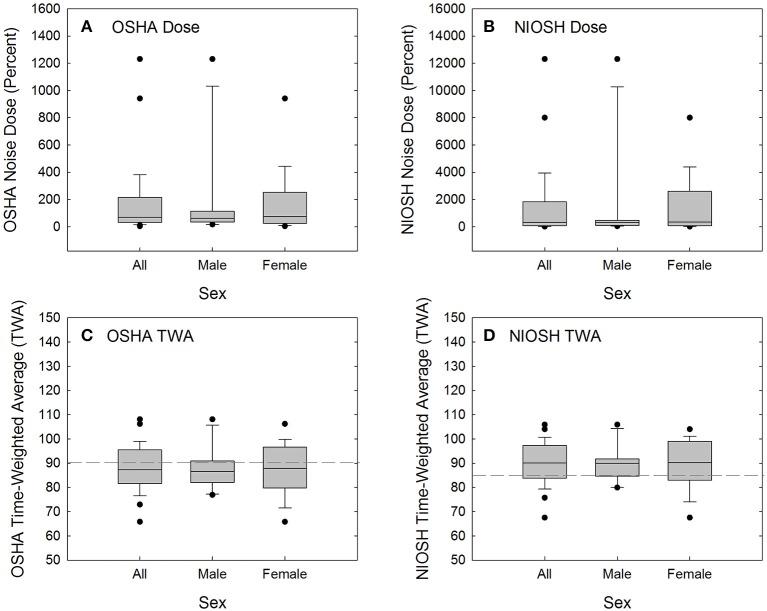
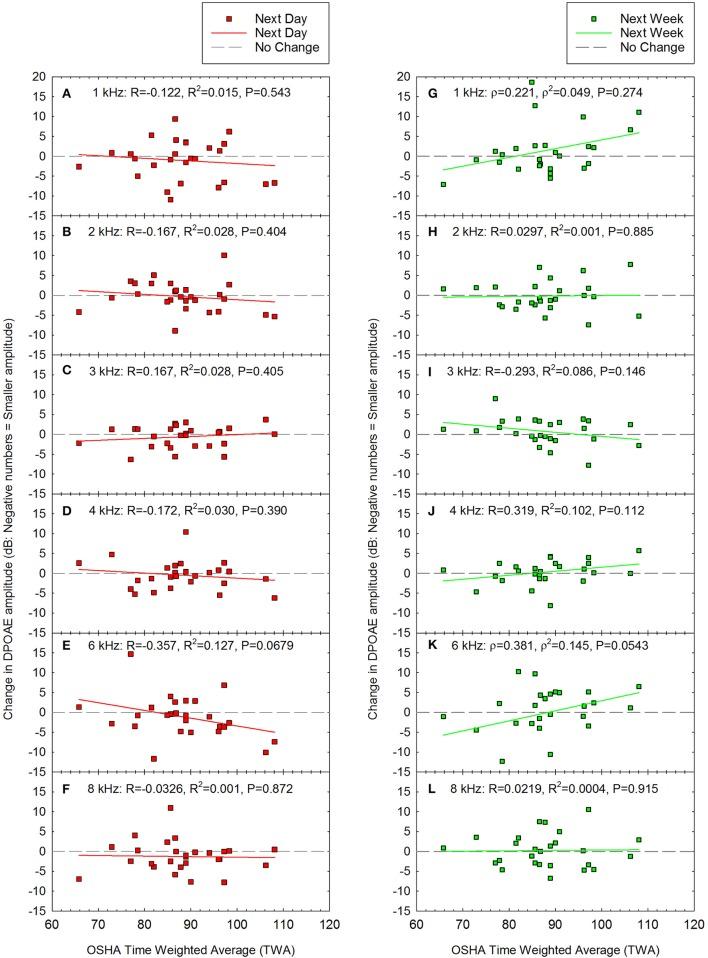
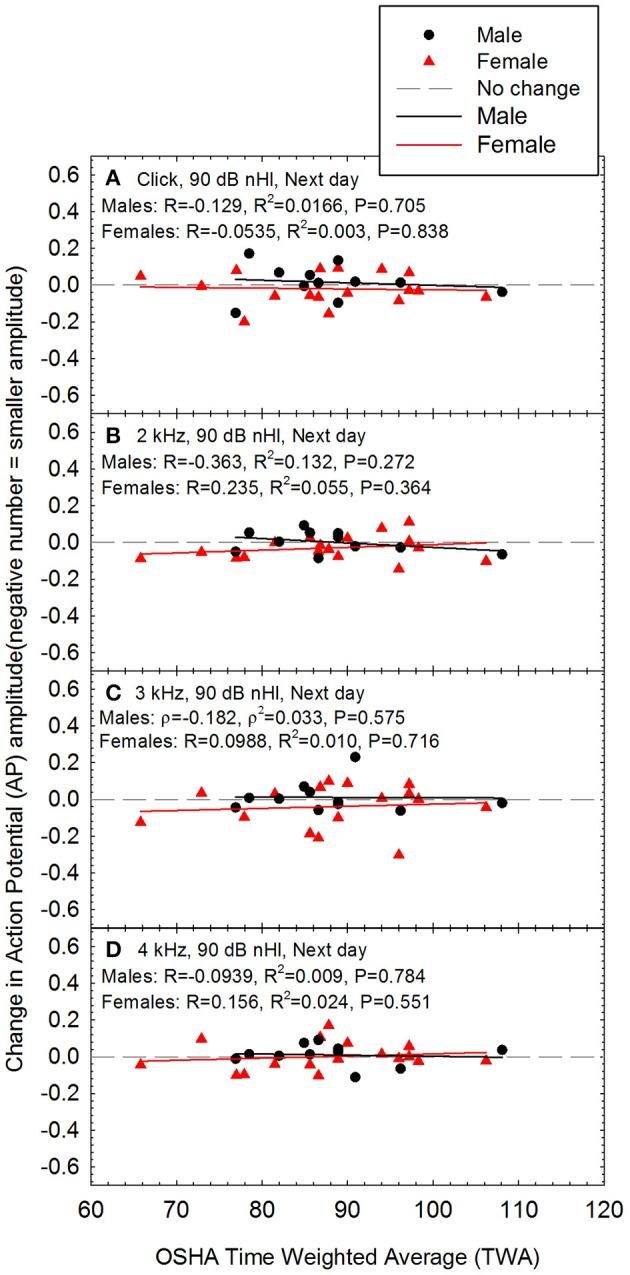
This study tested hypothesized relationships between noise exposure and auditory deficits. Both retrospective assessment of potential associations between noise exposure history and performance on an audiologic test battery and prospective assessment of potential changes in performance after new recreational noise exposure were completed. 32 participants (13M, 19F) with normal hearing (25-dB HL or better, 0.25-8 kHz) were asked to participate in 3 pre- and post-exposure sessions including: otoscopy, tympanometry, distortion product otoacoustic emissions (DPOAEs) (f2 frequencies 1-8 kHz), pure-tone audiometry (0.25-8 kHz), Words-in-Noise (WIN) test, and electrocochleography (eCochG) measurements at 70, 80, and 90-dB nHL (click and 2-4 kHz tone-bursts). The first session was used to collect baseline data, the second session was collected the day after a loud recreational event, and the third session was collected 1-week later. Of the 32 participants, 26 completed all 3 sessions. The retrospective analysis did not reveal statistically significant relationships between noise exposure history and any auditory deficits. The day after new exposure, there was a statistically significant correlation between noise "dose" and WIN performance overall, and within the 4-dB signal-to-babble ratio. In contrast, there were no statistically significant correlations between noise dose and changes in threshold, DPOAE amplitude, or AP amplitude the day after new noise exposure. Additional analyses revealed a statistically significant relationship between TTS and DPOAE amplitude at 6 kHz, with temporarily decreased DPOAE amplitude observed with increasing TTS. There was no evidence of auditory deficits as a function of previous noise exposure history, and no permanent changes in audiometric, electrophysiologic, or functional measures after new recreational noise exposure. There were very few participants with TTS the day after exposure - a test time selected to be consistent with previous animal studies. The largest observed TTS was approximately 20-dB. The observed pattern of small TTS suggests little risk of synaptopathy from common recreational noise exposure, and that we should not expect to observe changes in evoked potentials for this reason. No such changes were observed in this study. These data do not support suggestions that common, recreational noise exposure is likely to result in "hidden hearing loss".
本研究测试了噪声暴露与听觉缺陷之间的假设关系。完成了对噪声暴露史与听力学测试组表现之间潜在关联的回顾性评估,以及新的娱乐性噪声暴露后表现潜在变化的前瞻性评估。32名听力正常(25 dB HL或更好,0.25 - 8 kHz)的参与者(13名男性,19名女性)被要求参加3次暴露前和暴露后的测试环节,包括:耳镜检查、鼓室图、畸变产物耳声发射(DPOAE)(f2频率1 - 8 kHz)、纯音听力测定(0.25 - 8 kHz)、噪声中的言语(WIN)测试,以及在70、80和90 dB nHL下的耳蜗电图(eCochG)测量(短声和2 - 4 kHz短纯音)。第一次测试环节用于收集基线数据,第二次测试环节在一次喧闹的娱乐活动后第二天进行,第三次测试环节在1周后进行。32名参与者中,26名完成了所有3次测试。回顾性分析未发现噪声暴露史与任何听觉缺陷之间存在统计学上的显著关系。新暴露后的第二天,噪声“剂量”与总体WIN表现以及4 dB信噪比范围内存在统计学上的显著相关性。相比之下,新噪声暴露后第二天,噪声剂量与阈值变化、DPOAE幅度或动作电位幅度之间没有统计学上的显著相关性。进一步分析显示,TTS与6 kHz处的DPOAE幅度之间存在统计学上的显著关系,随着TTS增加,观察到DPOAE幅度暂时降低。没有证据表明听觉缺陷是既往噪声暴露史的函数,新的娱乐性噪声暴露后听力学、电生理学或功能测量也没有永久性变化。暴露后第二天很少有参与者出现TTS——选择这个测试时间是为了与之前的动物研究一致。观察到的最大TTS约为20 dB。观察到的小TTS模式表明,常见娱乐性噪声暴露导致突触病变的风险很小,因此我们不应期望观察到诱发电位的变化。本研究中未观察到此类变化。这些数据不支持常见娱乐性噪声暴露可能导致“隐性听力损失”的观点。



 Zotero 插件