
肿瘤抑制因子SPARCL1与癌症进展和预后的关联。
Associations of tumor suppressor SPARCL1 with cancer progression and prognosis.
作者信息
Li Ting, Liu Xia, Yang Antai, Fu Wenjie, Yin Fuqiang, Zeng Xiaoyun
机构信息
Life Sciences Institute, Guangxi Medical University, Nanning, Guangxi 530021, P.R. China.
Centre for Translational Medicine, Guangxi Medical University, Nanning, Guangxi 530021, P.R. China.
出版信息
Oncol Lett. 2017 Sep;14(3):2603-2610. doi: 10.3892/ol.2017.6546. Epub 2017 Jul 8.
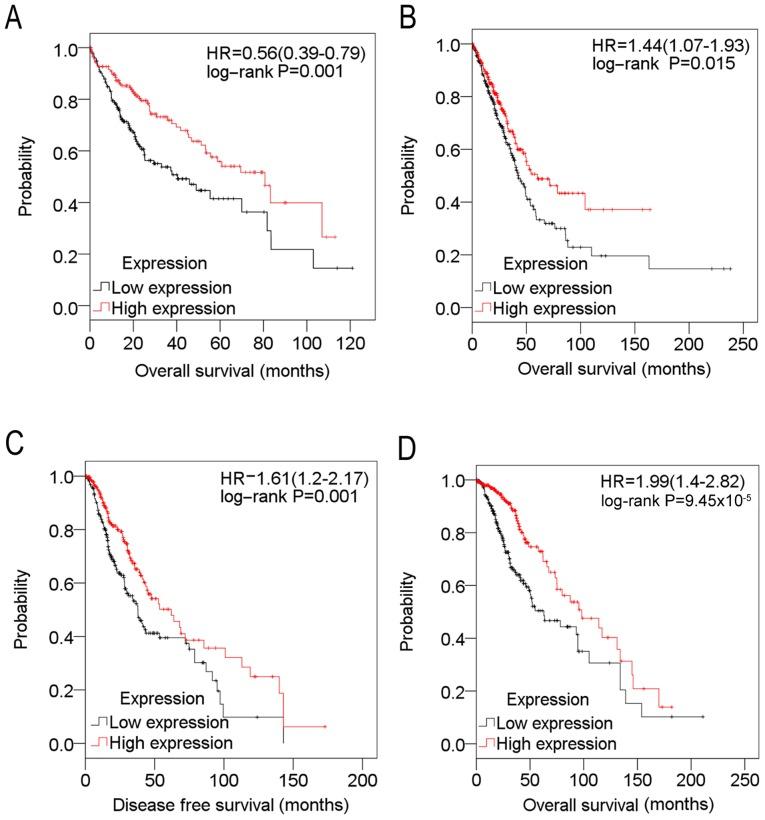
SPARC-like protein 1 (SPARCL1), a member of the family of secreted proteins which is acidic and rich in cysteine, is a potential tumor suppressor gene in most types of tumor. A systemic review and bioinformatics analysis was carried out to determine the associations between SPARCL1 and tumor progression and clinical factors. Downregulation of SPARCL1, thought to be regulated by epigenetic modifications including DNA methylation, serves important functions in tumor progression and development, with its regulatory functions on cell viability, migration, invasion, cell adhesion and drug resistance. Downregulation of SPARCL1 was markedly associated with a poor overall survival rate of patients with one of ≥7 solid tumors and predicted increased mortality in patients with one of ≥4 distinct tumor types. The present review indicated that SPARCL1 may be a therapeutic target for cancer treatment and a biomarker to determine prognosis.
类富含半胱氨酸酸性分泌蛋白1(SPARCL1)是分泌蛋白家族的成员,该家族蛋白呈酸性且富含半胱氨酸,在大多数类型的肿瘤中是一种潜在的抑癌基因。开展了一项系统综述和生物信息学分析,以确定SPARCL1与肿瘤进展及临床因素之间的关联。SPARCL1的下调被认为受包括DNA甲基化在内的表观遗传修饰调控,在肿瘤进展和发展中发挥重要作用,对细胞活力、迁移、侵袭、细胞黏附和耐药性具有调节功能。SPARCL1的下调与≥7种实体瘤之一的患者总体生存率低显著相关,并预测≥4种不同肿瘤类型之一的患者死亡率增加。本综述表明,SPARCL1可能是癌症治疗的一个治疗靶点和判断预后的一个生物标志物。


 Zotero 插件