
的免疫调节特性:多糖肽的作用
Immunomodulatory Properties of : The Role of Polysaccharopeptide.
作者信息
Saleh Mohammad H, Rashedi Iran, Keating Armand
机构信息
Institute of Biomaterials and Biomedical Engineering, University of Toronto, Toronto, ON, Canada.
Cell Therapy Program, Princess Margaret Cancer Centre, Krembil Research Institute, University Health Network, Toronto, ON, Canada.
出版信息
Front Immunol. 2017 Sep 6;8:1087. doi: 10.3389/fimmu.2017.01087. eCollection 2017.
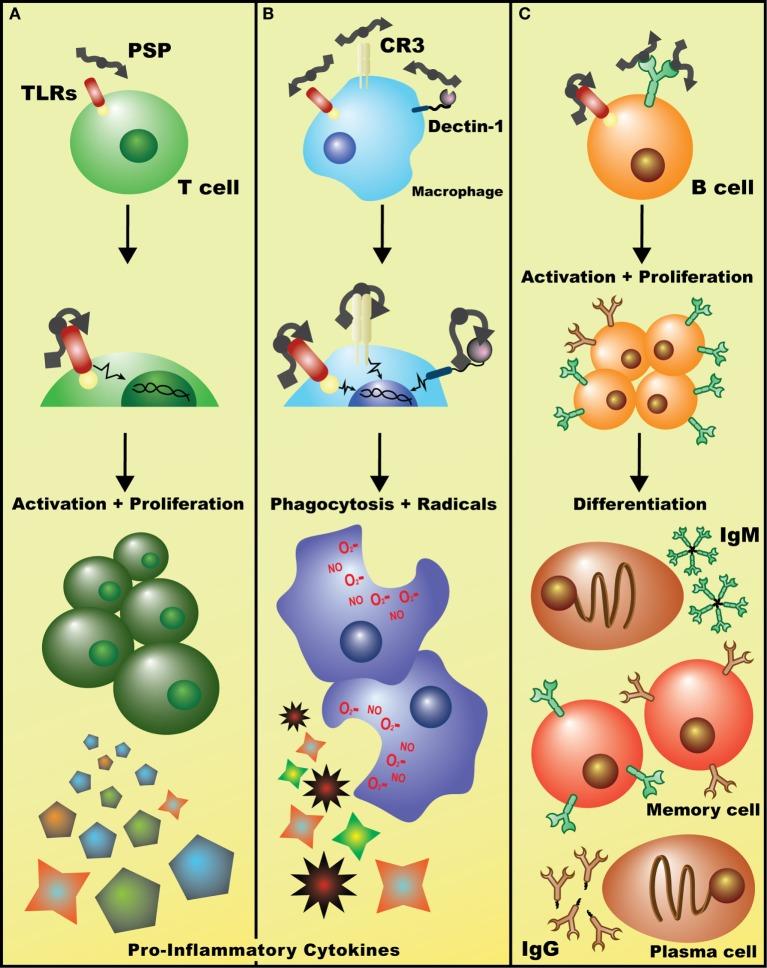
Traditional uses of herbal medicine have depended mostly on anecdotal evidence for much of history. The increasing application of scientific rigor to the study some of these traditional therapies in recent years has revealed potent bioactivity, notably demonstrated by the 2015 Nobel Prize for the discovery of an antimalarial compound from traditional Chinese herbs. Given the recent successes of immunotherapy and checkpoint blockade, there is a renewed interest in identifying new drugs with immunomodulatory effects. As an estimated 45-60% of cancer patients worldwide are reported to use complementary alternative medicine alongside traditional therapy, this review will highlight the literature on the immunomodulatory effects of one of these compounds. We report on the induction of a largely pro-inflammatory cytokine profile by the polysaccharopeptide (PSP) isolated from the (Yun zhi) mushroom, as well as its effects on various immune subsets, and the clinical data that have led to its widespread adoption as an adjunct cancer therapeutic in many Eastern cultures. Particular focus is given to the potential mechanisms underlying the bioactivity of PSP and reports of its ability to promote antitumor immunity by helping overcome tolerogenic tumor microenvironments.
在历史的大部分时间里,草药的传统用途主要依赖于轶事证据。近年来,对其中一些传统疗法的研究越来越严格地应用科学方法,揭示了其强大的生物活性,2015年诺贝尔生理学或医学奖授予从传统中药中发现抗疟化合物,这一成果便是明证。鉴于免疫疗法和检查点阻断疗法最近取得的成功,人们对鉴定具有免疫调节作用的新药重新产生了兴趣。据报道,全球估计有45%-60%的癌症患者在接受传统治疗的同时使用补充替代医学,本综述将重点介绍其中一种化合物的免疫调节作用的相关文献。我们报告了从云芝蘑菇中分离出的多糖肽(PSP)诱导大量促炎细胞因子谱的情况,以及它对各种免疫亚群的影响,还有使其在许多东方文化中作为辅助癌症治疗方法被广泛采用的临床数据。特别关注的是PSP生物活性的潜在机制,以及关于它通过帮助克服耐受性肿瘤微环境来促进抗肿瘤免疫能力的报道。
 Zotero 插件