
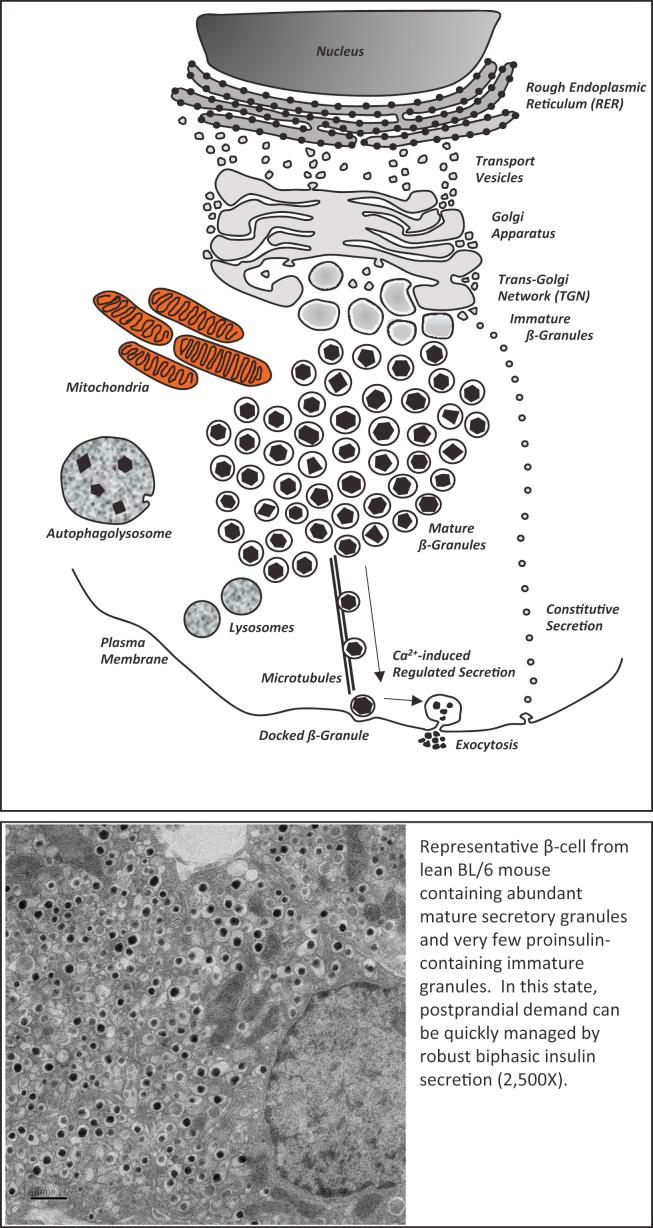
β 细胞中胰岛素分泌的动态可塑性。
The dynamic plasticity of insulin production in β-cells.
机构信息
MedImmune, Cardiovascular and Metabolic Disease Research, 1 MedImmune Way, Gaithersburg, MD 20878, USA.
出版信息
Mol Metab. 2017 May 4;6(9):958-973. doi: 10.1016/j.molmet.2017.04.010. eCollection 2017 Sep.
BACKGROUND
Although the insulin-producing pancreatic β-cells are quite capable of adapting to both acute and chronic changes in metabolic demand, persistently high demand for insulin will ultimately lead to their progressive dysfunction and eventual loss. Recent and historical studies highlight the importance of 'resting' the β-cell as a means of preserving functional β-cell mass.
SCOPE OF REVIEW
We provide experimental evidence to highlight the remarkable plasticity for insulin production and secretion by the pancreatic β-cell alongside some clinical evidence that supports leveraging this unique ability to preserve β-cell function.
MAJOR CONCLUSIONS
Treatment strategies for type 2 diabetes mellitus (T2DM) targeted towards reducing the systemic metabolic burden, rather than demanding greater insulin production from an already beleaguered β-cell, should be emphasized to maintain endogenous insulin secretory function and delay the progression of T2DM.
背景
尽管产生胰岛素的胰腺β细胞非常有能力适应代谢需求的急性和慢性变化,但对胰岛素的持续高需求最终将导致其逐渐功能障碍并最终丧失。最近和历史研究强调了“让β细胞休息”作为保护功能性β细胞量的一种手段的重要性。
综述范围
我们提供实验证据来强调胰腺β细胞在胰岛素产生和分泌方面的显著可塑性,以及一些支持利用这种独特能力来保护β细胞功能的临床证据。
主要结论
应强调针对降低全身代谢负担的 2 型糖尿病 (T2DM) 治疗策略,而不是要求已经疲惫不堪的β细胞产生更多的胰岛素,以维持内源性胰岛素分泌功能并延缓 T2DM 的进展。


 Zotero 插件