
机会致病菌以与荚膜多糖相关的空间特异性方式产生外膜囊泡。
The Opportunistic Pathogen Produces Outer Membrane Vesicles in a Spatially Distinct Manner Related to Capsular Polysaccharide.
作者信息
Hampton Cheri M, Guerrero-Ferreira Ricardo C, Storms Rachel E, Taylor Jeannette V, Yi Hong, Gulig Paul A, Wright Elizabeth R
机构信息
Division of Pediatric Infectious Diseases, Emory University School of Medicine, Children's Healthcare of Atlanta, Atlanta, GA, United States.
Robert P. Apkarian Integrated Electron Microscopy Core, Emory University, Atlanta, GA, United States.
出版信息
Front Microbiol. 2017 Nov 7;8:2177. doi: 10.3389/fmicb.2017.02177. eCollection 2017.
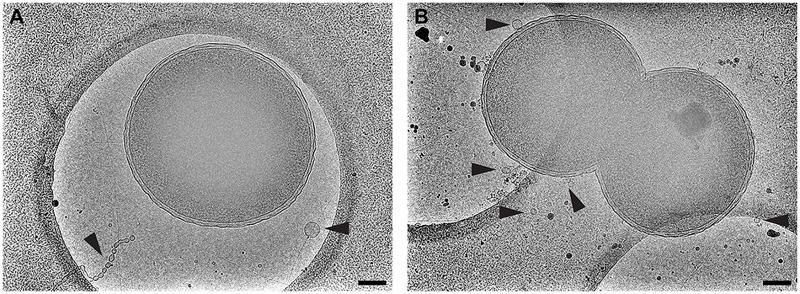
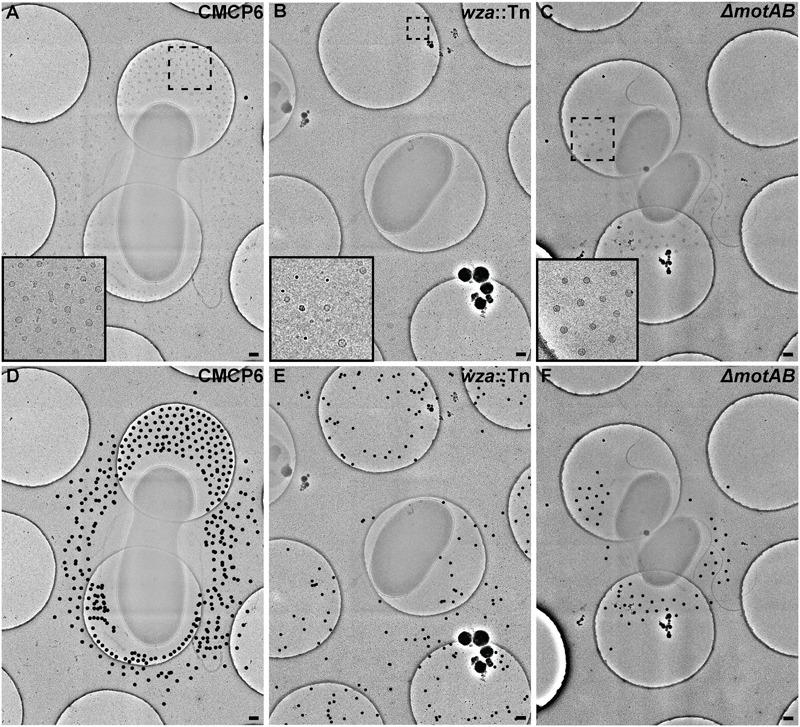
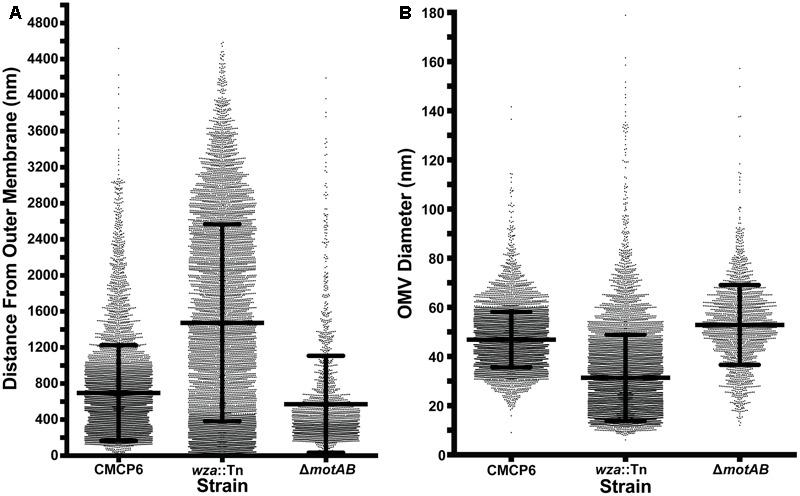
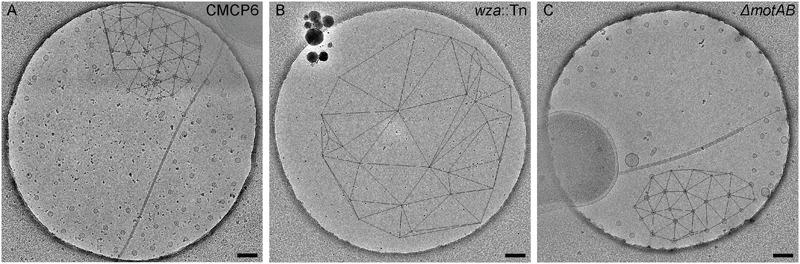
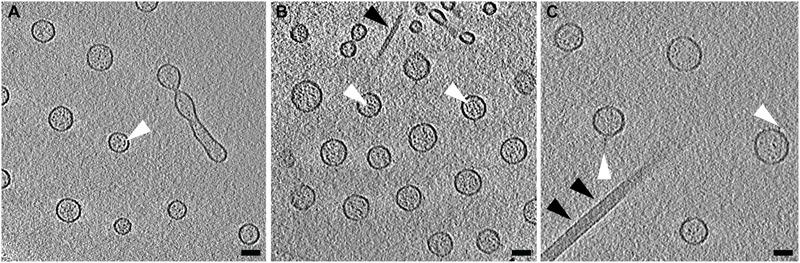
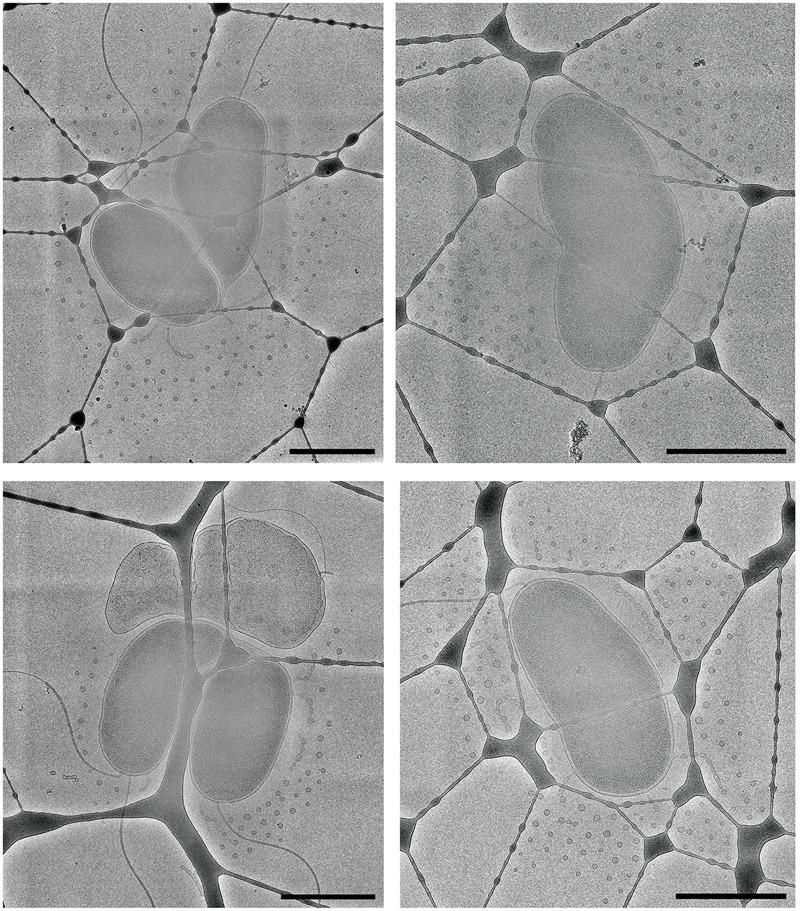
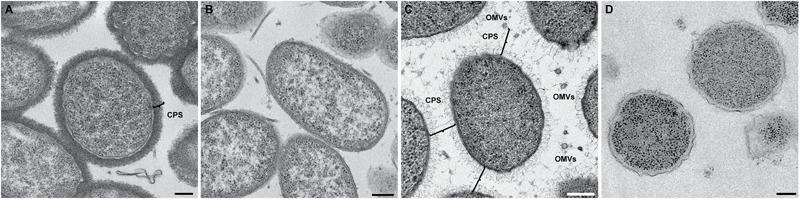
, a bacterial species that inhabits brackish waters, is an opportunistic pathogen of humans. infections can cause acute gastroenteritis, invasive septicemia, tissue necrosis, and potentially death. Virulence factors associated with include the capsular polysaccharide (CPS), lipopolysaccharide, flagellum, pili, and outer membrane vesicles (OMVs). The aims of this study were to characterize the morphology of cells and the formation and arrangement of OMVs using cryo-electron microscopy (cryo-EM). cryo-EM and cryo-electron tomography imaging of strains grown in liquid cultures revealed the presence of OMVs (diameters of ∼45 nm for wild-type, ∼30 nm for the unencapsulated mutant, and ∼50 nm for the non-motile mutant) in log-phase growth. Production of OMVs in the stationary growth phase was limited and irregular. The spacing of the OMVs around the wild-type cells was in regular, concentric rings. In wild-type cells and a non-motile mutant, the spacing between the cell envelope and the first ring of OMVs was ∼200 nm; this spacing was maintained between subsequent OMV layers. The size, arrangement, and spacing of OMVs in an unencapsulated mutant was irregular and indicated that the polysaccharide chains of the capsule regulate aspects of OMV production and order. Together, our results revealed the distinctive organization of OMVs that is affected by expression of the CPS.
[细菌名称]是一种栖息于微咸水中的细菌,是人类的机会致病菌。该细菌感染可导致急性肠胃炎、侵袭性败血症、组织坏死,并可能导致死亡。与该细菌相关的毒力因子包括荚膜多糖(CPS)、脂多糖、鞭毛、菌毛和外膜囊泡(OMV)。本研究的目的是使用冷冻电子显微镜(cryo-EM)来表征该细菌细胞的形态以及OMV的形成和排列。对在液体培养物中生长的该细菌菌株进行冷冻电镜和冷冻电子断层扫描成像显示,在对数生长期存在OMV(野生型直径约为45 nm,无荚膜突变体直径约为30 nm,非运动突变体直径约为50 nm)。在稳定生长期,OMV的产生有限且不规则。野生型细胞周围的OMV呈规则的同心环排列。在野生型细胞和非运动突变体中,细胞膜与第一圈OMV之间的间距约为200 nm;在后续的OMV层之间保持该间距。无荚膜突变体中OMV的大小、排列和间距不规则,表明荚膜的多糖链调节OMV产生和排列的各个方面。总之,我们的结果揭示了受CPS表达影响的该细菌OMV的独特组织方式。


 Zotero 插件