
β-榄香烯通过抑制宫颈癌细胞中 Wnt/β-连环蛋白信号通路发挥治疗作用。
Therapeutic effects of β-elemene via attenuation of the Wnt/β-catenin signaling pathway in cervical cancer cells.
机构信息
Department of Gynecology, The First Affiliated Hospital of China Medical University, Shenyang, Liaoning 110000, P.R. China.
Department of Biochemistry and Molecular Biology, China Medical University, Shenyang, Liaoning 110000, P.R. China.
出版信息
Mol Med Rep. 2018 Mar;17(3):4299-4306. doi: 10.3892/mmr.2018.8455. Epub 2018 Jan 18.
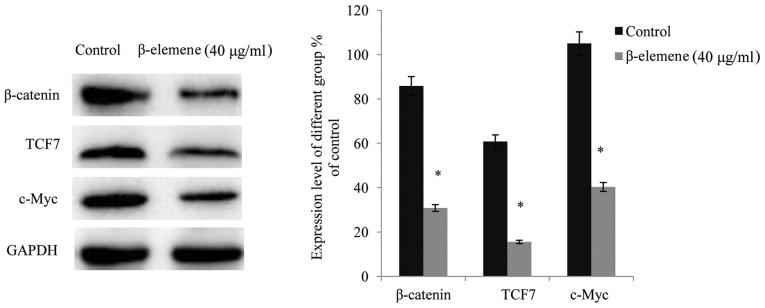
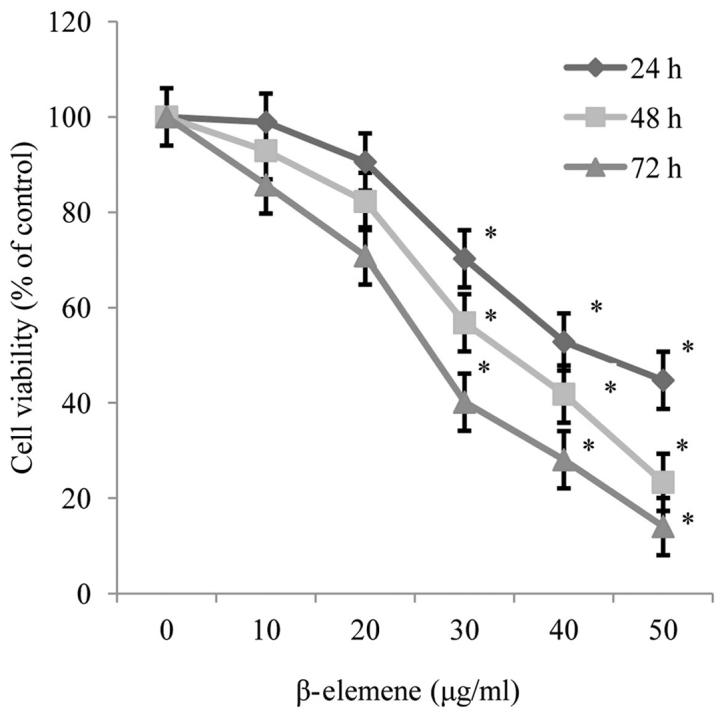
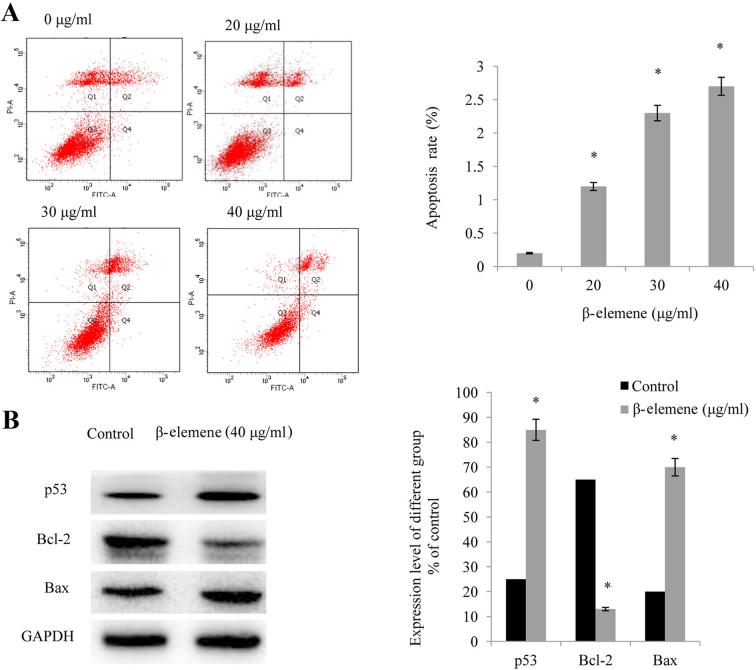
Concurrent radio chemotherapy treatment prolongs the survival rate of patients with advanced cervical cancer; however, it has adverse side‑effects. β‑elemene, an active component of the traditional Chinese medicinal herb Curcuma zedoaria, is a promising alternative therapeutic drug for the treatment of advanced cervical cancer. The aim of the present study was to investigate the antitumor effects of β‑elemene in human cervical cancer SiHa cells and to determine its underlying therapeutic molecular mechanisms. Cell viability, cell cycle progression and apoptosis were detected using an MTT assay and flow cytometry analysis. Furthermore, the levels of cell migration and cell invasion were investigated using Transwell and wound healing assays. The expression levels of Cyclin‑dependent kinase inhibitor 2B (P15), Cyclin D1, cellular tumor antigen p53, apoptosis regulator Bcl‑2 (Bcl‑2), apoptosis regulator BAX (Bax), 72 kDa type IV collagenase (MMP‑2), matrix metalloproteinase‑9 (MMP‑9), β‑catenin, transcription factor 7 (TCF7), and Myc proto‑oncogene protein (c‑Myc) were analyzed via western blotting. The results revealed that β‑elemene inhibited the proliferation of SiHa cells in a dose and time‑dependent manner. Administration of β‑elemene induced G1 phase cell‑cycle arrest, as demonstrated by the upregulation of P15 expression and the downregulation of Cyclin D1 expression. Furthermore, the present study revealed that β‑elemene induced apoptosis in SiHa cells by enhancing the expression of p53 and Bax, and suppressing the expression of Bcl‑2. In addition, treatment with β‑elemene inhibited cell migration and invasion via downregulation of MMP‑2 and MMP‑9 expression levels. Western blotting demonstrated that β‑elemene reduced the expression levels of β‑catenin and its downstream target molecule TCF7, thus resulting in reduced levels of their target proteins, including c‑Myc, Cyclin D1, Bax and MMP‑2 in cervical cancer cells. The results of the present study suggested that β‑elemene may inhibit cell proliferation and invasion, in addition to inducing apoptosis, via attenuation of the Wnt/β‑catenin signaling pathway in cervical cancer cells.
同期放化疗可延长晚期宫颈癌患者的生存率,但具有不良反应。β-榄香烯是莪术的一种活性成分,是治疗晚期宫颈癌的一种有前途的治疗药物。本研究旨在探讨β-榄香烯对人宫颈癌 SiHa 细胞的抗肿瘤作用,并探讨其潜在的治疗分子机制。采用 MTT 法和流式细胞术检测细胞活力、细胞周期进程和细胞凋亡。此外,还通过 Transwell 和划痕愈合试验检测细胞迁移和侵袭水平。通过 Western blot 分析细胞周期蛋白依赖性激酶抑制剂 2B(P15)、细胞周期蛋白 D1、肿瘤抗原 p53、凋亡调节因子 Bcl-2(Bcl-2)、凋亡调节因子 Bax(Bax)、72 kDa Ⅳ型胶原酶(MMP-2)、基质金属蛋白酶-9(MMP-9)、β-连环蛋白、转录因子 7(TCF7)和原癌基因蛋白 Myc(c-Myc)的表达水平。结果表明,β-榄香烯呈剂量和时间依赖性抑制 SiHa 细胞增殖。β-榄香烯给药诱导 G1 期细胞周期停滞,表现为 P15 表达上调和细胞周期蛋白 D1 表达下调。此外,本研究表明,β-榄香烯通过增强 p53 和 Bax 的表达,抑制 Bcl-2 的表达,诱导 SiHa 细胞凋亡。此外,β-榄香烯通过下调 MMP-2 和 MMP-9 的表达水平抑制细胞迁移和侵袭。Western blot 表明,β-榄香烯降低了β-连环蛋白及其下游靶分子 TCF7 的表达水平,从而降低了其靶蛋白,包括宫颈癌细胞中的 c-Myc、细胞周期蛋白 D1、Bax 和 MMP-2 的水平。本研究结果表明,β-榄香烯可能通过抑制宫颈癌细胞中的 Wnt/β-连环蛋白信号通路来抑制细胞增殖和侵袭,并诱导细胞凋亡。


 Zotero 插件