
持续性激活气道上皮 2 型相关基因网络与变应原致敏哮喘患者诱导痰中细胞表型的关联。
Persistent activation of interlinked type 2 airway epithelial gene networks in sputum-derived cells from aeroallergen-sensitized symptomatic asthmatics.
机构信息
Telethon Kids Institute, The University of Western Australia, Perth, Australia.
School of Paediatrics and Child Health, The University of Western Australia, Perth, Australia.
出版信息
Sci Rep. 2018 Jan 24;8(1):1511. doi: 10.1038/s41598-018-19837-6.
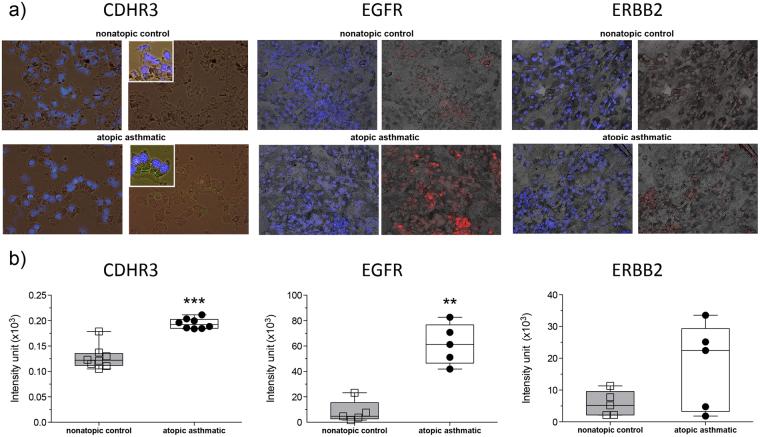
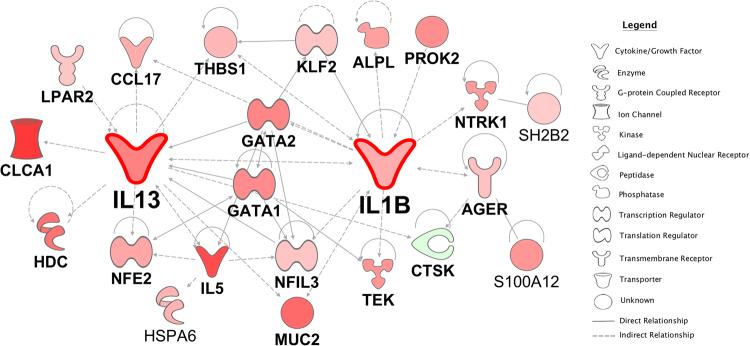
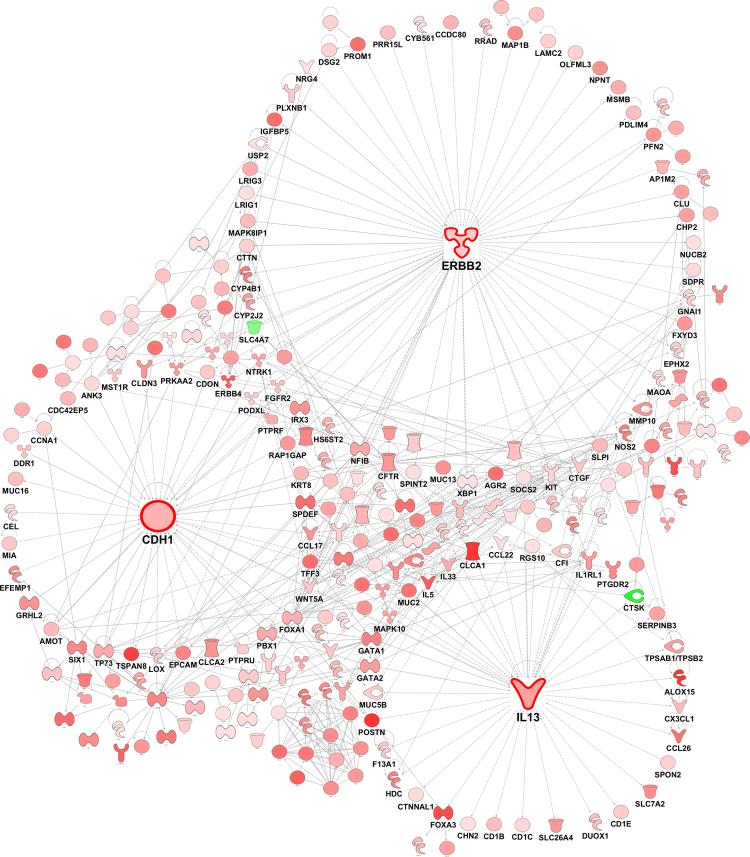
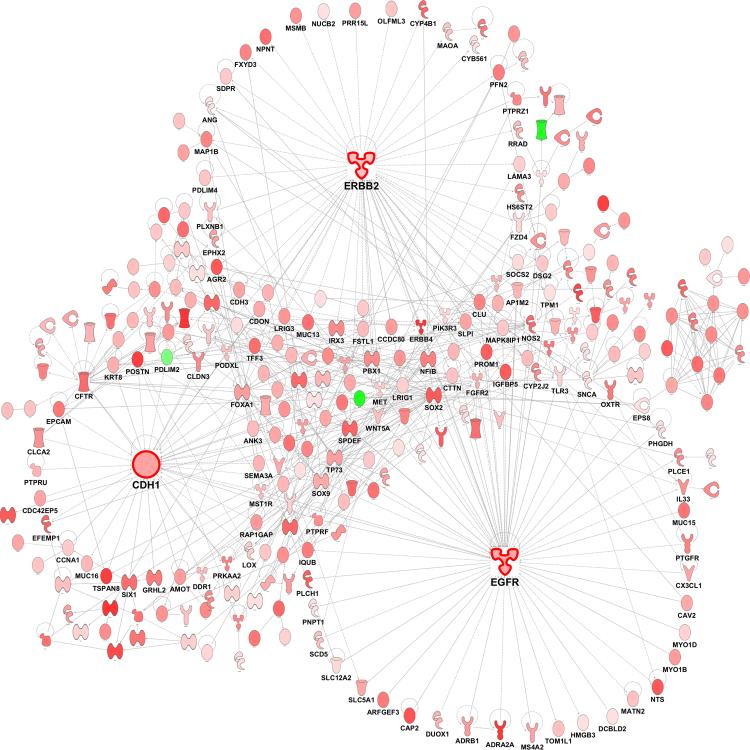
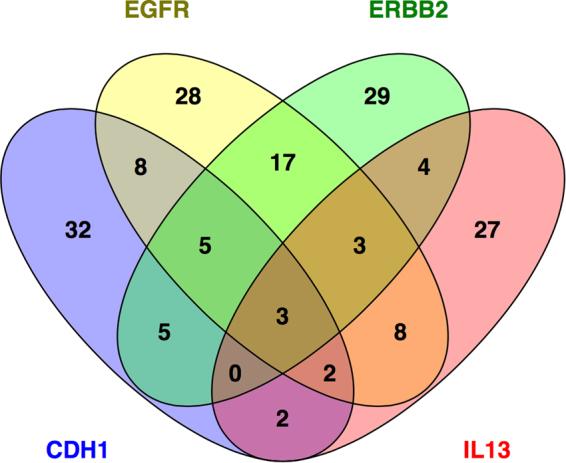
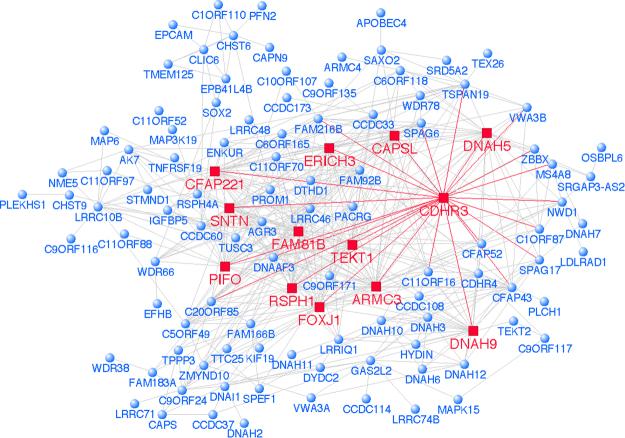
Atopic asthma is a persistent disease characterized by intermittent wheeze and progressive loss of lung function. The disease is thought to be driven primarily by chronic aeroallergen-induced type 2-associated inflammation. However, the vast majority of atopics do not develop asthma despite ongoing aeroallergen exposure, suggesting additional mechanisms operate in conjunction with type 2 immunity to drive asthma pathogenesis. We employed RNA-Seq profiling of sputum-derived cells to identify gene networks operative at baseline in house dust mite-sensitized (HDM) subjects with/without wheezing history that are characteristic of the ongoing asthmatic state. The expression of type 2 effectors (IL-5, IL-13) was equivalent in both cohorts of subjects. However, in HDM-wheezers they were associated with upregulation of two coexpression modules comprising multiple type 2- and epithelial-associated genes. The first module was interlinked by the hubs EGFR, ERBB2, CDH1 and IL-13. The second module was associated with CDHR3 and mucociliary clearance genes. Our findings provide new insight into the molecular mechanisms operative at baseline in the airway mucosa in atopic asthmatics undergoing natural aeroallergen exposure, and suggest that susceptibility to asthma amongst these subjects involves complex interactions between type 2- and epithelial-associated gene networks, which are not operative in equivalently sensitized/exposed atopic non-asthmatics.
特应性哮喘是一种持续性疾病,其特征为间歇性喘息和肺功能进行性下降。该疾病被认为主要由慢性变应原诱导的 2 型相关炎症驱动。然而,尽管持续暴露于变应原,绝大多数特应者并未发展为哮喘,这表明除了 2 型免疫外,还有其他机制共同作用以驱动哮喘发病机制。我们采用痰液衍生细胞的 RNA-Seq 分析,鉴定了屋尘螨致敏(HDM)有/无喘息史受试者中基线时起作用的基因网络,这些网络特征与持续的哮喘状态有关。两组受试者的 2 型效应物(IL-5、IL-13)的表达相当。然而,在 HDM-喘息者中,它们与两个共表达模块的上调相关,这些模块包含多个 2 型和上皮相关基因。第一个模块由 EGFR、ERBB2、CDH1 和 IL-13 等枢纽连接。第二个模块与 CDHR3 和粘液纤毛清除基因相关。我们的研究结果为正在进行自然变应原暴露的特应性哮喘患者气道黏膜中基线时起作用的分子机制提供了新的见解,并表明这些受试者中对哮喘的易感性涉及 2 型和上皮相关基因网络之间的复杂相互作用,而在同样致敏/暴露的特应性非哮喘者中,这些网络并不起作用。
 Zotero 插件