
气道上皮细胞免疫在哮喘和 COPD 患者鼻病毒感染期间被延迟。
Airway Epithelial Cell Immunity Is Delayed During Rhinovirus Infection in Asthma and COPD.
机构信息
School of Medicine and Public Health, University of Newcastle, Callaghan, NSW, Australia.
Priority Research Centre for Healthy Lungs, Hunter Medical Research Institute, University of Newcastle, New Lambton Heights, NSW, Australia.
出版信息
Front Immunol. 2020 May 15;11:974. doi: 10.3389/fimmu.2020.00974. eCollection 2020.
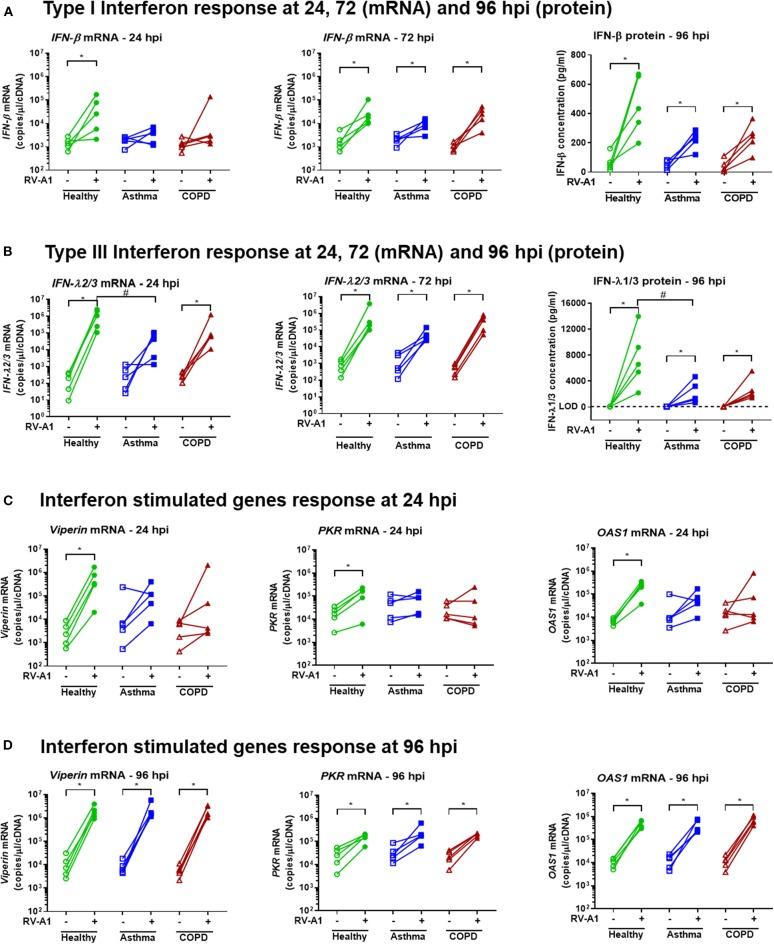
Respiratory viral infections, particularly those caused by rhinovirus, exacerbate chronic respiratory inflammatory diseases, such as asthma and chronic obstructive pulmonary disease (COPD). Airway epithelial cells are the primary site of rhinovirus replication and responsible of initiating the host immune response to infection. Numerous studies have reported that the anti-viral innate immune response (including type I and type III interferon) in asthma is less effective or deficient leading to the conclusion that epithelial innate immunity is a key determinant of disease severity during a rhinovirus induced exacerbation. However, deficient rhinovirus-induced epithelial interferon production in asthma has not always been observed. We hypothesized that disparate airway epithelial infection models using high multiplicity of infection (MOI) and lacking genome-wide, time course analyses have obscured the role of epithelial innate anti-viral immunity in asthma and COPD. To address this, we developed a low MOI rhinovirus model of differentiated primary epithelial cells obtained from healthy, asthma and COPD donors. Using genome-wide gene expression following infection, we demonstrated that gene expression patterns are similar across patient groups, but that the kinetics of induction are delayed in cells obtained from asthma and COPD donors. Rhinovirus-induced innate immune responses were defined by interferons (type-I, II, and III), interferon response factors (IRF1, IRF3, and IRF7), TLR signaling and NF-κB and STAT1 activation. Induced gene expression was evident at 24 h and peaked at 48 h post-infection in cells from healthy subjects. In contrast, in cells from donors with asthma or COPD induction was maximal at or beyond 72-96 h post-infection. Thus, we propose that propensity for viral exacerbations of asthma and COPD relate to delayed (rather than deficient) expression of epithelial cell innate anti-viral immune genes which in turns leads to a delayed and ultimately more inflammatory host immune response.
呼吸道病毒感染,特别是由鼻病毒引起的感染,会加重慢性呼吸道炎症性疾病,如哮喘和慢性阻塞性肺疾病(COPD)。气道上皮细胞是鼻病毒复制的主要部位,也是引发宿主感染免疫反应的部位。大量研究表明,哮喘患者的抗病毒先天免疫反应(包括 I 型和 III 型干扰素)效果较差或缺乏,因此得出结论,上皮先天免疫是鼻病毒感染加重期间疾病严重程度的关键决定因素。然而,并非在所有哮喘患者中都观察到鼻病毒诱导的上皮干扰素产生不足。我们假设,使用高感染复数(MOI)和缺乏全基因组、时程分析的不同气道上皮感染模型,掩盖了上皮先天抗病毒免疫在哮喘和 COPD 中的作用。为了解决这个问题,我们开发了一种使用低 MOI 鼻病毒感染健康、哮喘和 COPD 供体来源的分化原代上皮细胞的模型。通过感染后的全基因组基因表达分析,我们证明了不同患者群体的基因表达模式相似,但哮喘和 COPD 供体来源的细胞诱导动力学延迟。鼻病毒诱导的先天免疫反应由干扰素(I 型、II 型和 III 型)、干扰素反应因子(IRF1、IRF3 和 IRF7)、TLR 信号转导以及 NF-κB 和 STAT1 激活来定义。在健康供体的细胞中,感染后 24 小时即可检测到诱导的先天免疫反应,在 48 小时达到高峰。相比之下,在哮喘或 COPD 供体的细胞中,诱导在感染后 72-96 小时达到高峰。因此,我们提出,哮喘和 COPD 病毒恶化的倾向与上皮细胞先天抗病毒免疫基因表达的延迟(而非缺乏)有关,这反过来又导致宿主免疫反应的延迟和最终更具炎症性。




 Zotero 插件