
一种进化的 NS1 突变增强了寨卡病毒逃避宿主干扰素诱导的能力。
An evolutionary NS1 mutation enhances Zika virus evasion of host interferon induction.
机构信息
Department of Biochemistry & Molecular Biology, University of Texas Medical Branch, Galveston, TX, 77555, USA.
Department of Microbiology & Immunology, University of Texas Medical Branch, Galveston, TX, 77555, USA.
出版信息
Nat Commun. 2018 Jan 29;9(1):414. doi: 10.1038/s41467-017-02816-2.
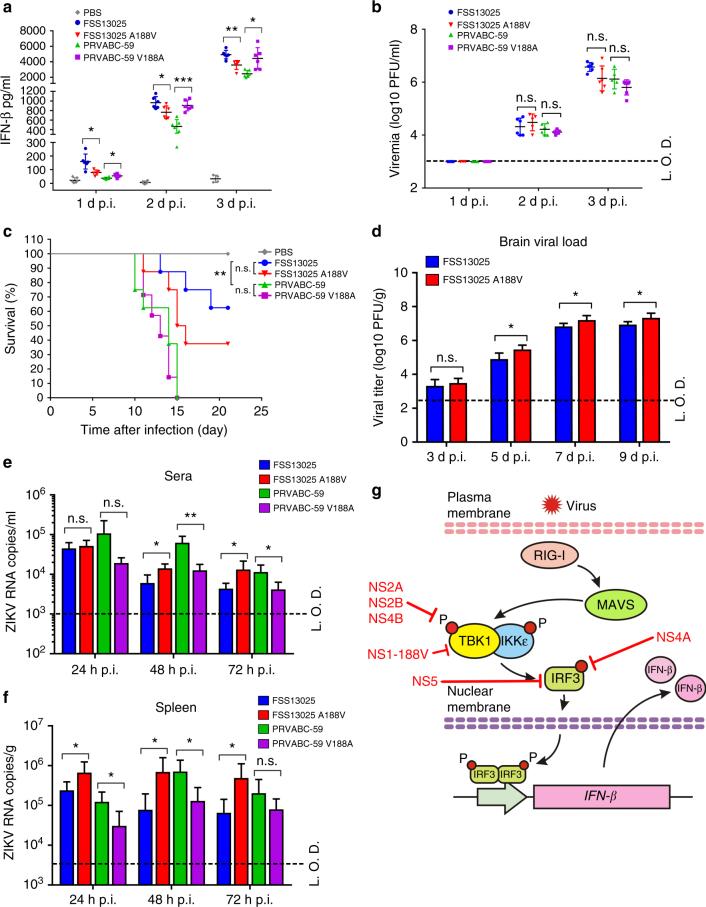
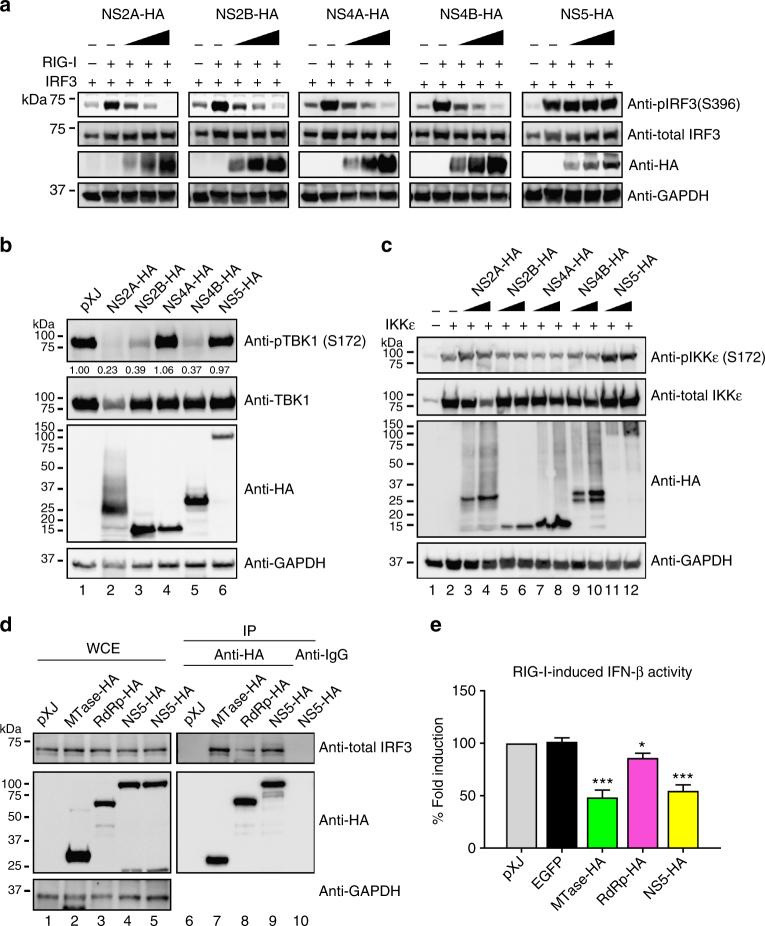
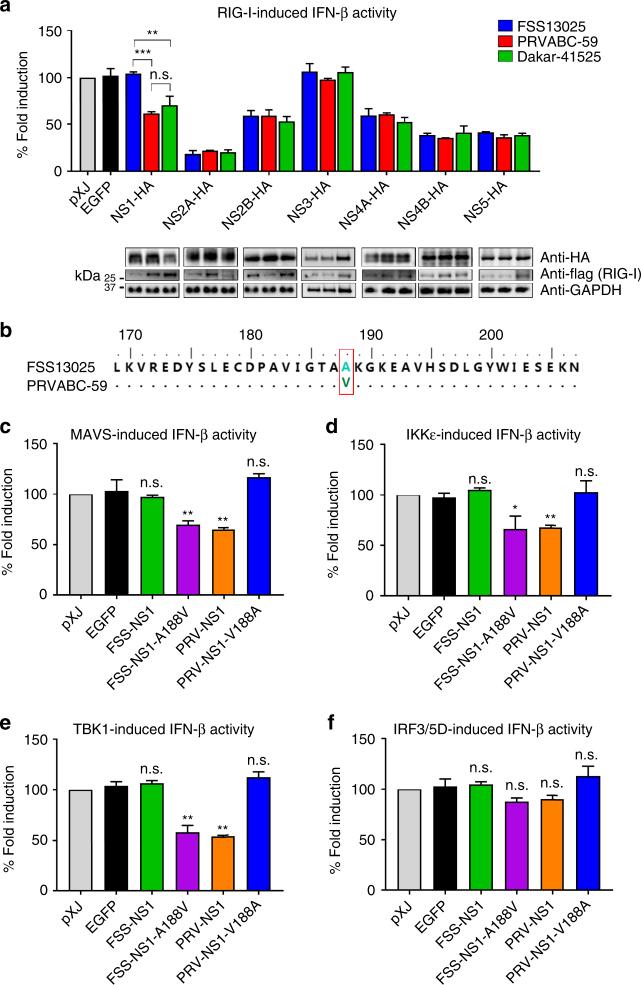
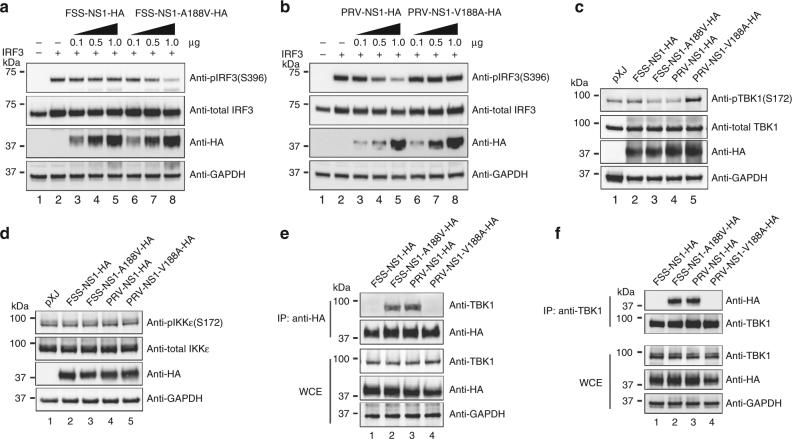
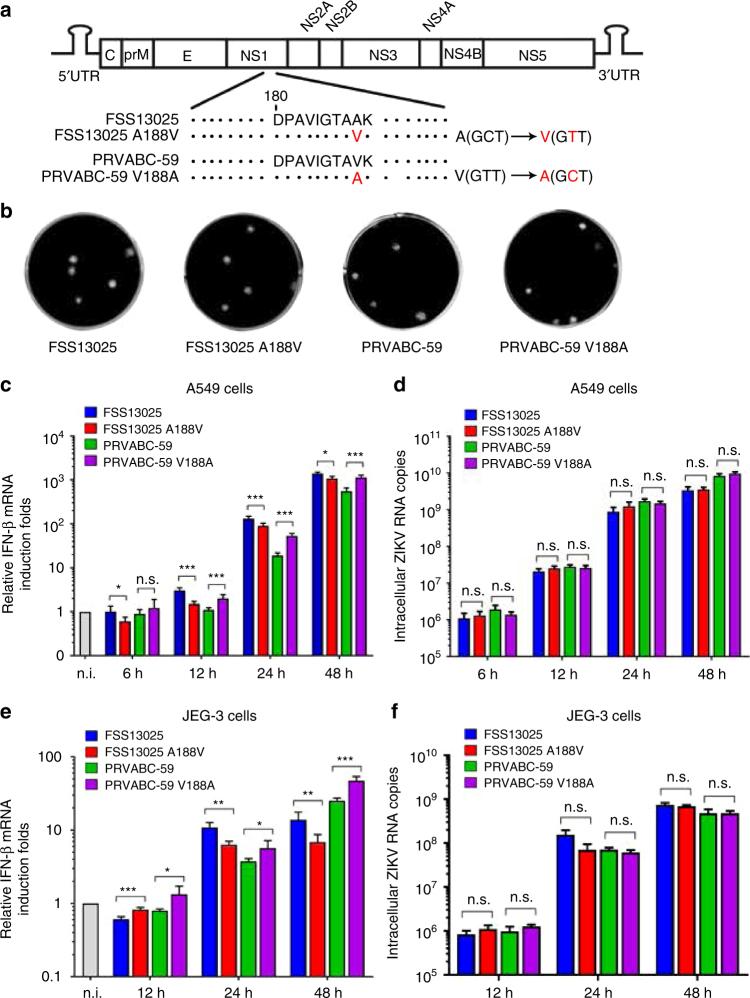
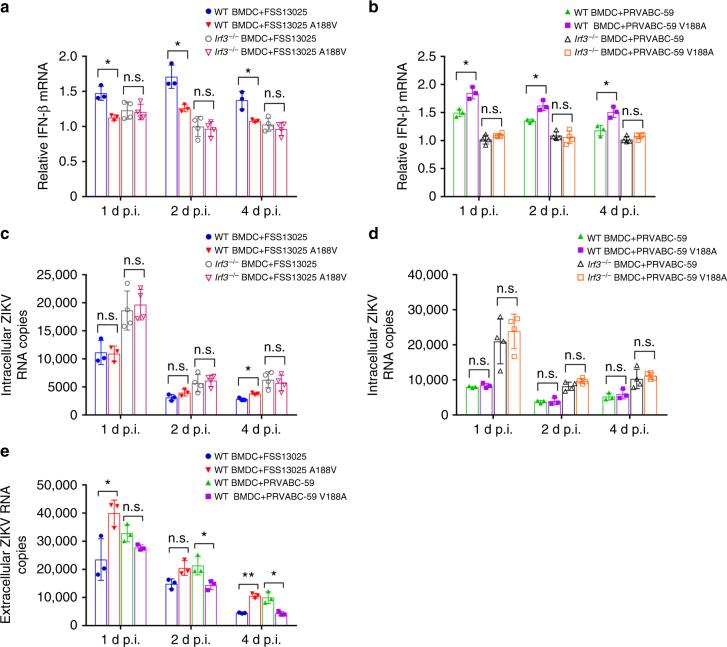
Virus-host interactions determine an infection outcome. The Asian lineage of Zika virus (ZIKV), responsible for the recent epidemics, has fixed a mutation in the NS1 gene after 2012 that enhances mosquito infection. Here we report that the same mutation confers NS1 to inhibit interferon-β induction. This mutation enables NS1 binding to TBK1 and reduces TBK1 phosphorylation. Engineering the mutation into a pre-epidemic ZIKV strain debilitates the virus for interferon-β induction; reversing the mutation in an epidemic ZIKV strain invigorates the virus for interferon-β induction; these mutational effects are lost in IRF3-knockout cells. Additionally, ZIKV NS2A, NS2B, NS4A, NS4B, and NS5 can also suppress interferon-β production through targeting distinct components of the RIG-I pathway; however, for these proteins, no antagonistic difference is observed among various ZIKV strains. Our results support the mechanism that ZIKV has accumulated mutation(s) that increases the ability to evade immune response and potentiates infection and epidemics.
病毒-宿主相互作用决定了感染的结果。导致最近流行的寨卡病毒(ZIKV)的亚洲谱系在 2012 年后在 NS1 基因中固定了一个突变,增强了蚊子的感染。在这里,我们报告说,相同的突变使 NS1 能够抑制干扰素-β的诱导。这种突变使 NS1 能够与 TBK1 结合,并减少 TBK1 的磷酸化。将突变引入到流行前的 ZIKV 株中会削弱该病毒诱导干扰素-β的能力;在流行的 ZIKV 株中反转该突变会增强该病毒诱导干扰素-β的能力;这些突变效应在 IRF3 敲除细胞中丧失。此外,ZIKV NS2A、NS2B、NS4A、NS4B 和 NS5 也可以通过靶向 RIG-I 途径的不同成分来抑制干扰素-β的产生;然而,对于这些蛋白,在各种 ZIKV 株之间没有观察到拮抗差异。我们的结果支持这样的机制,即 ZIKV 积累了增加逃避免疫反应能力并增强感染和流行的突变。

 Zotero 插件