
血浆激肽释放酶-激肽原系统在小鼠结肠炎发病机制中起关键作用。
The Plasma Kallikrein-Kininogen Pathway Is Critical in the Pathogenesis of Colitis in Mice.
机构信息
Cyrus Tang Hematology Center, Collaborative Innovation Center of Hematology, Soochow University, Suzhou, China.
The Sol Sherry Thrombosis Research Center, Temple University School of Medicine, Philadelphia, PA, United States.
出版信息
Front Immunol. 2018 Feb 6;9:21. doi: 10.3389/fimmu.2018.00021. eCollection 2018.
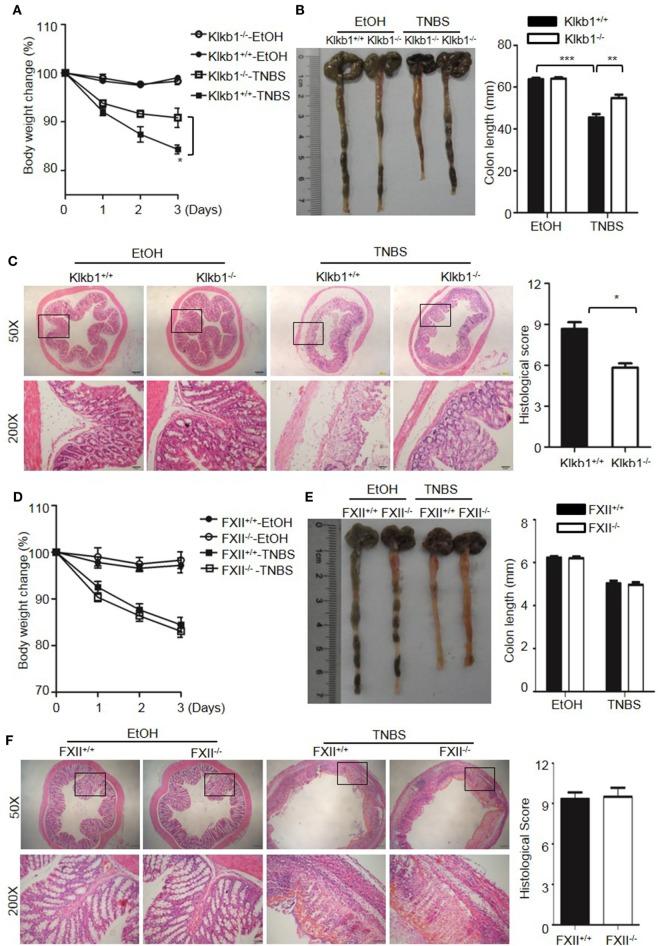
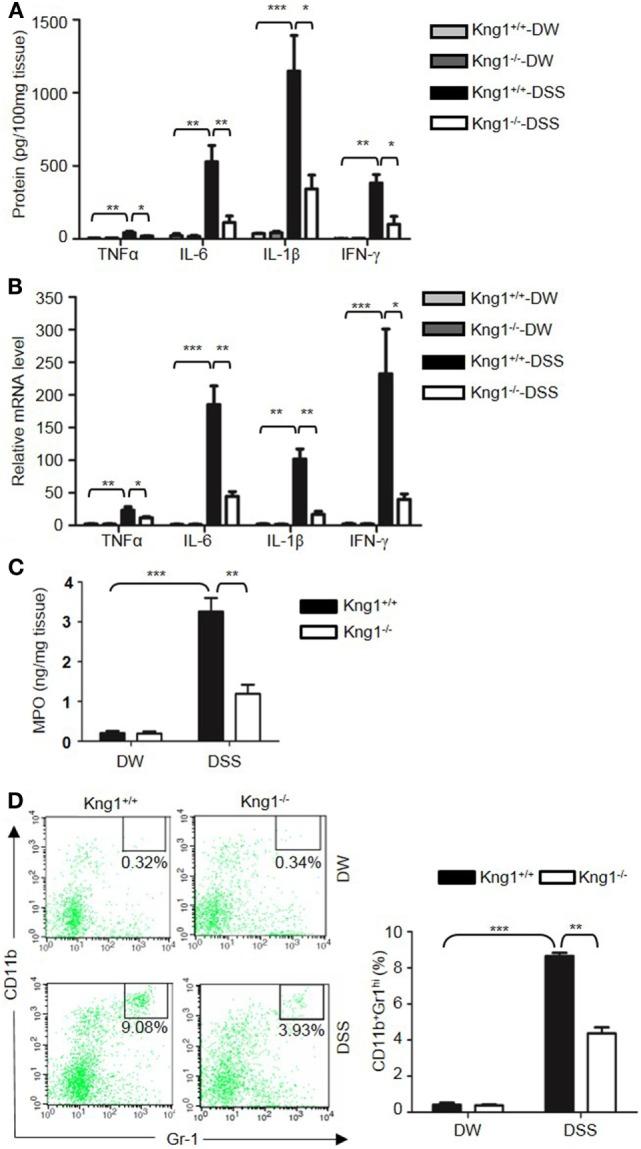
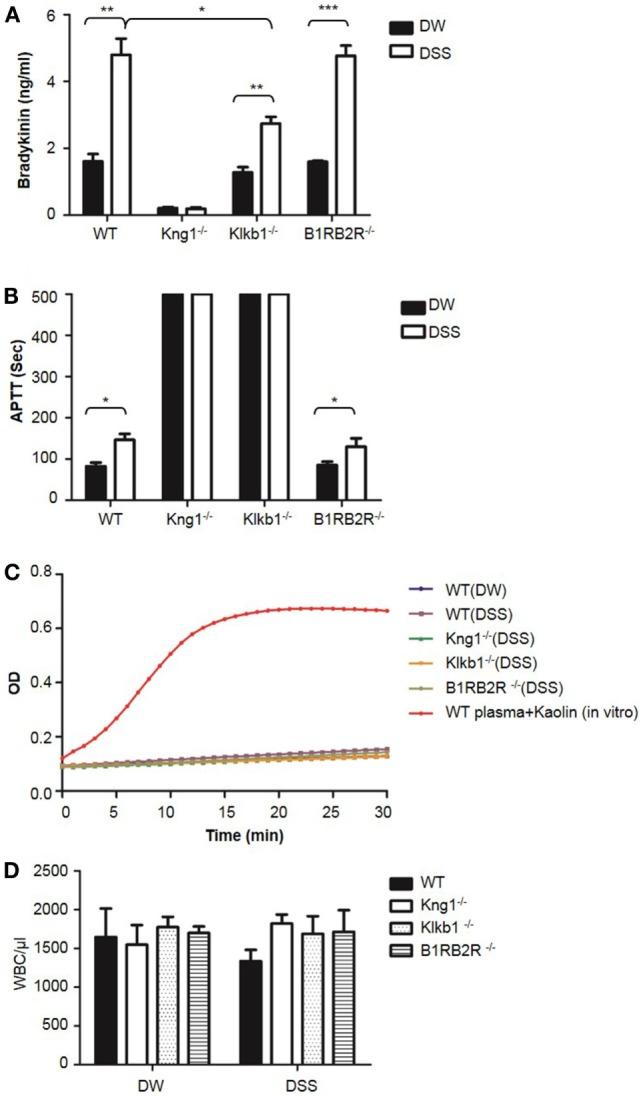
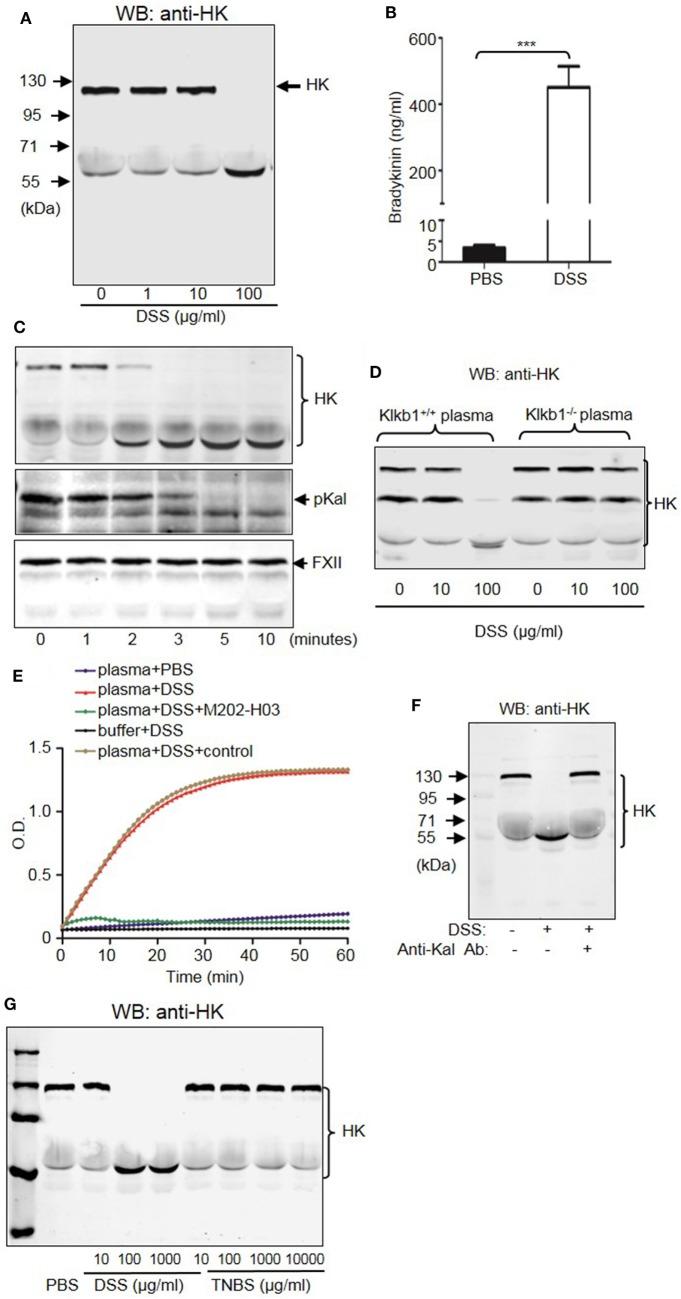
The kallikrein-kinin system (KKS) consists of two serine proteases, prekallikrein (pKal) and factor XII (FXII), and a cofactor, high-molecular-weight kininogen (HK). Upon activation of the KKS, HK is cleaved to release bradykinin. Although the KKS is activated in humans and animals with inflammatory bowel disease (IBD), its role in the pathogenesis of IBD has not been characterized. In the present study, we determined the role of the KKS in the pathogenesis of IBD using mice that lack proteins involved in the KKS. In two colitis models, induced by dextran sulfate sodium (DSS) or 2,4,6-trinitrobenzene sulfonic acid (TNBS), mice deficient in HK, pKal, or bradykinin receptors displayed attenuated phenotypes, including body weight loss, disease activity index, colon length shortening, histological scoring, and colonic production of cytokines. Infiltration of neutrophils and inflammatory monocytes in the colonic lamina propria was reduced in HK-deficient mice. Reconstitution of HK-deficient mice through intravenous injection of HK recovered their susceptibility to DSS-induced colitis, increased IL-1β levels in the colon tissue and bradykinin concentrations in plasma. In contrast to the phenotypes of other mice lacking other proteins involved in the KKS, mice lacking FXII had comparable colonic inflammation to that observed in wild-type mice. The concentration of bradykinin was significantly increased in the plasma of wild-type mice after DSS-induced colitis. analysis revealed that DSS-induced pKal activation, HK cleavage, and bradykinin plasma release were prevented by the absence of pKal or the inhibition of Kal. Unlike DSS, TNBS-induced colitis did not trigger HK cleavage. Collectively, our data strongly suggest that Kal, acting independently of FXII, contributes to experimental colitis by promoting bradykinin release from HK.
激肽释放酶-激肽系统(KKS)由两种丝氨酸蛋白酶,前激肽原(pKal)和因子 XII(FXII),以及一个辅因子高分子量激肽原(HK)组成。KKS 被激活后,HK 被切割释放缓激肽。虽然 KKS 在人类和患有炎症性肠病(IBD)的动物中被激活,但它在 IBD 发病机制中的作用尚未得到阐明。在本研究中,我们使用缺乏 KKS 相关蛋白的小鼠来确定 KKS 在 IBD 发病机制中的作用。在两种葡聚糖硫酸钠(DSS)或 2,4,6-三硝基苯磺酸(TNBS)诱导的结肠炎模型中,HK、pKal 或缓激肽受体缺陷的小鼠表现出表型减弱,包括体重减轻、疾病活动指数、结肠长度缩短、组织学评分和结肠细胞因子产生减少。HK 缺陷小鼠的结肠固有层中性粒细胞和炎症性单核细胞浸润减少。通过静脉注射 HK 对 HK 缺陷小鼠进行重建,恢复了它们对 DSS 诱导的结肠炎的易感性,增加了结肠组织中的 IL-1β 水平和血浆中的缓激肽浓度。与缺乏其他 KKS 相关蛋白的其他小鼠的表型不同,缺乏 FXII 的小鼠的结肠炎症与野生型小鼠相似。DSS 诱导的结肠炎后,血浆中缓激肽的浓度显著增加。分析显示,pKal 或 Kal 的缺失或抑制可防止 DSS 诱导的 pKal 激活、HK 切割和缓激肽血浆释放。与 DSS 不同,TNBS 诱导的结肠炎不会触发 HK 切割。总之,我们的数据强烈表明,Kal 独立于 FXII 发挥作用,通过促进 HK 释放缓激肽,导致实验性结肠炎。






 Zotero 插件