
发酵性能、生长及代谢足迹的改变揭示了接种于合成葡萄汁样培养基中的酵母菌种间的营养竞争。
Altered Fermentation Performances, Growth, and Metabolic Footprints Reveal Competition for Nutrients between Yeast Species Inoculated in Synthetic Grape Juice-Like Medium.
作者信息
Rollero Stephanie, Bloem Audrey, Ortiz-Julien Anne, Camarasa Carole, Divol Benoit
机构信息
Department of Viticulture and Oenology, Institute of Wine Biotechnology, Stellenbosch University, Stellenbosch, South Africa.
UMR SPO, INRA, SupAgroM, Université de Montpellier, Montpellier, France.
出版信息
Front Microbiol. 2018 Feb 13;9:196. doi: 10.3389/fmicb.2018.00196. eCollection 2018.
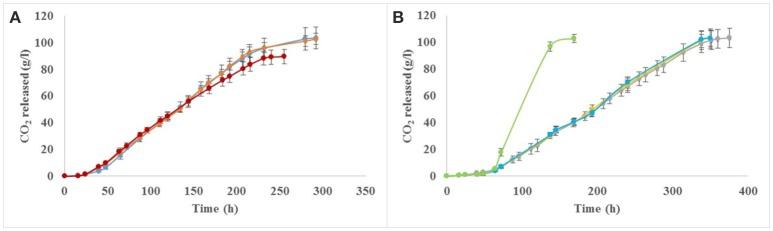
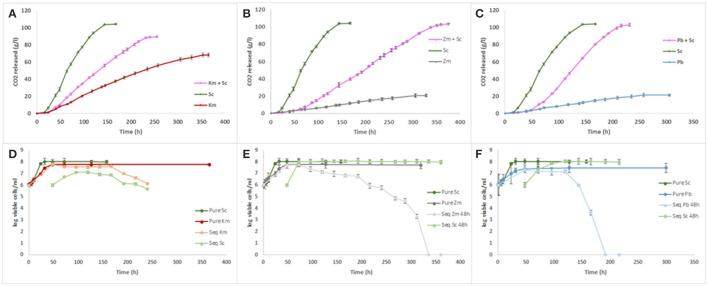
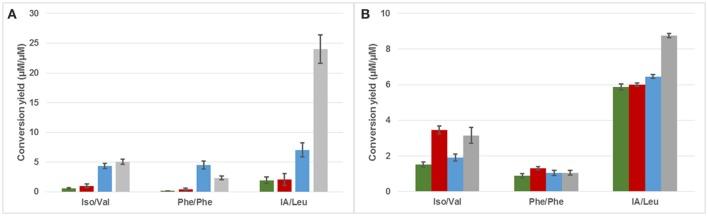
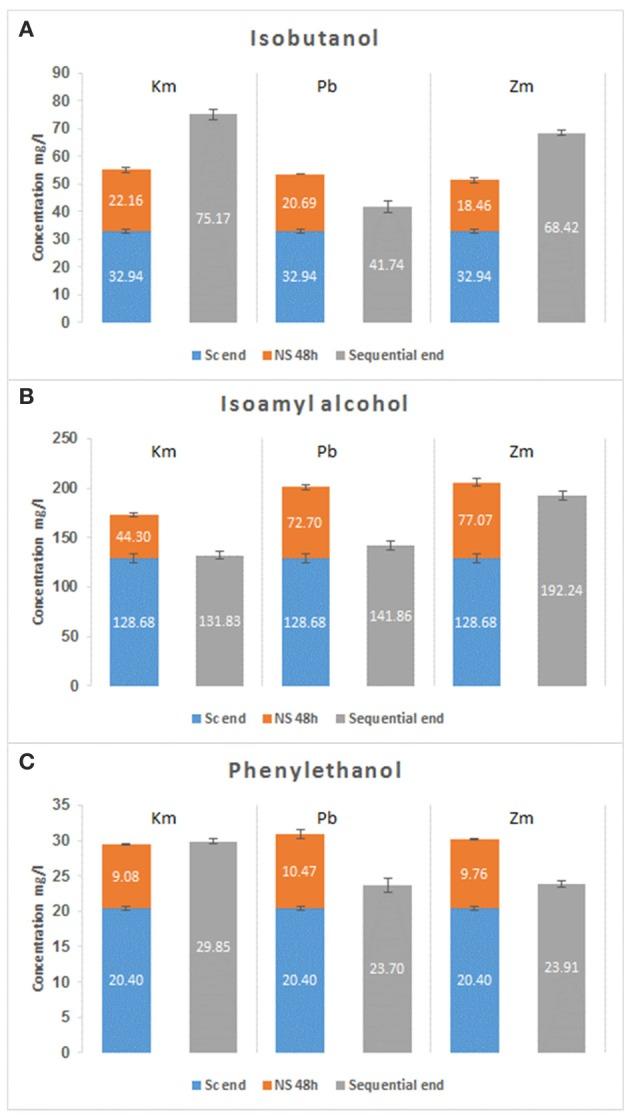
The sequential inoculation of non- yeasts and in grape juice is becoming an increasingly popular practice to diversify wine styles and/or to obtain more complex wines with a peculiar microbial footprint. One of the main interactions is competition for nutrients, especially nitrogen sources, that directly impacts not only fermentation performance but also the production of aroma compounds. In order to better understand the interactions taking place between non-Saccharomyces yeasts and S. cerevisiae during alcoholic fermentation, sequential inoculations of three yeast species () with were performed individually in a synthetic medium. Different species-dependent interactions were evidenced. Indeed, the three sequential inoculations resulted in three different behaviors in terms of growth. and declined after the inoculation of which promptly outcompeted the other two species. However, while the presence of did not impact the fermentation kinetics of , that of rendered the overall kinetics very slow and with no clear exponential phase. and both declined and became undetectable before fermentation completion. The results also demonstrated that yeasts differed in their preference for nitrogen sources. Unlike and appeared to be a competitor for (as evidenced by the uptake of ammonium and amino acids), thereby explaining the resulting stuck fermentation. Nevertheless, the results suggested that competition for other nutrients (probably vitamins) occurred during the sequential inoculation of with . The metabolic footprint of the non- yeasts determined after 48 h of fermentation remained until the end of fermentation and combined with that of . For instance, fermentations performed with were characterized by the formation of phenylethanol and phenylethyl acetate, while those performed with or displayed higher production of isoamyl alcohol and ethyl esters. When considering sequential inoculation of yeasts, the nutritional requirements of the yeasts used should be carefully considered and adjusted accordingly. Finally, our chemical data suggests that the organoleptic properties of the wine are altered in a species specific manner.
在葡萄汁中依次接种非酿酒酵母和酿酒酵母正成为一种越来越流行的做法,以实现葡萄酒风格的多样化和/或获得具有独特微生物特征的更复杂葡萄酒。主要的相互作用之一是对营养物质的竞争,尤其是氮源,这不仅直接影响发酵性能,还影响香气化合物的产生。为了更好地理解在酒精发酵过程中非酿酒酵母和酿酒酵母之间发生的相互作用,在合成培养基中分别对三种酵母菌株()与酿酒酵母进行了依次接种。结果证明了不同菌株之间存在不同的相互作用。事实上,三次依次接种在生长方面导致了三种不同的行为。接种酿酒酵母后,和下降,酿酒酵母迅速胜过其他两种菌株。然而,虽然的存在不影响酿酒酵母的发酵动力学,但的存在使整体动力学非常缓慢且没有明显的指数期。和在发酵完成前均下降并变得不可检测。结果还表明,酵母对氮源的偏好不同。与和不同,似乎是(铵和氨基酸的吸收证明)的竞争者,从而解释了由此导致的发酵停滞。然而,结果表明,在与依次接种过程中发生了对其他营养物质(可能是维生素)的竞争。发酵48小时后确定的非酿酒酵母的代谢特征一直持续到发酵结束,并与酿酒酵母的代谢特征相结合。例如,用进行的发酵以苯乙醇和苯乙酸苯乙酯的形成为特征,而用或进行的发酵显示出更高的异戊醇和乙酯产量。在考虑酵母的依次接种时,应仔细考虑并相应调整所用酵母菌株的营养需求。最后,我们的化学数据表明,葡萄酒的感官特性以菌株特异性方式发生改变。

 Zotero 插件