
低表达 microRNA-630 通过 miR-630/YAP1/ERK 反馈回路赋予 EGFR 突变型肺腺癌对酪氨酸激酶抑制剂的耐药性。
A low microRNA-630 expression confers resistance to tyrosine kinase inhibitors in EGFR-mutated lung adenocarcinomas via miR-630/YAP1/ERK feedback loop.
机构信息
Graduate Institute of Cancer Biology and Drug Discovery, Taipei Medical University, Taipei, Taiwan.
Department of Internal Medicine, Chung Shan Medical Hospital, Taichung, Taiwan.
出版信息
Theranostics. 2018 Feb 2;8(5):1256-1269. doi: 10.7150/thno.22048. eCollection 2018.
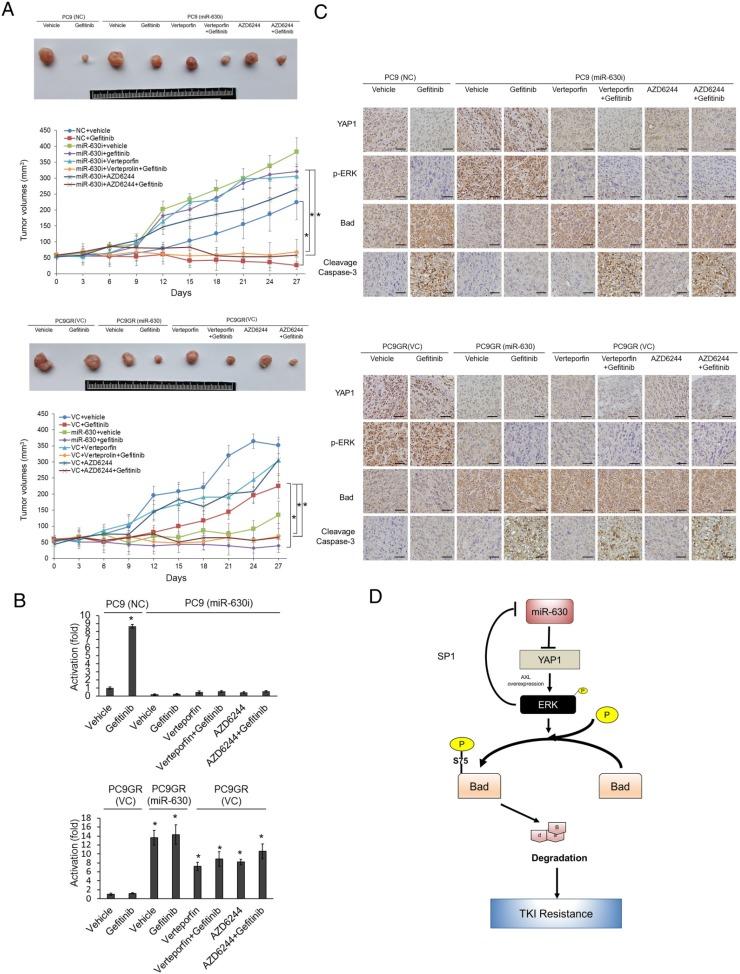
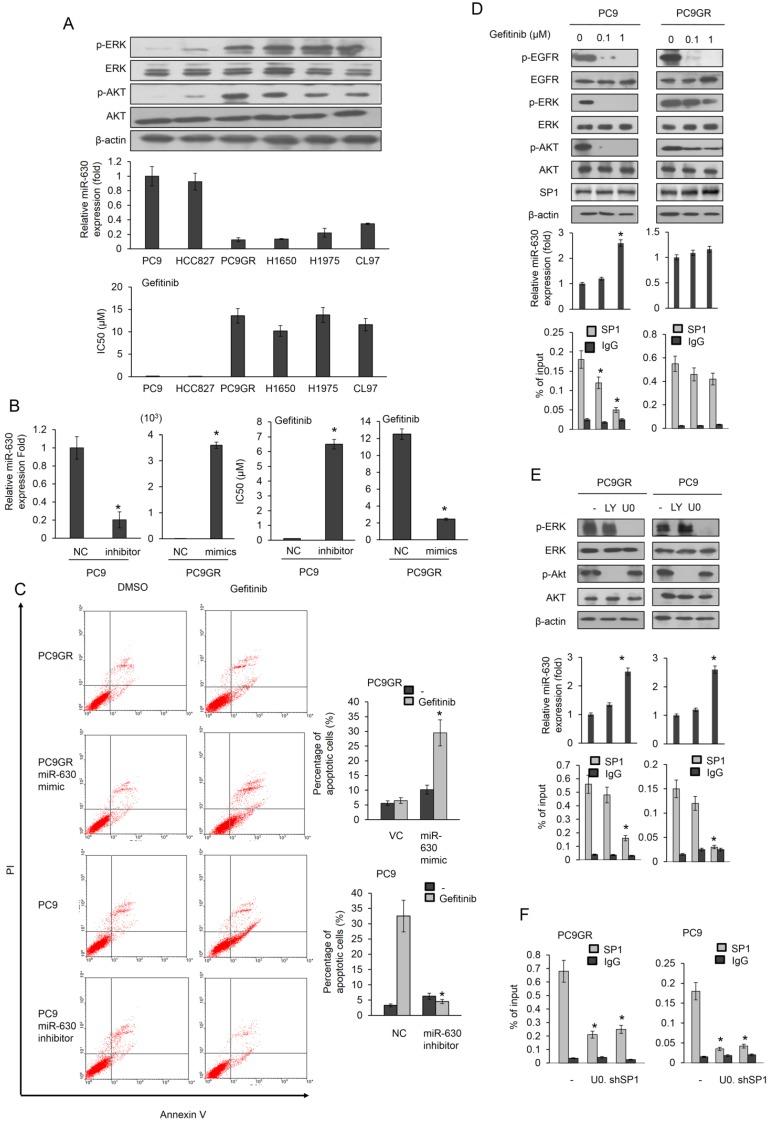
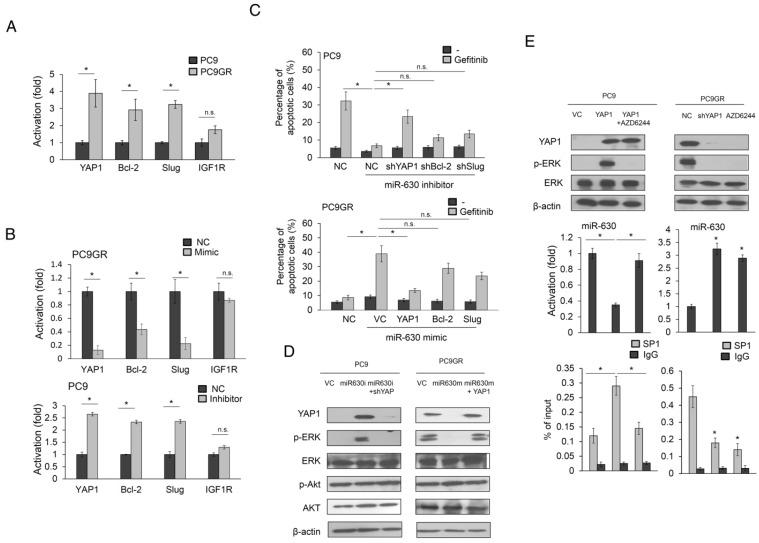
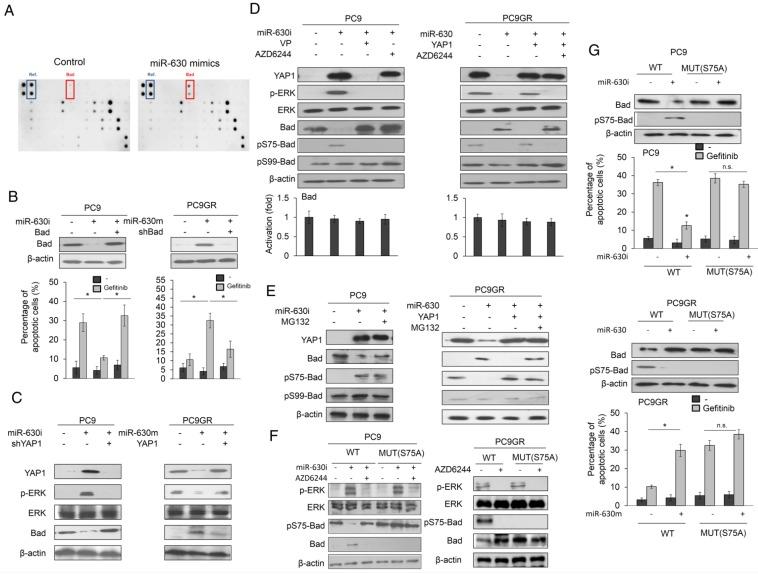
MicroRNA-630 plays dual roles in apoptosis and drug resistance in human cancers. However, the role of miR-630 in resistance to tyrosine kinase inhibitors (TKIs) in lung adenocarcinoma remains to be elucidated. Manipulation of miR-630 and its targeted gene YAP1 and/or combination of inhibitor treatments was performed to explore whether low miR-630 could confer TKI resistance due to de-targeting YAP1, and this could decrease proapoptotic protein Bad expression through the miR-630/YAP1/ERK feedback loop. A retrospective study was conducted to examine whether the expression of miR-630 and YAP1 could be associated with TKI therapeutic response in patients with lung adenocarcinoma. Low miR-630 expression may confer TKI resistance via increased SP1 binding to the miR-630 promoter due to ERK activation by YAP1 de-targeting. Persistent activation of ERK signaling via the miR-630/YAP1/ERK feedback loop may be responsible for TKI resistance in EGFR-mutated cells. Moreover, a decrease in Bad expression by its phosphorylation at Serine 75 through ERK activation conferred low miR-630-mediated TKI resistance by modulating the apoptotic pathway. Xenographic tumors induced by miR-630-knockdown PC9 and PC9GR cells in nude mice were nearly suppressed by the combination of gefitinib with the YAP1 inhibitor verteporfin or an MEK/ERK inhibitor AZD6244. Patients with low miR-630 and high YAP1 expressing tumors had a higher prevalence of unfavorable responses to TKI therapy and poorer outcomes when compared with their counterparts. MiR-630 may be a potential biomarker for the prediction of TKI therapeutic response and outcome in patients with lung adenocarcinoma.
微小 RNA-630 在人类癌症的凋亡和耐药中发挥双重作用。然而,miR-630 在肺腺癌对酪氨酸激酶抑制剂(TKI)耐药中的作用仍有待阐明。通过操纵 miR-630 及其靶向基因 YAP1 以及(或)联合抑制剂处理,探讨低表达 miR-630 是否由于靶向 YAP1 而导致 TKI 耐药,并通过 miR-630/YAP1/ERK 反馈环降低促凋亡蛋白 Bad 的表达。进行回顾性研究,以检查肺腺癌患者中 miR-630 和 YAP1 的表达是否与 TKI 治疗反应相关。
低表达 miR-630 可能通过 ERK 激活导致 YAP1 脱靶后 SP1 结合到 miR-630 启动子,从而导致 TKI 耐药。通过 miR-630/YAP1/ERK 反馈环持续激活 ERK 信号可能是 EGFR 突变细胞中 TKI 耐药的原因。此外,通过 ERK 激活使 Bad 在丝氨酸 75 处磷酸化,降低其表达,通过调节凋亡途径赋予低表达 miR-630 介导的 TKI 耐药性。在裸鼠中,miR-630 敲低的 PC9 和 PC9GR 细胞诱导的异种肿瘤几乎被 gefitinib 与 YAP1 抑制剂 verteporfin 或 MEK/ERK 抑制剂 AZD6244 的联合治疗所抑制。与低表达 miR-630 和高表达 YAP1 的肿瘤患者相比,他们对 TKI 治疗反应不良和预后较差的发生率更高。
miR-630 可能是预测肺腺癌患者 TKI 治疗反应和结局的潜在生物标志物。
 Zotero 插件