
及其中CRISPR-Cas系统的分析与应用。 (你提供的原文“Analysis of CRISPR-Cas System in and Its Application.”表述不太完整,“in”后面似乎缺少具体内容,以上是根据现有内容尽量准确翻译的结果 。)
Analysis of CRISPR-Cas System in and Its Application.
作者信息
Hao Mengyuan, Cui Yanhua, Qu Xiaojun
机构信息
Department of Food Science and Engineering, School of Chemistry and Chemical Engineering, Harbin Institute of Technology, Harbin, China.
Institute of Microbiology, Heilongjiang Academy of Sciences, Harbin, China.
出版信息
Front Microbiol. 2018 Feb 20;9:257. doi: 10.3389/fmicb.2018.00257. eCollection 2018.
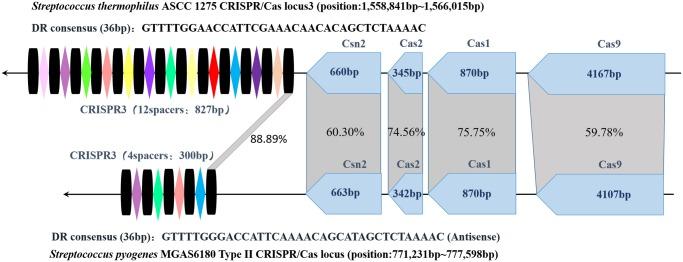
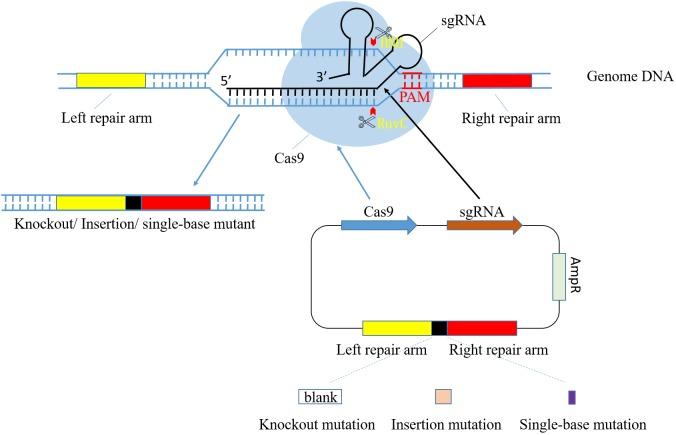
CRISPR-Cas (Clustered regularly interspaced short palindromic repeats-CRISPR associated proteins) loci, which provide a specific immunity against exogenous elements, are hypervariable among distinct prokaryotes. Based on previous researches, this review focuses on concluding systematical genome editing protocols in Firstly, its protocols and optimized conditions in gene editing are introduced. What's more, classification and diversity analyses of CRISPR-Cas benefit the further understanding of evolution relationship among Ability of its foreign segment integration and spacer source analyses also indicate a new direction of phage resistance. Above all, all of these point out its potential to be regarded as another model system other than type II CRISPR-Cas in .
CRISPR-Cas(成簇规律间隔短回文重复序列及其相关蛋白)位点可对外源元件提供特异性免疫,在不同原核生物中具有高度变异性。基于以往研究,本综述首先着重总结系统的基因组编辑方案,介绍其基因编辑方案及优化条件。此外,CRISPR-Cas的分类和多样性分析有助于进一步理解其进化关系。其外源片段整合能力和间隔区来源分析也为噬菌体抗性研究指明了新方向。最重要的是,所有这些都表明它有潜力成为继II型CRISPR-Cas之后的另一种模式系统。
 Zotero 插件