
初级保健中多种疾病的流行病学:一项回顾性队列研究。
The epidemiology of multimorbidity in primary care: a retrospective cohort study.
机构信息
School of Medicine, University of Utah, Salt Lake City, US.
Department of Public Health and Primary Care, University of Cambridge, Cambridge, UK.
出版信息
Br J Gen Pract. 2018 Apr;68(669):e245-e251. doi: 10.3399/bjgp18X695465. Epub 2018 Mar 12.
BACKGROUND
Multimorbidity places a substantial burden on patients and the healthcare system, but few contemporary epidemiological data are available.
AIM
To describe the epidemiology of multimorbidity in adults in England, and quantify associations between multimorbidity and health service utilisation.
DESIGN AND SETTING
Retrospective cohort study, undertaken in England.
METHOD
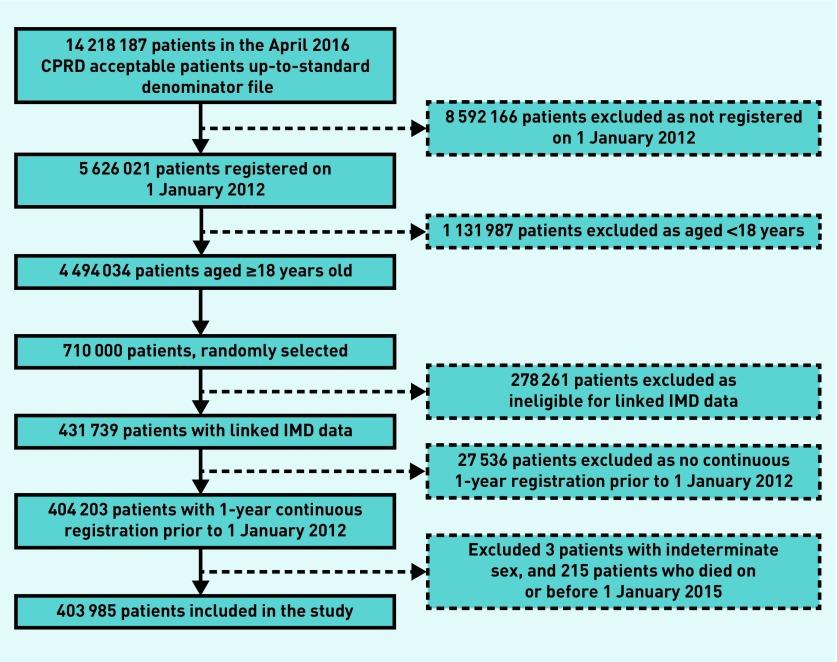
The study used a random sample of 403 985 adult patients (aged ≥18 years), who were registered with a general practice on 1 January 2012 and included in the Clinical Practice Research Datalink. Multimorbidity was defined as having two or more of 36 long-term conditions recorded in patients' medical records, and associations between multimorbidity and health service utilisation (GP consultations, prescriptions, and hospitalisations) over 4 years were quantified.
RESULTS
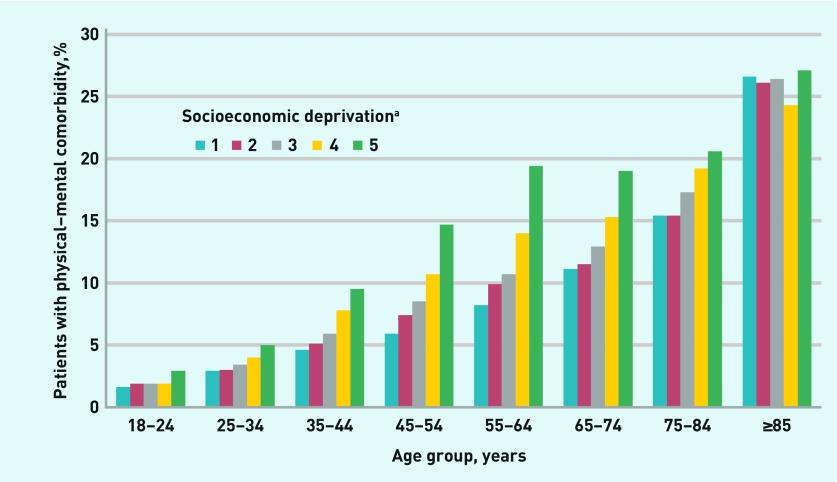
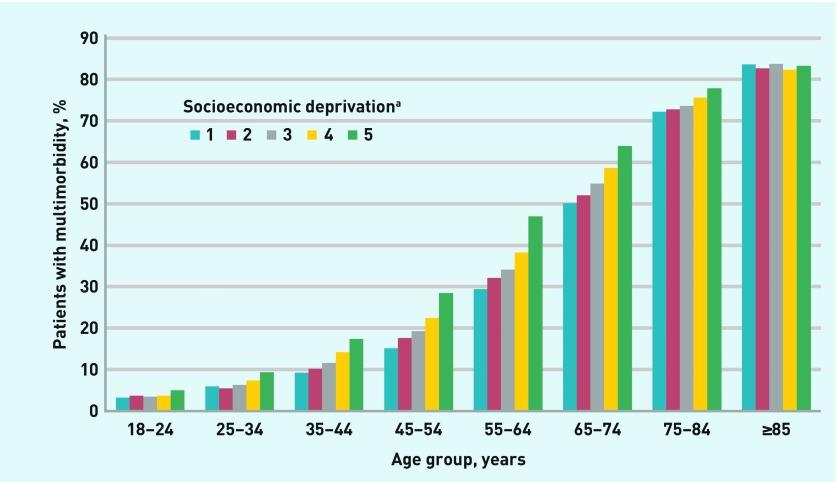
In total, 27.2% of the patients involved in the study had multimorbidity. The most prevalent conditions were hypertension (18.2%), depression or anxiety (10.3%), and chronic pain (10.1%). The prevalence of multimorbidity was higher in females than males (30.0% versus 24.4% respectively) and among those with lower socioeconomic status (30.0% in the quintile with the greatest levels of deprivation versus 25.8% in that with the lowest). Physical-mental comorbidity constituted a much greater proportion of overall morbidity in both younger patients (18-44 years) and those patients with a lower socioeconomic status. Multimorbidity was strongly associated with health service utilisation. Patients with multimorbidity accounted for 52.9% of GP consultations, 78.7% of prescriptions, and 56.1% of hospital admissions.
CONCLUSION
Multimorbidity is common, socially patterned, and associated with increased health service utilisation. These findings support the need to improve the quality and efficiency of health services providing care to patients with multimorbidity at both practice and national level.
背景
多种疾病给患者和医疗系统带来了沉重负担,但目前可用的当代流行病学数据很少。
目的
描述英格兰成年人多种疾病的流行病学,并量化多种疾病与卫生服务利用之间的关联。
设计和设置
在英格兰进行的回顾性队列研究。
方法
该研究使用了 403985 名成年患者(年龄≥18 岁)的随机样本,这些患者于 2012 年 1 月 1 日在普通诊所注册,并包含在临床实践研究数据链接中。多种疾病定义为患者病历中记录的两种或两种以上 36 种长期疾病,并且量化了多种疾病与 4 年内卫生服务利用(全科医生咨询、处方和住院)之间的关联。
结果
研究中共有 27.2%的患者患有多种疾病。最常见的疾病是高血压(18.2%)、抑郁或焦虑(10.3%)和慢性疼痛(10.1%)。女性的多种疾病患病率高于男性(分别为 30.0%和 24.4%),社会经济地位较低的人群中患病率更高(在最贫困的五分位数中为 30.0%,在最贫困的五分位数中为 25.8%)。在年轻患者(18-44 岁)和社会经济地位较低的患者中,身体-精神合并症构成了总发病率的更大比例。多种疾病与卫生服务利用密切相关。患有多种疾病的患者占全科医生咨询的 52.9%、处方的 78.7%和住院的 56.1%。
结论
多种疾病很常见,具有社会模式,并且与卫生服务利用增加有关。这些发现支持需要提高在实践和国家层面为患有多种疾病的患者提供护理的卫生服务的质量和效率。
 Zotero 插件