
鲍曼不动杆菌因脂多糖丢失导致的粘菌素耐药表型改变。
Phenotypic changes associated with Colistin resistance due to Lipopolysaccharide loss in Acinetobacter baumannii.
机构信息
a Clinical Unit of Infectious Diseases, Clinical Microbiology and Preventive Medicine; Institute of Biomedicine of Seville (IBiS), University Hospital Virgen del Rocío/CSIC /University of Seville , Seville , Spain.
b Department of Medicine , University of Seville , Seville , Spain.
出版信息
Virulence. 2018 Dec 31;9(1):930-942. doi: 10.1080/21505594.2018.1460187.
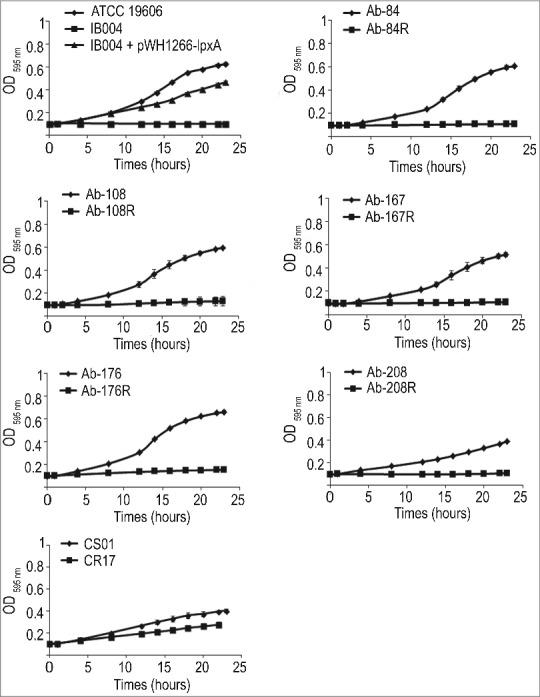
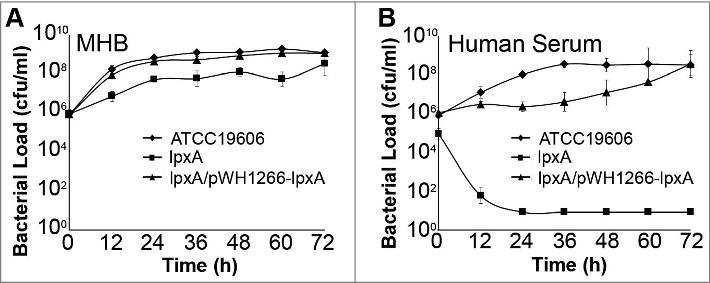
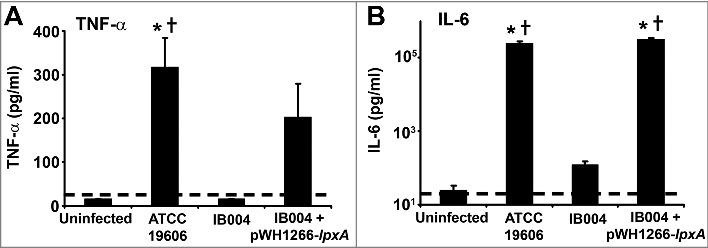
Acinetobacter baumannii can acquire resistance to colistin via complete loss of lipopolysaccharide (LPS) biosynthesis due to mutations in the lpxA, lpxC and lpxD genes. However, although colistin is increasingly being used for the treatment of multidrug resistant infections, very few A. baumannii clinical isolates develop colistin resistance through loss of LPS biosynthesis. This may suggest that LPS loss affects virulence traits that play a role in the transmission and pathogenesis of A. baumannii. In this study we characterize multiple virulence phenotypes of colistin resistant, LPS-deficient derivatives of the ATCC 19606 strain and five multidrug resistant clinical isolates and their colistin resistant, LPS-deficient derivatives. Our results indicate that LPS loss results in growth defects compared to the parental strain in vitro both in laboratory media and human serum (competition indices of 0.58 and 7.0 × 10, respectively) and reduced ability to grow and disseminate in vivo (competition index 6.7 × 10). Infection with the LPS-deficient strain resulted in lower serum levels of pro-inflammatory cytokines TNF-α and IL-6 compared to the parent strain, and was less virulent in a mouse model of disseminated sepsis. LPS loss also significantly affected biofilm production, surface motility, growth under iron limitation and susceptibility to multiple disinfectants used in the clinical setting. These results demonstrate that LPS loss has a significant effect on multiple virulence traits, and may provide insight into the low incidence of colistin resistant strains lacking LPS that have been reported in the clinical setting.
鲍曼不动杆菌可以通过 lpxA、lpxC 和 lpxD 基因突变完全丧失脂多糖 (LPS) 生物合成而获得对多粘菌素的耐药性。然而,尽管多粘菌素越来越多地被用于治疗多重耐药感染,但很少有鲍曼不动杆菌临床分离株通过丧失 LPS 生物合成而产生多粘菌素耐药性。这可能表明 LPS 缺失会影响毒力特性,这些特性在鲍曼不动杆菌的传播和发病机制中起作用。在这项研究中,我们描述了 ATCC 19606 株和五个多药耐药临床分离株及其多粘菌素耐药、LPS 缺陷衍生物的多种毒力表型。我们的结果表明,与亲本株相比,LPS 缺失在体外(实验室培养基和人血清中的竞争指数分别为 0.58 和 7.0×10)以及体内生长和传播能力降低(竞争指数为 6.7×10)导致生长缺陷。与亲本株相比,感染 LPS 缺陷株导致血清中促炎细胞因子 TNF-α 和 IL-6 水平降低,并且在播散性败血症的小鼠模型中毒力降低。LPS 缺失还显著影响生物膜形成、表面运动、铁限制下的生长和对临床环境中使用的多种消毒剂的敏感性。这些结果表明,LPS 缺失对多种毒力特性有显著影响,并可能深入了解在临床环境中报道的缺乏 LPS 的多粘菌素耐药菌株发生率较低的原因。




 Zotero 插件