
黏菌素耐药机制及耐黏菌素感染的管理策略
Colistin Resistance Mechanism and Management Strategies of Colistin-Resistant Infections.
作者信息
Islam Md Minarul, Jung Da Eun, Shin Woo Shik, Oh Man Hwan
机构信息
Smart Animal Bio Institute, Dankook University, Cheonan 31116, Republic of Korea.
Department of Microbiology, College of Science and Technology, Dankook University, Cheonan 31116, Republic of Korea.
出版信息
Pathogens. 2024 Nov 28;13(12):1049. doi: 10.3390/pathogens13121049.
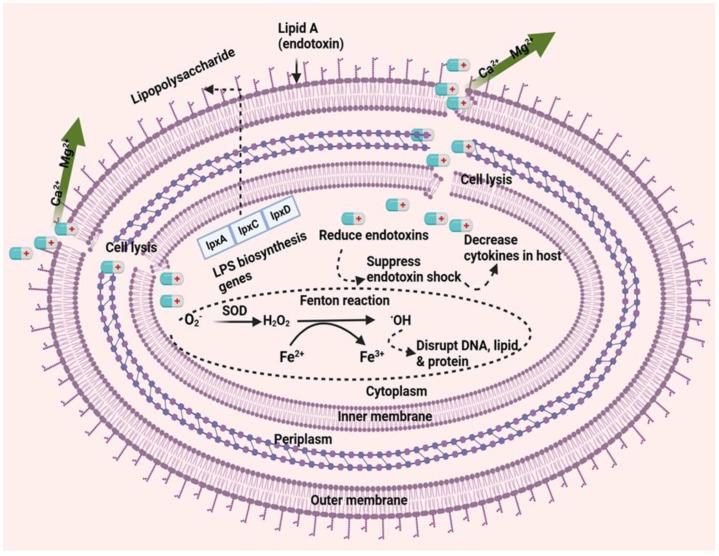
The emergence of antibiotic-resistant () is a pressing threat in clinical settings. Colistin is currently a widely used treatment for multidrug-resistant , serving as the last line of defense. However, reports of colistin-resistant strains of have emerged, underscoring the urgent need to develop alternative medications to combat these serious pathogens. To resist colistin, has developed several mechanisms. These include the loss of outer membrane lipopolysaccharides (LPSs) due to mutation of LPS biosynthetic genes, modification of lipid A (a constituent of LPSs) structure through the addition of phosphoethanolamine (PEtN) moieties to the lipid A component by overexpression of chromosomal pmrCAB operon genes and gene, or acquisition of plasmid-encoded genes through horizontal gene transfer. Other resistance mechanisms involve alterations of outer membrane permeability through porins, the expulsion of colistin by efflux pumps, and heteroresistance. In response to the rising threat of colistin-resistant , researchers have developed various treatment strategies, including antibiotic combination therapy, adjuvants to potentiate antibiotic activity, repurposing existing drugs, antimicrobial peptides, nanotechnology, photodynamic therapy, CRISPR/Cas, and phage therapy. While many of these strategies have shown promise in vitro and in vivo, further clinical trials are necessary to ensure their efficacy and widen their clinical applications. Ongoing research is essential for identifying the most effective therapeutic strategies to manage colistin-resistant This review explores the genetic mechanisms underlying colistin resistance and assesses potential treatment options for this challenging pathogen.
耐抗生素()的出现是临床环境中一个紧迫的威胁。黏菌素是目前广泛用于治疗多重耐药菌的药物,是最后一道防线。然而,已经出现了耐黏菌素菌株的报道,这凸显了开发替代药物来对抗这些严重病原体的迫切需求。为了抵抗黏菌素,细菌已经发展出了几种机制。这些机制包括由于脂多糖(LPS)生物合成基因的突变导致外膜脂多糖的缺失、通过染色体pmrCAB操纵子基因和基因的过表达向脂质A成分添加磷酸乙醇胺(PEtN)基团来修饰脂质A(LPS的一种成分)结构,或者通过水平基因转移获得质粒编码的基因。其他耐药机制包括通过孔蛋白改变外膜通透性、通过外排泵排出黏菌素以及异质性耐药。为了应对耐黏菌素细菌日益增加的威胁,研究人员已经开发了各种治疗策略,包括抗生素联合治疗、增强抗生素活性的佐剂、现有药物的重新利用、抗菌肽、纳米技术、光动力疗法、CRISPR/Cas和噬菌体疗法。虽然这些策略中的许多在体外和体内都显示出了前景,但仍需要进一步的临床试验来确保其疗效并扩大其临床应用。持续的研究对于确定治疗耐黏菌素细菌最有效的治疗策略至关重要。这篇综述探讨了黏菌素耐药的遗传机制,并评估了针对这种具有挑战性的病原体的潜在治疗选择。

 Zotero 插件