
四 miRNA 分类器作为 II 期结肠癌肿瘤复发的新型预后标志物。
A four-microRNA classifier as a novel prognostic marker for tumor recurrence in stage II colon cancer.
机构信息
Department of Clinical Science, Faculty of Medicine, University of Bergen, Bergen, Norway.
Department of Oncology and Medical Physics, Haukeland University Hospital, Bergen, Norway.
出版信息
Sci Rep. 2018 Apr 18;8(1):6157. doi: 10.1038/s41598-018-24519-4.
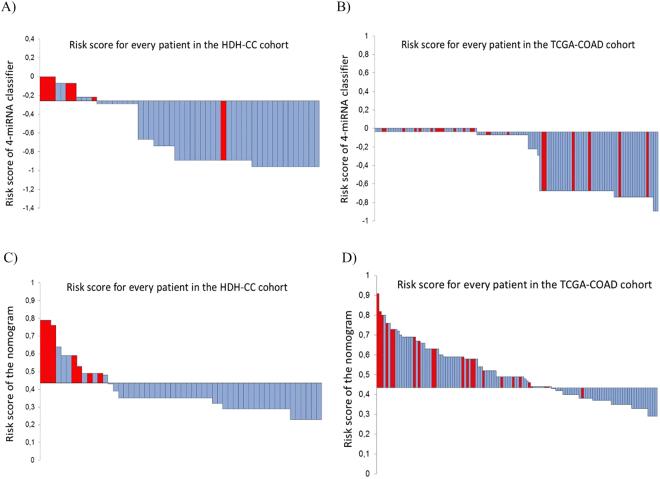
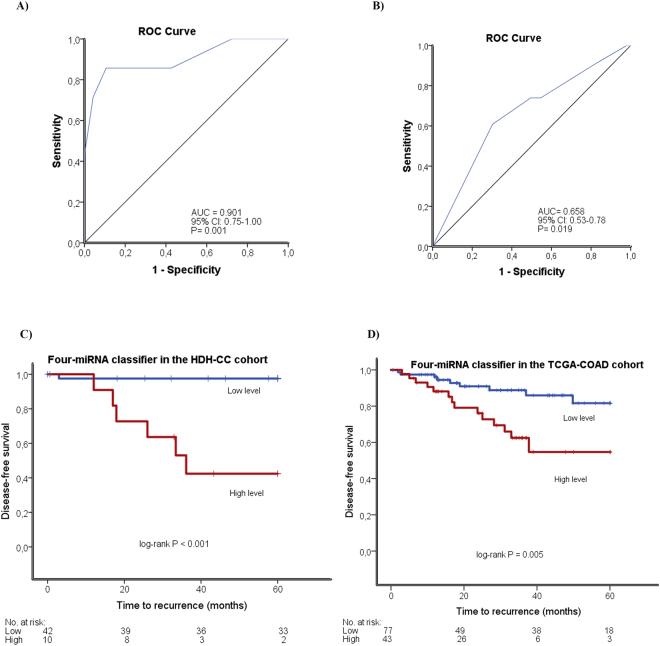
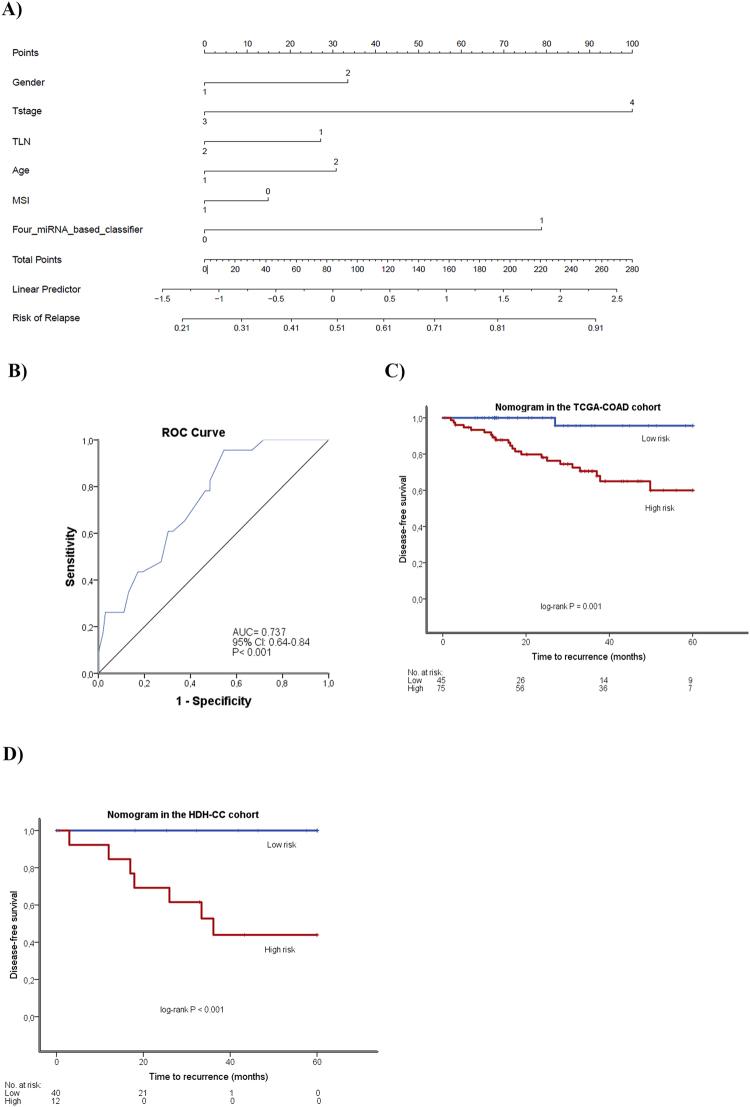
About 20 percent of TNM-stage II colon cancer patients who are treated by surgical resection develop recurrence, and adjuvant chemotherapy in this group is still debated among researchers and clinicians. Currently, adverse histopathological and clinical factors are used to select patients for adjuvant chemotherapy following surgery. However, additional biomarkers to classify patients at risk of recurrence are needed. We have conducted a study using fresh frozen tumor tissue from 54 TNM-stage II colon cancer patients and performed microRNA profiling using next-generation sequencing. For the selection of the prognostic microRNAs, a LASSO Cox Regression model was employed. For the validation, we used the publically available TCGA-COAD cohort (n = 122). A prognostic panel of four micorRNAs (hsa-miR-5010-3p, hsa-miR-5100, hsa-miR-656-3p and hsa-miR-671-3p) was identified in the study cohort and validated in the TCGA-COAD cohort. The four-microRNA classifier successfully identified high-risk patients in the study cohort (P < 0.001) and the validation cohort (P = 0.005). Additionally, a number of established risk factors and the four-miRNA classifier were used to construct a nomogram to evaluate risk of recurrence. We identified a four-microRNA classifier in patients with TNM-stage II colon cancer that can be used to discriminate between patients at low- and high risk of recurrence.
约 20%接受手术切除治疗的 II 期 TNM 结肠癌患者会出现复发,而该组患者是否接受辅助化疗在研究人员和临床医生中仍存在争议。目前,采用不良组织病理学和临床因素来选择接受手术后辅助化疗的患者。但是,需要额外的生物标志物来对有复发风险的患者进行分类。我们使用 54 例 II 期 TNM 结肠癌患者的新鲜冷冻肿瘤组织进行了研究,并使用下一代测序进行了 microRNA 分析。为了选择具有预后意义的 microRNA,我们使用了 LASSO Cox 回归模型。为了验证,我们使用了公开的 TCGA-COAD 队列(n=122)。在研究队列中鉴定出了由四个 micorRNA(hsa-miR-5010-3p、hsa-miR-5100、hsa-miR-656-3p 和 hsa-miR-671-3p)组成的预后微RNA 组合,并在 TCGA-COAD 队列中进行了验证。该四 microRNA 分类器在研究队列(P<0.001)和验证队列(P=0.005)中成功识别了高危患者。此外,还使用了一些既定的风险因素和四 microRNA 分类器来构建列线图,以评估复发风险。我们在 II 期 TNM 结肠癌患者中鉴定出了一个四 microRNA 分类器,可以区分低风险和高风险复发的患者。
 Zotero 插件