
耳感染大鼠模型中,LuxS/AI-2 群体感应系统可引发疾病,并调控与毒力和代谢相关的基因。
The LuxS/AI-2 Quorum-Sensing System of Is Required to Cause Disease, and to Regulate Virulence- and Metabolism-Related Genes in a Rat Model of Middle Ear Infection.
机构信息
Department of Otorhinolaryngology-Head and Neck Surgery, Korea University College of Medicine, Seoul, South Korea.
Institute for Medical Device Clinical Trials, Korea University College of Medicine, Seoul, South Korea.
出版信息
Front Cell Infect Microbiol. 2018 May 4;8:138. doi: 10.3389/fcimb.2018.00138. eCollection 2018.
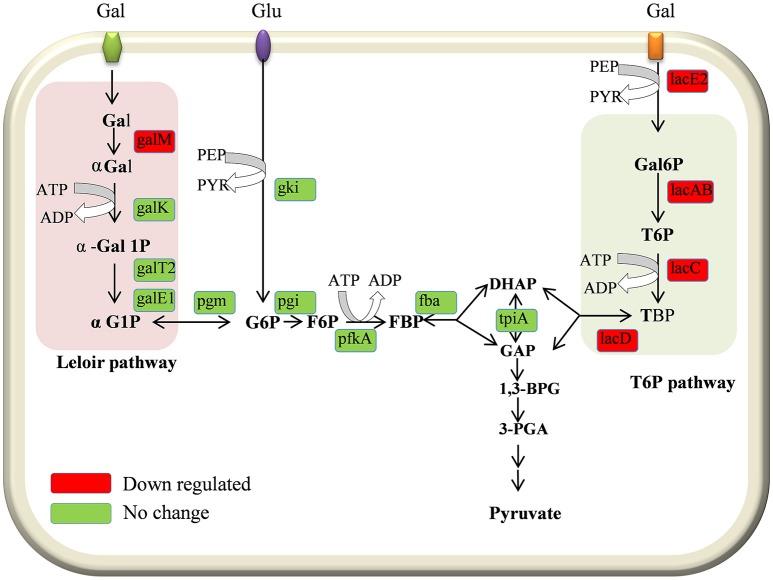
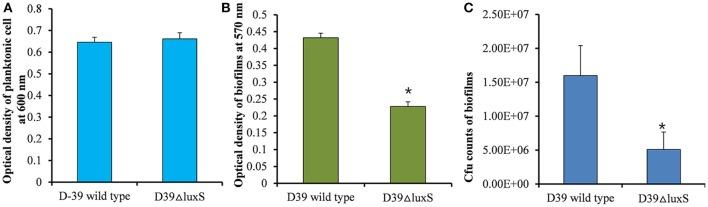
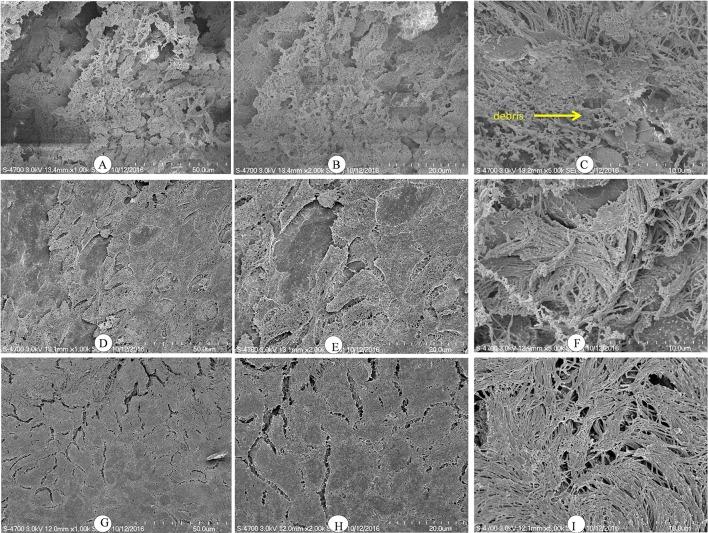
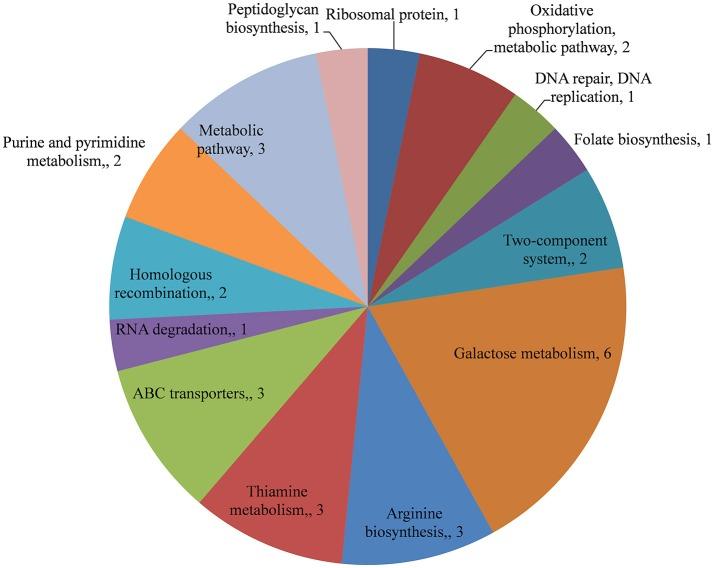
colonizes the nasopharynx of children, and from nasopharynx it could migrate to the middle ear and causes acute otitis media (AOM). During colonization and AOM, the pneumococcus forms biofilms. biofilm formation requires a functional LuxS/AI-2 quorum-sensing system. We investigated the role of LuxS/AI-2 signaling in pneumococcal middle ear infection, and identified the genes that are regulated by LuxS/AI-2 during pneumococcal biofilm formation. D39 wild-type and an isogenic D39Δ strain were utilized to evaluate biofilm formation, and colonization and epithelial damage using a microtiter plate assay and a rat model of pneumococcal middle ear infection, respectively. Biofilm structures and colonization and epithelial damage were evaluated at the ultrastructural level by scanning electron microscopy and confocal microscopy. Microarrays were used to investigate the global genes that were regulated by LuxS/AI-2 during biofilm formation. The biofilm biomass and density of D39Δ were significantly ( < 0.05) lower than those of D39 wild-type. SEM and confocal microscopy revealed that D39Δ formed thin biofilms compared with D39 wild-type. The model of middle ear infection showed that D39Δ resulted in ~60% less ( < 0.05) bacterial colonization than the wild-type. SEM analysis of the rat middle ears revealed dense biofilm-like cell debris deposited on the cilia in wild-type D39-infected rats. However, little cell debris was deposited in the middle ears of the D39Δ-inoculated rats, and the cilia were visible. cDNA-microarray analysis revealed 117 differentially expressed genes in D39Δ compared with D39 wild-type. Among the 66 genes encoding putative proteins and previously characterized proteins, 60 were significantly downregulated, whereas 6 were upregulated. Functional annotation revealed that genes involved in DNA replication and repair, ATP synthesis, capsule biosynthesis, cell division, the cell cycle, signal transduction, transcription regulation, competence, virulence, and carbohydrate metabolism were downregulated in the absence of LuxS/AI-2. The LuxS/AI-2 quorum-sensing system is necessary for biofilm formation and the colonization of the ear epithelium, and caused middle ear infection in the rat model. LuxS/AI-2 regulates the expression of the genes involved in virulence and bacterial fitness during pneumococcal biofilm formation.
肺炎链球菌定植于儿童鼻咽部,然后从鼻咽部迁移至中耳并引起急性中耳炎(AOM)。在定植和 AOM 过程中,肺炎链球菌形成生物膜。生物膜的形成需要一个功能性的 LuxS/AI-2 群体感应系统。我们研究了 LuxS/AI-2 信号在肺炎链球菌中耳感染中的作用,并确定了在肺炎链球菌生物膜形成过程中受 LuxS/AI-2 调控的基因。我们利用 D39 野生型和同源缺失株 D39Δ 分别通过微量滴定板测定法和肺炎链球菌中耳感染的大鼠模型来评估生物膜形成、定植和上皮损伤。通过扫描电子显微镜和共聚焦显微镜在超微结构水平评估生物膜结构和定植及上皮损伤。利用微阵列研究了在生物膜形成过程中受 LuxS/AI-2 调控的全局基因。D39Δ 的生物膜生物量和密度明显低于 D39 野生型(<0.05)。SEM 和共聚焦显微镜显示 D39Δ 形成的生物膜比 D39 野生型薄。中耳感染模型显示 D39Δ 的细菌定植量比野生型低约 60%(<0.05)。SEM 分析大鼠中耳发现,在 D39 野生型感染的大鼠中,大量致密的生物膜样细胞碎片沉积在纤毛上。然而,在 D39Δ 接种的大鼠中耳中,几乎没有细胞碎片沉积,纤毛可见。与 D39 野生型相比,D39Δ 的 cDNA 微阵列分析显示有 117 个差异表达基因。在编码假定蛋白和先前鉴定的蛋白的 66 个基因中,有 60 个基因显著下调,6 个基因上调。功能注释显示,在缺乏 LuxS/AI-2 时,参与 DNA 复制和修复、ATP 合成、荚膜生物合成、细胞分裂、细胞周期、信号转导、转录调控、感受态、毒力和碳水化合物代谢的基因下调。LuxS/AI-2 群体感应系统对于生物膜形成和中耳上皮定植是必需的,并在大鼠模型中引起中耳炎。LuxS/AI-2 调节肺炎链球菌生物膜形成过程中与毒力和细菌适应性相关基因的表达。


 Zotero 插件