
产前暴露于脂多糖会促进雄性子代大鼠出现血脂异常。
Prenatal Lipopolysaccharide Exposure Promotes Dyslipidemia in the Male Offspring Rats.
作者信息
Yu Shiyun, Wen Yan, Li Jingmei, Zhang Haigang, Liu Ya
机构信息
Department of Pharmaceutics, College of Pharmacy, Institute of Materia Medica, Third Military Medical University, Chongqing, China.
Department of General Surgery, Southwest Hospital of Third Military Medical University, Chongqing, China.
出版信息
Front Physiol. 2018 May 16;9:542. doi: 10.3389/fphys.2018.00542. eCollection 2018.
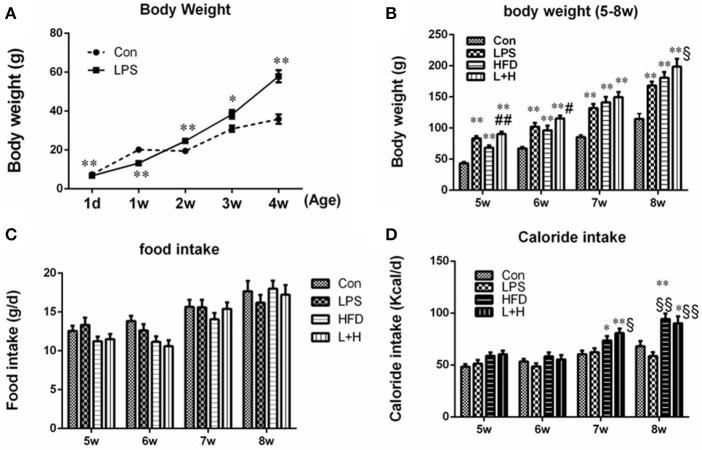
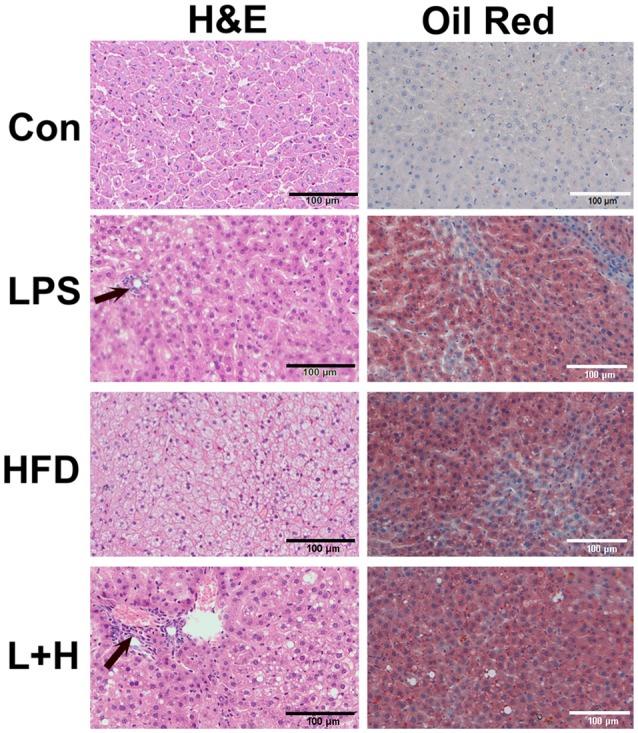
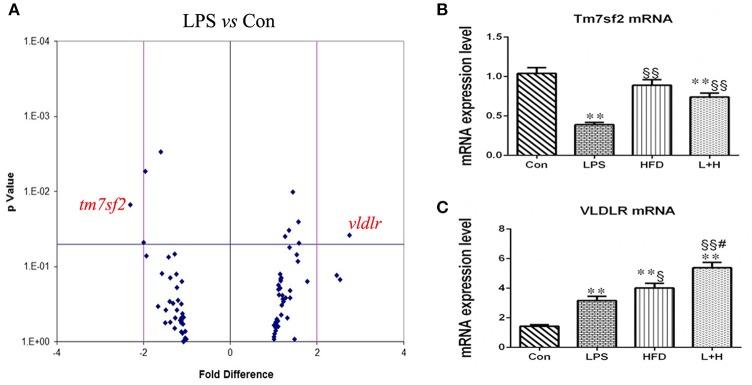
Inflammation is critical to the pathogenesis of cardiovascular diseases (CVDs). We have uncovered intrauterine inflammation induced by lipopolysaccharide (LPS) increases CVDs in adult offspring rats. The present study aimed to explore the role of prenatal exposure to LPS on the lipid profiles in male offspring rats and to further assess their susceptibility to high fat diet (HFD). Maternal LPS (0.79 mg/kg) exposure produced a significant increase in serum and hepatic levels of total cholesterol, triglycerides, low-density lipoprotein cholesterol, aspartate amino transferase as well as liver morphological abnormalities in 8-week-old offspring rats. Meanwhile, disturbed gene expressions involved in hepatic lipid metabolism and related signaling pathways were found, especially the up-regulated very-low density lipoprotein receptor (VLDLR) and down-regulated transmembrane 7 superfamily member 2 (TM7SF2). Following HFD treatment, however, the lipid profile shifts and liver dysfunction were exacerbated compared to the offsprings treated with prenatal LPS exposure alone. Compared with that in control offsprings, the hepatic mitochondria (Mt) in offspring rats solely treated with HFD exhibited remarkably higher ATP level, enforced Complex IV expression and a sharp reduction of its activity, whereas the offsprings from LPS-treated dams showed the loss of ATP content, diminished membrane potential, decline in protein expression and activity of mitochondrial respiratory complex IV, increased level of MtDNA deletion as well. Furthermore, treatment with HFD deteriorated these mitochondrial disorders in the prenatally LPS-exposed offspring rats. Taken together, maternal LPS exposure reinforces dyslipidemia in response to a HFD in adult offsprings, which should be associated with mitochondrial abnormalities and disturbed gene expressions of cholesterol metabolism.
炎症对心血管疾病(CVD)的发病机制至关重要。我们发现脂多糖(LPS)诱导的子宫内炎症会增加成年子代大鼠患心血管疾病的风险。本研究旨在探讨产前暴露于LPS对雄性子代大鼠血脂谱的影响,并进一步评估它们对高脂饮食(HFD)的易感性。母体暴露于LPS(0.79mg/kg)会导致8周龄子代大鼠血清和肝脏中的总胆固醇、甘油三酯、低密度脂蛋白胆固醇、天冬氨酸氨基转移酶水平显著升高,同时肝脏形态出现异常。此外,还发现参与肝脏脂质代谢和相关信号通路的基因表达紊乱,尤其是极低密度脂蛋白受体(VLDLR)上调和跨膜7超家族成员2(TM7SF2)下调。然而,与仅接受产前LPS暴露治疗的子代相比,高脂饮食治疗后,血脂谱变化和肝功能障碍加剧。与对照子代相比,仅接受高脂饮食治疗的子代大鼠肝脏线粒体(Mt)的ATP水平显著升高,并加强了细胞色素C氧化酶(Complex IV)的表达,但其活性急剧下降;而来自LPS处理母鼠的子代则出现ATP含量丧失、膜电位降低、线粒体呼吸复合物IV的蛋白表达和活性下降,线粒体DNA缺失水平也增加。此外,高脂饮食会使产前暴露于LPS的子代大鼠的这些线粒体紊乱恶化。综上所述,母体暴露于LPS会加剧成年子代对高脂饮食的血脂异常,这可能与线粒体异常和胆固醇代谢相关基因表达紊乱有关。




 Zotero 插件