
抗神经生长因子疗法可减轻骨质疏松症小鼠的皮肤超敏反应和肌肉骨骼不适。
Anti-nerve growth factor therapy attenuates cutaneous hypersensitivity and musculoskeletal discomfort in mice with osteoporosis.
作者信息
Suzuki Miyako, Millecamps Magali, Ohtori Seiji, Mori Chisato, Stone Laura S
机构信息
Center for Preventive Medical Sciences, Chiba University, Chiba, Japan.
The Alan Edwards Centre for Research on Pain, McGill University, Montreal, QC, Canada.
出版信息
Pain Rep. 2018 Apr 10;3(3):e652. doi: 10.1097/PR9.0000000000000652. eCollection 2018 May.
INTRODUCTION
The prevalence of osteoporosis is increasing with the aging population and is associated with increased risk of fracture and chronic pain. Osteoporosis is currently treated with bisphosphonate therapy to attenuate bone loss. We previously reported that improvement in bone mineral density is not sufficient to reduce osteoporosis-related pain in an ovariectomy (OVX)-induced mouse model of osteoporosis, highlighting the need for new treatments. Targeting of nerve growth factor (NGF) with sequestering antibodies is a promising new direction for the treatment of musculoskeletal pain including back pain and arthritis. Its efficacy is currently unknown for osteoporotic pain.
OBJECTIVE
To investigate the efficacy of anti-NGF antibody therapy on osteoporotic pain in an OVX-induced mouse model.
METHODS
Ovariectomy- and sham-operated mice were injected with an anti-NGF antibody (10 mg/kg, intraperitoneally, administered 2×, 14 days apart), and the effect on behavioural indices of osteoporosis-related pain and on sensory neuron plasticity was evaluated.
RESULTS
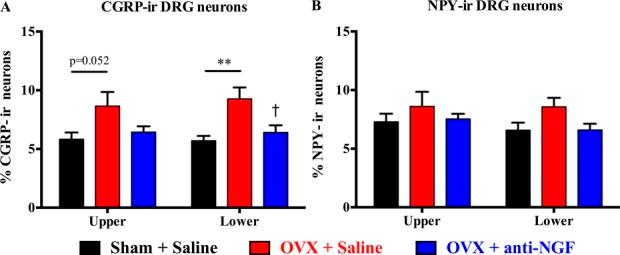
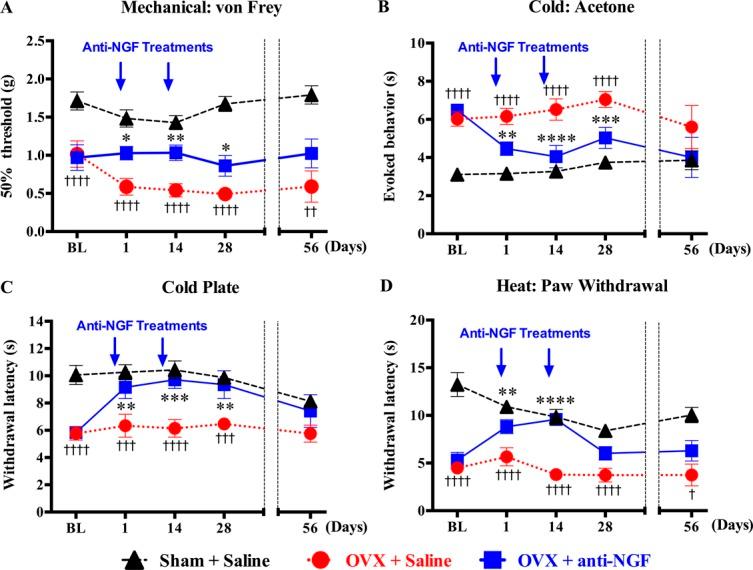
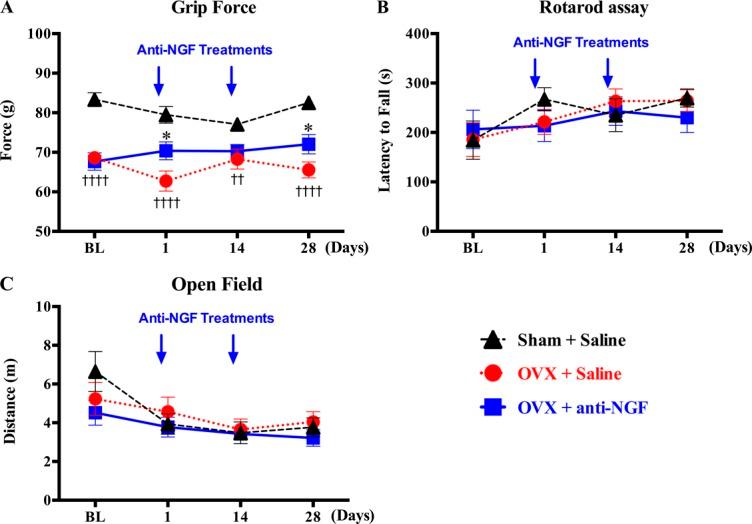
Treatment with anti-NGF antibodies attenuated OVX-induced hypersensitivity to mechanical, cold, and heat stimuli on the plantar surface of the hind paw. The OVX-induced impairment in grip force strength, used here as a measure of axial discomfort, was partially reversed by anti-NGF therapy. No changes were observed in the rotarod or open-field tests for overall motor function and activity. Finally, anti-NGF treatment attenuated the increase in calcitonin gene-related peptide-immunoreactive dorsal root ganglia neurons observed in OVX mice.
CONCLUSION
Taken together, these data suggest that anti-NGF antibodies may be useful in the treatment of prefracture hypersensitivity that is reported in 10% of patients with osteoporosis.
引言
随着人口老龄化,骨质疏松症的患病率不断上升,且与骨折和慢性疼痛风险增加相关。目前,骨质疏松症采用双膦酸盐疗法治疗以减轻骨质流失。我们之前报道,在卵巢切除(OVX)诱导的骨质疏松症小鼠模型中,骨矿物质密度的改善不足以减轻与骨质疏松症相关的疼痛,这凸显了新治疗方法的必要性。用隔离抗体靶向神经生长因子(NGF)是治疗包括背痛和关节炎在内的肌肉骨骼疼痛的一个有前景的新方向。其对骨质疏松性疼痛的疗效目前尚不清楚。
目的
研究抗NGF抗体疗法对OVX诱导的小鼠模型中骨质疏松性疼痛的疗效。
方法
给卵巢切除和假手术的小鼠注射抗NGF抗体(10mg/kg,腹腔注射,分2次给药,间隔14天),并评估其对骨质疏松症相关疼痛行为指标和感觉神经元可塑性的影响。
结果
抗NGF抗体治疗减轻了OVX诱导的后爪足底表面对机械、冷和热刺激的超敏反应。抗NGF疗法部分逆转了此处用作轴向不适指标的OVX诱导的握力强度损伤。在评估整体运动功能和活动的转棒试验或旷场试验中未观察到变化。最后,抗NGF治疗减轻了OVX小鼠中降钙素基因相关肽免疫反应性背根神经节神经元的增加。
结论
综上所述,这些数据表明抗NGF抗体可能有助于治疗10%的骨质疏松症患者中报告的骨折前超敏反应。
 Zotero 插件