
蛋白质组学和转录组学谱的整合揭示了棉花耐盐性的多个遗传调控水平。
Integration of proteomic and transcriptomic profiles reveals multiple levels of genetic regulation of salt tolerance in cotton.
机构信息
State Key Laboratory of Cotton Biology, Institute of Cotton Research, Chinese Academy of Agricultural Sciences, Anyang, 455000, Henan, China.
出版信息
BMC Plant Biol. 2018 Jun 20;18(1):128. doi: 10.1186/s12870-018-1350-1.
BACKGROUND
Salinity is a major abiotic stress that limits upland cotton growth and reduces fibre production worldwide. To reveal genetic regulation via transcript and protein levels after salt stress, we comprehensively analysed the global changes in mRNA, miRNA, and protein profiles in response to salt stress in two contrasting salt-tolerant cotton genotypes.
RESULTS
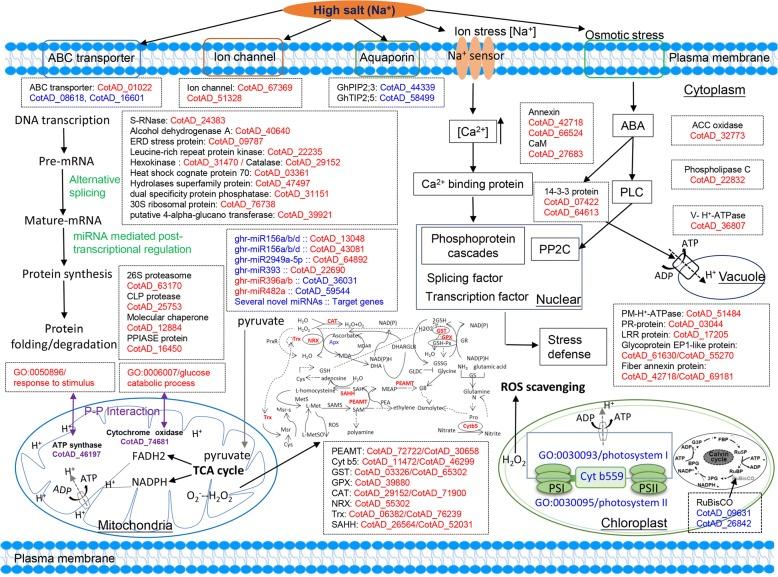
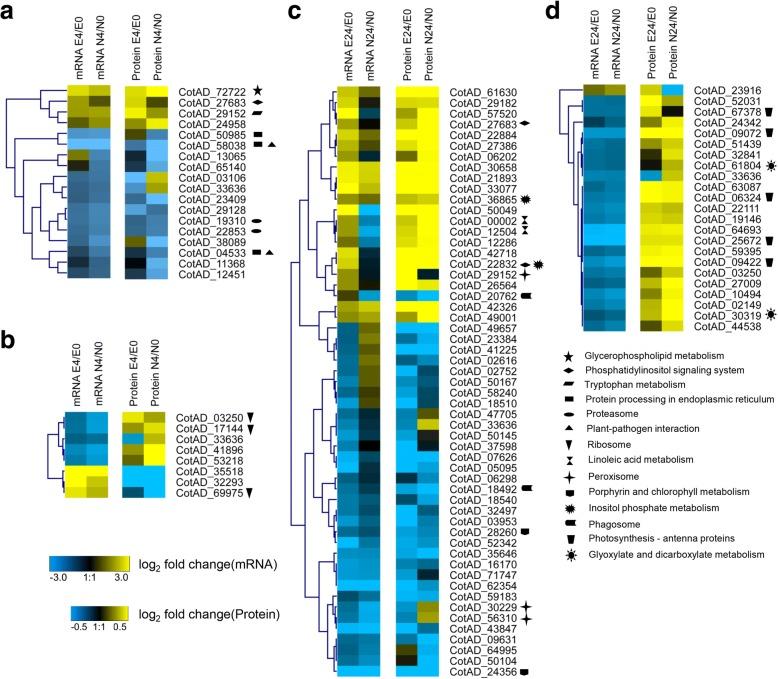
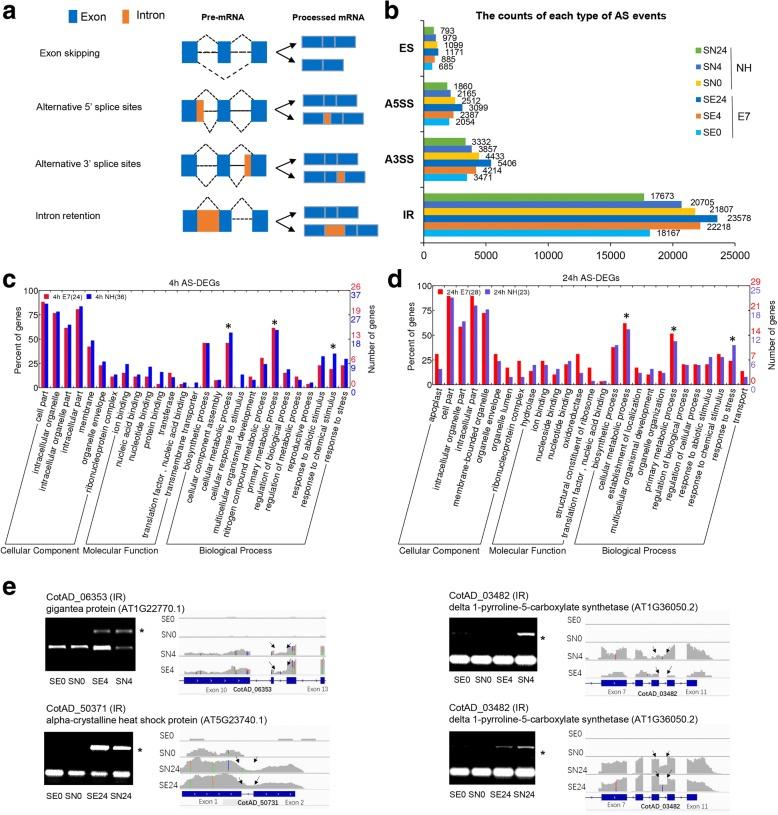
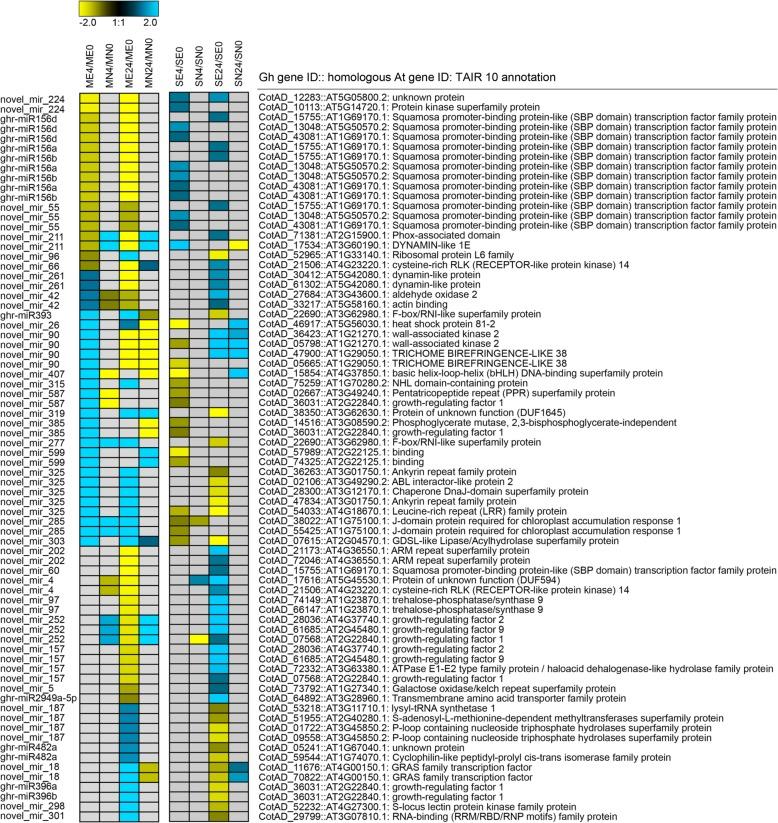
In the current study, proteomic and mRNA-seq data were combined to reveal that some genes are differentially expressed at both the proteomic and mRNA levels. However, we observed no significant change in mRNA corresponding to most of the strongly differentially abundant proteins. This finding may have resulted from global changes in alternative splicing events and miRNA levels under salt stress conditions. Evidence was provided indicating that several salt stress-responsive proteins can alter miRNAs and modulate alternative splicing events in upland cotton. The results of the stringent screening of the mRNA-seq and proteomic data between the salt-tolerant and salt-sensitive genotypes identified 63 and 85 candidate genes/proteins related to salt tolerance after 4 and 24 h of salt stress, respectively, between the tolerant and sensitive genotype. Finally, we predicted an interaction network comprising 158 genes/proteins and then discovered that two main clusters in the network were composed of ATP synthase (CotAD_74681) and cytochrome oxidase (CotAD_46197) in mitochondria. The results revealed that mitochondria, as important organelles involved in energy metabolism, play an essential role in the synthesis of resistance proteins during the process of salt exposure.
CONCLUSION
We provided a plausible schematic for the systematic salt tolerance model; this schematic reveals multiple levels of gene regulation in response to salt stress in cotton and provides a list of salt tolerance-related genes/proteins. The information here will facilitate candidate gene discovery and molecular marker development for salt tolerance breeding in cotton.
背景
盐度是一种主要的非生物胁迫,限制了旱地棉花的生长并降低了全球纤维产量。为了揭示盐胁迫后转录本和蛋白质水平的遗传调控,我们综合分析了两个具有不同耐盐性的棉花基因型对盐胁迫的mRNA、miRNA 和蛋白质谱的全球变化。
结果
在本研究中,结合蛋白质组学和 mRNA-seq 数据揭示了一些基因在蛋白质组学和 mRNA 水平上的差异表达。然而,我们观察到大多数强烈差异丰度蛋白的 mRNA 没有显著变化。这一发现可能是由于盐胁迫条件下替代剪接事件和 miRNA 水平的全局变化所致。有证据表明,一些盐胁迫响应蛋白可以改变 miRNA,并调节陆地棉中的可变剪接事件。对耐盐和敏感基因型之间的 mRNA-seq 和蛋白质组学数据进行严格筛选后,在盐胁迫 4 和 24 小时后,分别在耐盐和敏感基因型之间鉴定出 63 和 85 个候选基因/蛋白质与耐盐性相关。最后,我们预测了一个包含 158 个基因/蛋白质的相互作用网络,并发现网络中的两个主要簇由线粒体中的 ATP 合酶(CotAD_74681)和细胞色素氧化酶(CotAD_46197)组成。结果表明,作为涉及能量代谢的重要细胞器,线粒体在盐暴露过程中抗性蛋白的合成中起着重要作用。
结论
我们提供了一个合理的系统耐盐模型示意图;该示意图揭示了棉花对盐胁迫的多个基因调控水平,并提供了一组耐盐相关基因/蛋白质。这些信息将有助于候选基因的发现和棉花耐盐性分子标记的开发。



 Zotero 插件