
番茄基因在植物对非生物和生物复合胁迫响应中的作用
The Role of Tomato Genes in Plant Responses to Combined Abiotic and Biotic Stresses.
作者信息
Bai Yuling, Sunarti Sri, Kissoudis Christos, Visser Richard G F, van der Linden C G
机构信息
Plant Breeding, Wageningen University & Research, Wageningen, Netherlands.
出版信息
Front Plant Sci. 2018 Jun 13;9:801. doi: 10.3389/fpls.2018.00801. eCollection 2018.
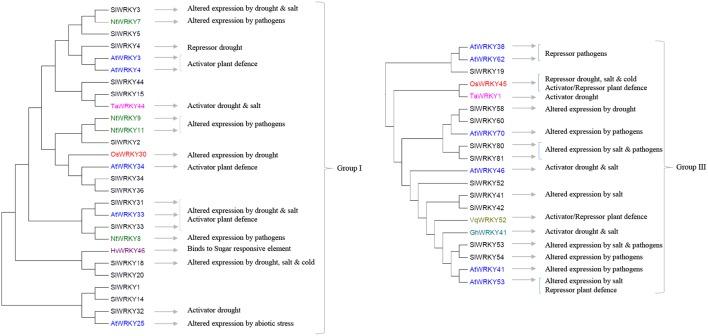
In the field, plants constantly face a plethora of abiotic and biotic stresses that can impart detrimental effects on plants. In response to multiple stresses, plants can rapidly reprogram their transcriptome through a tightly regulated and highly dynamic regulatory network where WRKY transcription factors can act as activators or repressors. WRKY transcription factors have diverse biological functions in plants, but most notably are key players in plant responses to biotic and abiotic stresses. In tomato there are 83 genes identified. Here we review recent progress on functions of these tomato genes and their homologs in other plant species, such as Arabidopsis and rice, with a special focus on their involvement in responses to abiotic and biotic stresses. In particular, we highlight genes that play a role in plant responses to a combination of abiotic and biotic stresses.
在田间,植物不断面临大量非生物和生物胁迫,这些胁迫会对植物产生有害影响。为应对多种胁迫,植物可通过一个严格调控且高度动态的调控网络迅速重新编程其转录组,其中WRKY转录因子可作为激活因子或抑制因子发挥作用。WRKY转录因子在植物中具有多种生物学功能,但最显著的是在植物对生物和非生物胁迫的反应中起关键作用。在番茄中已鉴定出83个基因。在此,我们综述了这些番茄基因及其在其他植物物种(如拟南芥和水稻)中的同源基因功能的最新进展,特别关注它们在应对非生物和生物胁迫中的作用。我们尤其强调了在植物对非生物和生物胁迫组合的反应中起作用的基因。

 Zotero 插件