
静止和激活的成年神经干细胞的独特分子特征揭示了它们与微环境的特定相互作用。
Distinct Molecular Signatures of Quiescent and Activated Adult Neural Stem Cells Reveal Specific Interactions with Their Microenvironment.
机构信息
CEA DRF iRCM SCSR, Laboratoire de Radiopathologie, UMR 967, Fontenay-aux-Roses 92265, France; INSERM, UMR967, Fontenay-aux-Roses 92265, France; Université Paris Diderot, Sorbonne Paris Cité, UMR 967, Fontenay-aux-Roses 92265, France; Université Paris Sud, UMR 967, Fontenay-aux-Roses 92265, France.
CEA DRF iRCM SCSR, Laboratoire de Radiopathologie, UMR 967, Fontenay-aux-Roses 92265, France; INSERM, UMR967, Fontenay-aux-Roses 92265, France; Université Paris Diderot, Sorbonne Paris Cité, UMR 967, Fontenay-aux-Roses 92265, France; Université Paris Sud, UMR 967, Fontenay-aux-Roses 92265, France.
出版信息
Stem Cell Reports. 2018 Aug 14;11(2):565-577. doi: 10.1016/j.stemcr.2018.06.005. Epub 2018 Jul 5.
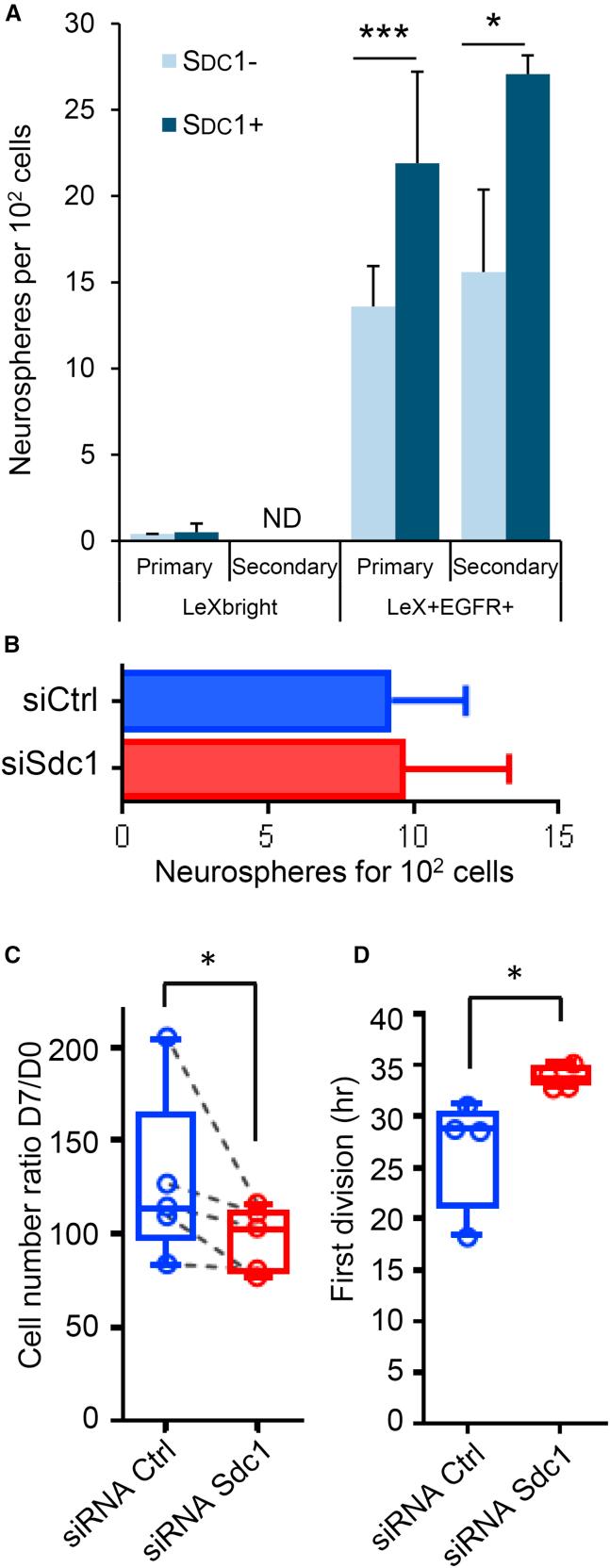
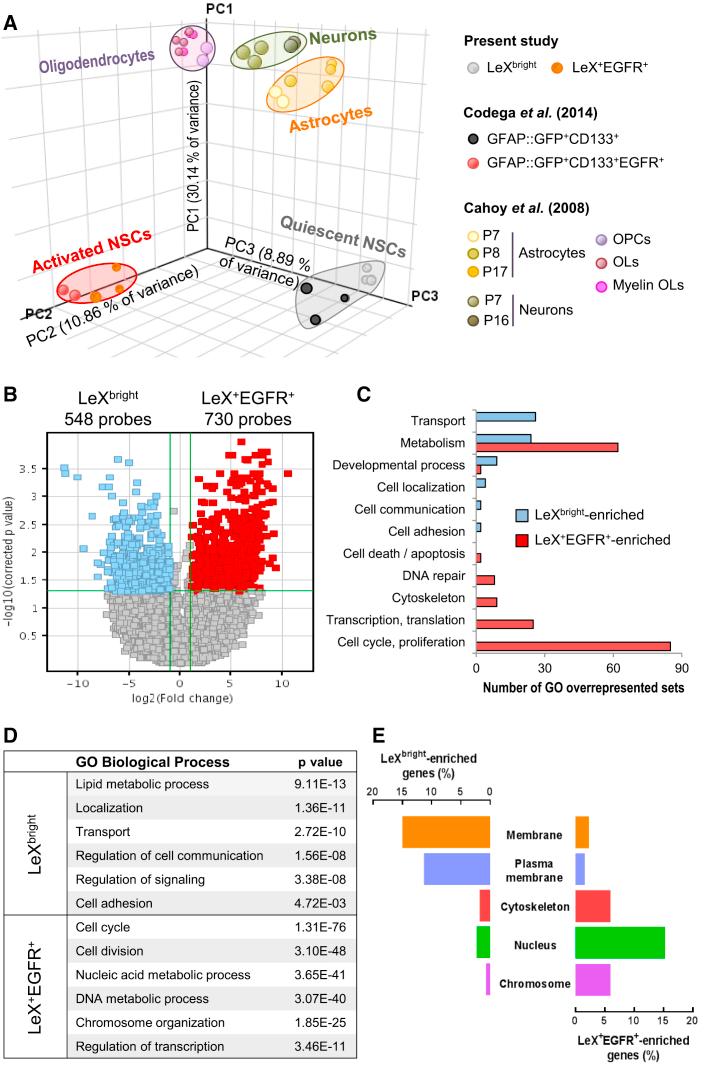
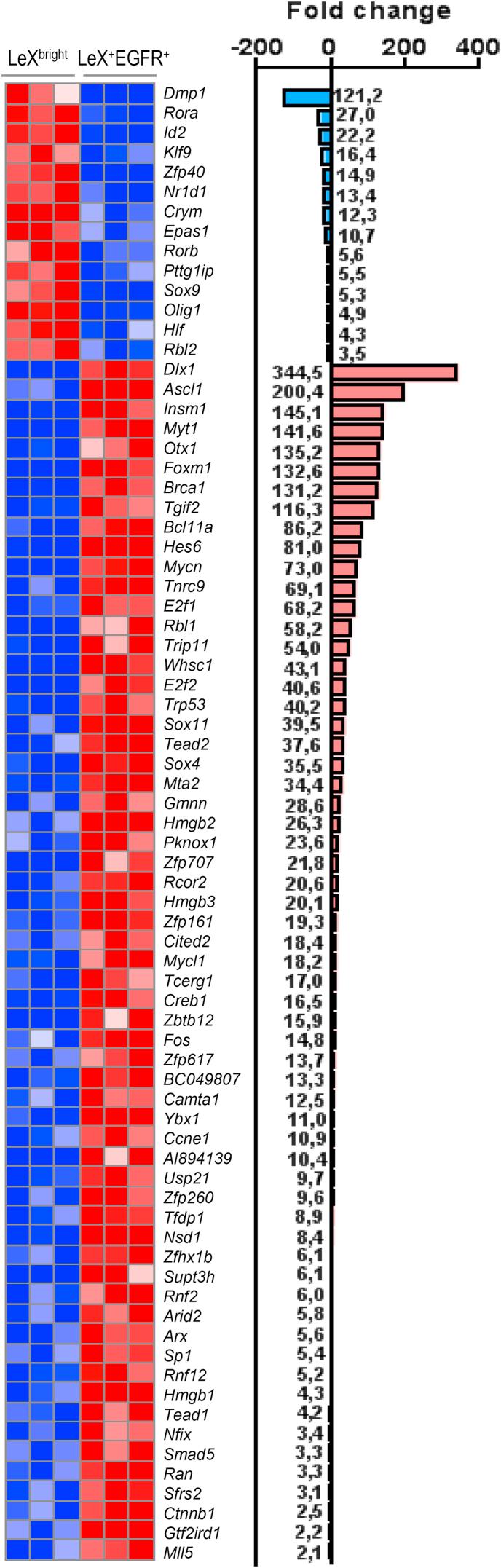
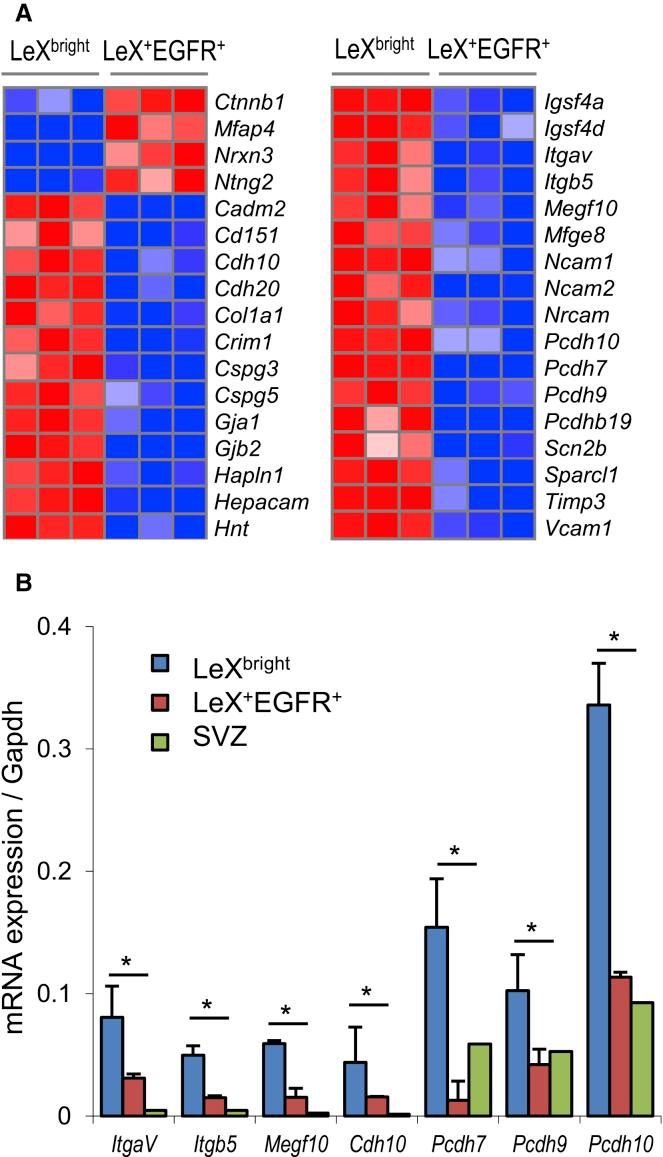
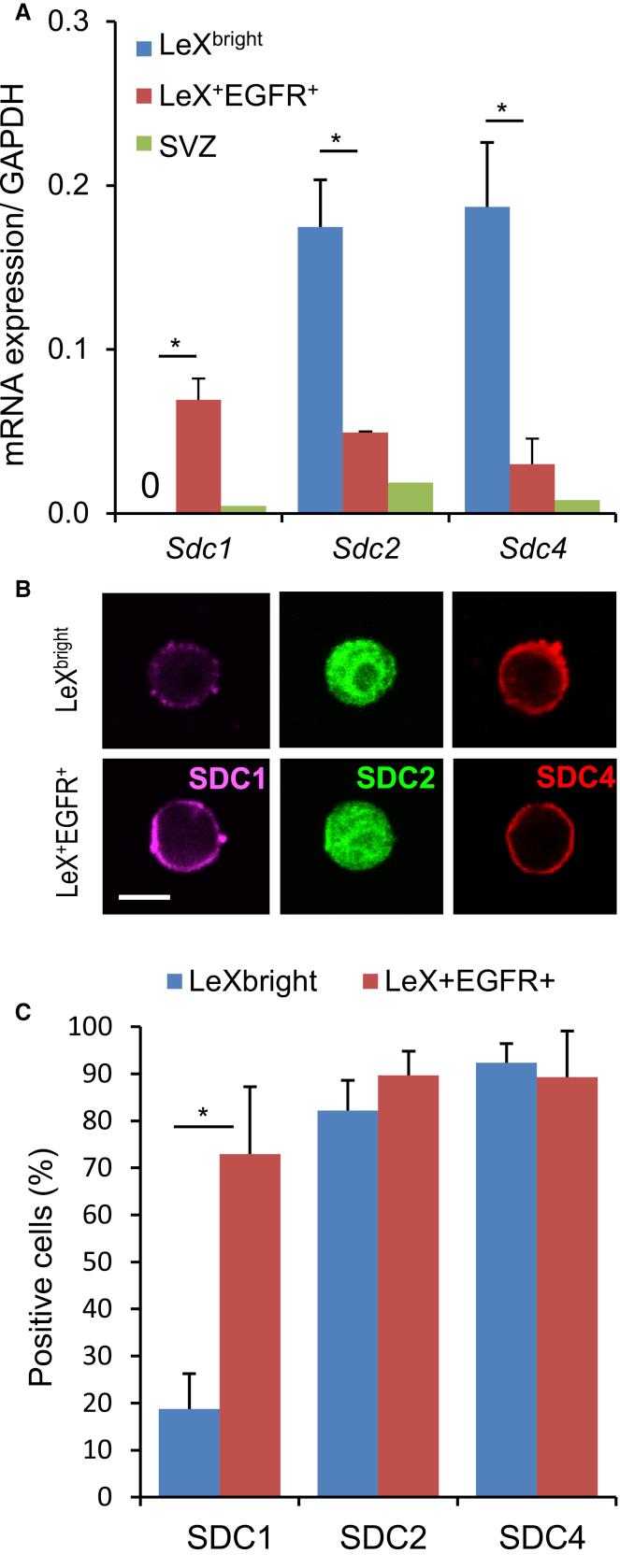
Deciphering the mechanisms that regulate the quiescence of adult neural stem cells (NSCs) is crucial for the development of therapeutic strategies based on the stimulation of their endogenous regenerative potential in the damaged brain. We show that LeX cells sorted from the adult mouse subventricular zone exhibit all the characteristic features of quiescent NSCs. Indeed, they constitute a subpopulation of slowly dividing cells that is able to enter the cell cycle to regenerate the irradiated niche. Comparative transcriptomic analyses showed that they express hallmarks of NSCs but display a distinct molecular signature from activated NSCs (LeXEGFR cells). Particularly, numerous membrane receptors are expressed on quiescent NSCs. We further revealed a different expression pattern of Syndecan-1 between quiescent and activated NSCs and demonstrated its role in the proliferation of activated NSCs. Our data highlight the central role of the stem cell microenvironment in the regulation of quiescence in adult neurogenic niches.
解析调节成年神经干细胞(NSC)静止的机制对于开发基于刺激其内在再生潜能的治疗策略至关重要,这些策略可用于受损大脑。我们表明,从小鼠侧脑室下区分选的 LeX 细胞表现出静止 NSC 的所有特征。实际上,它们构成了一个缓慢分裂细胞亚群,能够进入细胞周期以再生受照射的龛位。比较转录组分析表明,它们表达 NSC 的标志,但与激活的 NSC(LeXEGFR 细胞)具有不同的分子特征。特别地,许多膜受体在静止 NSC 上表达。我们进一步揭示了静止和激活的 NSC 之间 Syndecan-1 的不同表达模式,并证明了它在激活的 NSC 增殖中的作用。我们的数据强调了干细胞微环境在调节成年神经发生龛中的静止状态中的核心作用。

 Zotero 插件